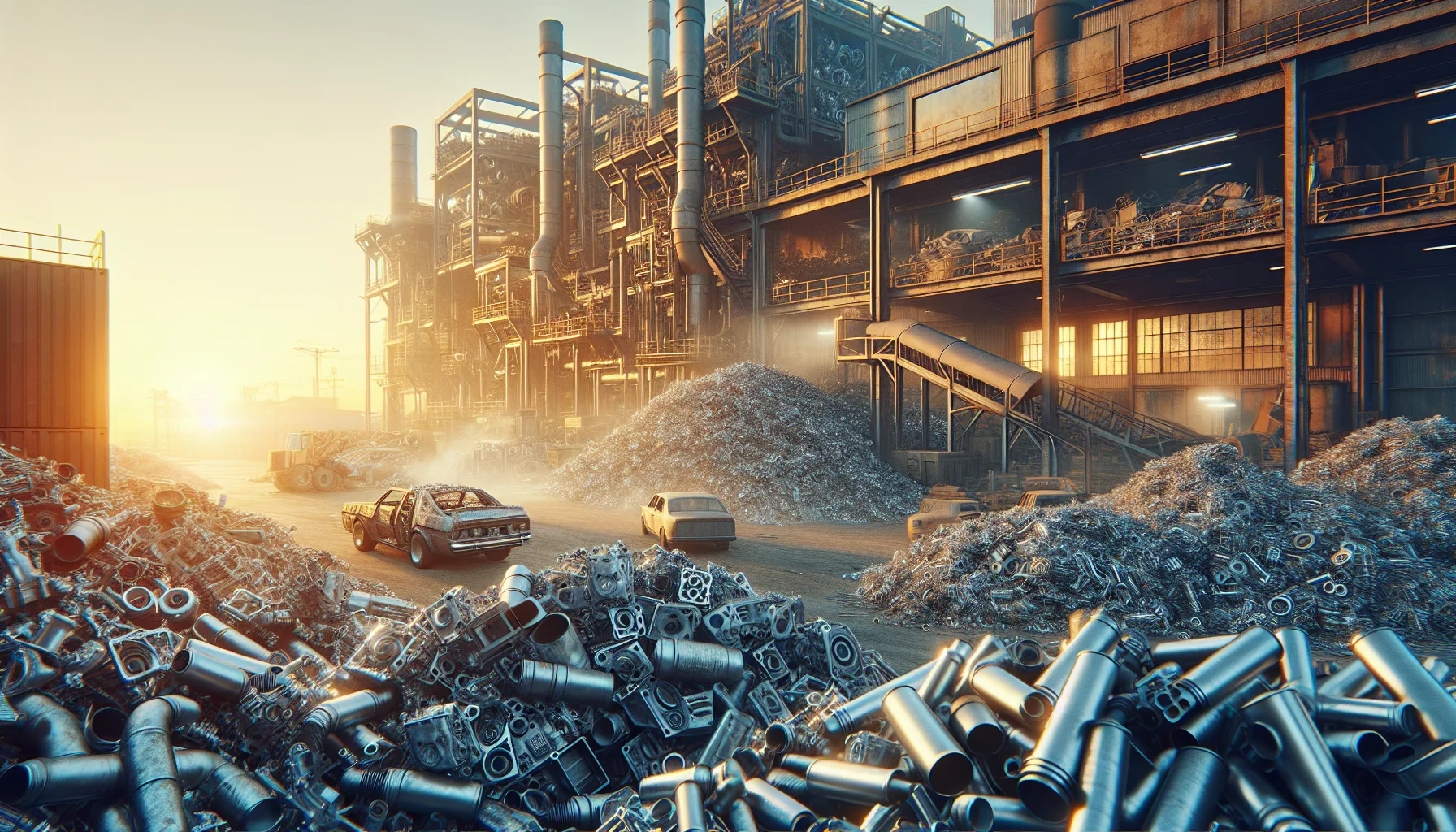
Every year, millions of catalytic converters reach the end of their automotive life, yet most vehicle owners have no idea their "dead" converter contains precious metals worth hundreds of dollars. The journey from your car's exhaust system to refined platinum, palladium, and rhodium reveals why catalytic converter scrap value has become one of the most lucrative recycling opportunities in Canada's automotive industry.
Understanding this lifecycle helps converter sellers maximize their returns and explains why platforms like SMASH have revolutionized how Canadians access transparent pricing based on real-time precious metal markets.
Manufacturing and Initial Installation: The Birth of Precious Metal Value
Catalytic converters begin their journey in specialized manufacturing facilities where ceramic or metallic substrates get coated with precise combinations of platinum, palladium, and rhodium. These precious metals aren't decorative — they're the active catalysts that transform harmful exhaust gases into less toxic compounds.
The amount of precious metal varies dramatically between converter types. Gasoline engine converters typically contain 2-7 grams of combined precious metals, while diesel converters can hold significantly more. High-end vehicle converters may contain over 10 grams of precious metals, explaining why palladium price today directly impacts their scrap value.
Original equipment manufacturers (OEMs) design converters for specific engine types, emission requirements, and regional regulations. Canadian vehicles require converters meeting federal emission standards, which often means higher precious metal content compared to converters designed for less stringent markets.
Installation happens during vehicle assembly or as replacement parts. Once installed, the converter begins its active service life, which typically lasts 80,000 to 120,000 kilometers under normal driving conditions.
Active Service Life: How Converters Accumulate Value and Wear
During active service, catalytic converters face extreme operating conditions. Exhaust temperatures can exceed 800°C, while the precious metal catalysts facilitate millions of chemical reactions daily. This constant activity gradually changes the converter's internal structure.
Interestingly, older converters often contain more precious metals than newer equivalents. Emission regulations in the 1990s and early 2000s required generous precious metal loadings before manufacturers optimized their formulations. This explains why converters from certain model years command premium prices in today's recycling market.
Several factors affect a converter's precious metal retention during its service life:
- Engine condition: Misfiring engines can overheat converters, potentially damaging the catalyst coating
- Fuel quality: Contaminated fuel can poison the catalysts, reducing their effectiveness
- Driving patterns: Stop-and-go city driving versus highway cruising affects catalyst wear rates
- Maintenance history: Regular maintenance preserves catalyst efficiency longer
Even worn or "failed" converters retain most of their precious metal content. A converter that no longer meets emission standards may still contain 90-95% of its original precious metals, making it valuable for recycling purposes.
End of Life and Removal: When Converters Enter the Scrap Market
Catalytic converters enter the scrap market through several pathways. The most common scenario involves vehicle replacement during regular maintenance when emission tests reveal converter failure. Automotive shops in Barrie and across Ontario generate steady streams of spent converters from routine repairs and replacements.
Vehicle scrapping represents another major source. When cars reach end-of-life, converters get removed before the vehicle enters the metal recycling process. Professional auto recyclers systematically harvest converters because their scrap value often exceeds the worth of other individual vehicle components.
Insurance write-offs create additional opportunities. Collision-damaged vehicles may have perfectly functional converters that retain full precious metal content. Smart sellers recognize these situations and find the best scrap converter prices in Canada rather than letting insurance companies handle disposal.
Theft recovery also feeds the legitimate scrap market. When stolen converters get recovered but can't be returned to owners, they eventually enter legal recycling channels. This unfortunate reality has increased awareness about converter value among vehicle owners.
The key transition point occurs when converters move from automotive service to recycling channels. Professional buyers evaluate each converter's potential precious metal content and offer prices accordingly. This evaluation process has become increasingly sophisticated, with experienced buyers identifying converter types by sight and estimating their metal content within narrow ranges.
Collection and Sorting: Professional Evaluation Determines Value
Professional converter buyers operate sophisticated sorting operations that maximize recovery efficiency. These facilities receive converters from automotive shops, scrapyards, and individual sellers throughout Ontario, including regular pickups from Barrie-area businesses.
The sorting process begins with visual identification. Experienced technicians can identify converter manufacturer, model year, and approximate precious metal content by examining the converter's physical characteristics. Shell design, internal structure, and even serial numbers provide clues about metal content.
Advanced sorting facilities use several evaluation methods:
- Visual classification: Grouping converters by type and estimated metal content
- Weight analysis: Heavier converters typically contain more substrate and potentially more precious metals
- XRF scanning: Handheld X-ray fluorescence devices can detect precious metal presence without destructive sampling
- Database matching: Comprehensive databases link converter part numbers to known metal loadings
This sorting process directly impacts the prices sellers receive. Accurate identification ensures converters get channeled to appropriate recovery processes and sellers receive fair compensation based on actual metal content rather than generic estimates.
Modern platforms like SMASH have transformed this evaluation process by connecting sellers directly with multiple buyers who compete based on precise converter identification and current precious metal prices. This competition drives up returns for sellers while ensuring converters reach processors who can handle their specific metal content efficiently.
Processing and Precious Metal Recovery: From Scrap to Refined Metals
Once sorted, converters enter specialized processing facilities designed to extract maximum precious metal value. These operations represent the most technically complex phase of the converter lifecycle, requiring sophisticated equipment and expertise.
The processing sequence typically follows these steps:
Decanning and size reduction: Workers remove converters from their metal shells and crush or grind the ceramic substrates into consistent particle sizes. This exposes the precious metal-coated surfaces for efficient extraction.
Sampling and assaying: Representative samples undergo detailed analysis to determine exact precious metal content. This analysis validates the sorting estimates and establishes final recovery targets.
Pyrometallurgical treatment: High-temperature furnaces process the crushed material, concentrating precious metals into a matte or crude metal form. This step requires careful temperature control and atmosphere management to optimize recovery rates.
Hydrometallurgical refining: Chemical processes separate individual precious metals from the concentrated material. Platinum, palladium, and rhodium each require specific treatment protocols to achieve final purity levels.
Recovery efficiency varies by processor capability and converter type, but professional facilities typically recover 95-98% of available precious metals. The recovered metals meet industry purity standards and can be sold directly to industrial users or precious metal markets.
This processing phase explains why catalytic converter recycling prices fluctuate with precious metal markets. When palladium prices increase, processors can pay more for palladium-rich converters while maintaining profitable operations. Sellers who check current Canadian scrap converter prices can time their sales to capture these market movements.
Market Sales and New Applications: Completing the Precious Metal Circle
Recovered precious metals enter global markets where they compete directly with newly mined materials. This market integration means converter recycling has become an essential part of the precious metal supply chain, providing roughly 25-30% of annual platinum group metal demand worldwide.
The refined metals find applications across multiple industries:
- Automotive manufacturing: Most recovered metals return to new converter production, creating a true circular economy
- Electronics industry: Palladium and platinum serve critical roles in electronic component manufacturing
- Jewelry and investment: Precious metals meeting purity standards can enter traditional jewelry and investment markets
- Chemical processing: Industrial catalysts for chemical production consume significant precious metal quantities
This diverse demand base helps stabilize precious metal prices and ensures consistent markets for recovered materials. When one application experiences reduced demand, other sectors typically absorb available supply.
For Canadian sellers, understanding these end markets explains why timing matters when deciding to sell catalytic converters online. Industrial demand cycles, mining disruptions, and geopolitical factors all influence precious metal prices and ultimately affect converter scrap values.
Regional factors also play important roles. Ontario's proximity to major automotive manufacturing centers creates additional demand for recovered precious metals, potentially supporting stronger local pricing for converter sellers in markets like Barrie and Toronto.
Sellers who read Canadian scrap converter pricing guides can better understand how these market forces affect their potential returns and make informed decisions about when and how to sell their converters.
Environmental Impact and Regulatory Considerations
The converter lifecycle creates significant environmental benefits beyond precious metal recovery. Professional recycling prevents toxic materials from entering landfills while reducing the need for new precious metal mining, which carries substantial environmental costs.
Canadian regulations govern several aspects of converter handling and processing. Environmental standards ensure processing facilities operate with appropriate pollution controls, while transportation regulations affect how converters move through the supply chain.
Recent regulatory developments in 2026 have strengthened requirements for converter documentation and chain-of-custody tracking. These changes help combat theft while ensuring legitimate recycling operations continue efficiently. Sellers who sell catalytic converters Ontario through established channels benefit from these protections.
The environmental argument for converter recycling has grown stronger as mining costs increase and environmental scrutiny intensifies. Recovered precious metals require roughly 85% less energy to produce compared to newly mined equivalents, making recycling increasingly attractive from both economic and environmental perspectives.
Looking ahead, the converter lifecycle faces changes from electric vehicle adoption, but internal combustion engines will remain dominant for years to come. Hybrid vehicles actually use converters extensively, ensuring continued demand for recycling services.
For sellers considering their options, choosing compare scrap metal bids from Canadian buyers through platforms like SMASH supports environmentally responsible recycling while maximizing financial returns. This approach ensures converters reach legitimate processors who follow proper environmental protocols.
Frequently Asked Questions
Q: How do I know if my catalytic converter has valuable precious metals?
All automotive catalytic converters contain precious metals, but amounts vary significantly. Converters from luxury vehicles, trucks, and hybrids typically contain more valuable metals. Professional evaluation is the only way to determine exact content and current scrap value based on today's precious metal markets.
Q: What affects catalytic converter scrap value most?
Precious metal prices have the biggest impact on scrap values. Palladium, platinum, and rhodium prices fluctuate daily based on global supply and demand. Converter type, condition, and current market competition among buyers also influence final prices significantly.
Q: Can I sell catalytic converters online in Barrie safely?
Yes, legitimate platforms like SMASH connect Barrie sellers with verified buyers across Ontario. Always verify buyer credentials, get multiple quotes, and maintain proper documentation. Avoid cash-only transactions or buyers who cannot provide business registration information.
Q: How long do catalytic converters retain their precious metal value?
Converters retain virtually all their precious metal content throughout their service life and beyond. Even "failed" converters that no longer meet emission standards typically contain 90-95% of their original precious metals, making them valuable for recycling purposes.
Q: What's the best time to sell catalytic converters for maximum value?
Monitor precious metal prices and sell when palladium, platinum, or rhodium prices trend upward. Market timing can significantly impact returns, especially for high-value converters. However, avoid holding converters too long if you need immediate funds, as prices can also decline.
Understanding the complete catalytic converter lifecycle reveals why these automotive components maintain such strong scrap values and how the precious metal recovery process drives pricing throughout Canada. Whether you're an automotive professional in Barrie managing regular converter replacements or an individual with a single converter to sell, this knowledge helps you make informed decisions and maximize returns. Find the best Canadian scrap converter prices and discover how platforms like SMASH can connect you with competitive buyers — get a free quote at best-scrap-converter-prices.ca.
Stay connected with industry developments and market insights by following SMASH on LinkedIn for regular updates on precious metal trends and recycling opportunities.