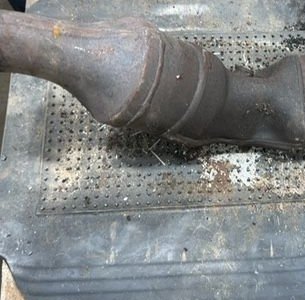
Most converter sellers in Medicine Hat have no idea what happens after they hand over a load of cats. They get a number, they take it or leave it, and they move on. But here's the thing: that number didn't come from thin air. It came from a chain of science — assaying, smelting, and precious metal recovery — and understanding that chain is exactly how you stop leaving money on the table. If you want the best catalytic converter price Medicine Hat has to offer, you need to know what buyers actually pay for.
This isn't a chemistry lecture. It's a practical breakdown of how your converters go from the pile in your yard to a final payout number — and where transparency (or the lack of it) changes everything.
---What Buyers Are Actually Paying For: Platinum Group Metals
A catalytic converter isn't valuable because it's heavy or because the ceramic looks impressive. It's valuable because of what's locked inside the substrate: platinum, palladium, and rhodium — collectively called platinum group metals, or PGMs. These three metals drive the entire converter market. The rhodium price today alone can swing your payout dramatically from one week to the next.
Rhodium is the most volatile of the three. It's produced in tiny quantities globally, used almost exclusively in autocatalysts, and trades at multiples of gold. When rhodium spikes, high-rhodium converters — think late-model domestic trucks and performance vehicles — become exceptionally valuable. When it drops, the spread between a high-grade and a low-grade converter narrows. This is why following live PGM spot prices matters if you're selling regularly.
Palladium and platinum round out the picture. Palladium dominates gasoline engine converters. Platinum is more common in diesel cats. The exact ratio of these metals in your load depends on the vehicle makes and years you're pulling from — which is exactly why documentation and identification matter so much before your converters ever reach a smelter.
---The Assaying Process: How Your Converters Get Tested
Before any smelting happens, the processor needs to know what they're working with. That's where assaying comes in. Think of it as the audit that sets the baseline for your payout.
There are two primary methods used in commercial converter assaying:
- Handheld XRF (X-ray fluorescence): A fast, non-destructive scan of the substrate surface. Used for quick sorting and rough grading at the yard level. It's directional — useful for separating high-grade from low-grade loads — but not precise enough for final settlement on large volumes.
- Fire assay (after smelting): The gold standard. Your converters are processed, the ceramic substrate is reduced to a homogenous sample, and that sample is chemically analyzed to determine the exact PGM content per unit. This is what your final payout is based on when dealing with a legitimate processor.
The gap between an XRF estimate and a fire assay result is where disputes happen. A buyer quoting you based on visual grading or handheld XRF alone is giving you a best guess, not a confirmed number. Legitimate processors settle on fire assay results — full stop. If your buyer can't tell you how they're assaying your load, that's a problem worth taking seriously.
For sellers in Medicine Hat and across Alberta, understanding this distinction is the difference between accepting a low bid because it sounds reasonable and knowing exactly what your load is worth.
---How Smelting Turns Ceramic into Cash
Once the converters are sorted and the substrates are identified, smelting begins. This is the physical process that separates PGMs from the ceramic carrier material.
Here's the simplified version of how it works:
- Decanning: The outer steel shell is cut or crushed away from the ceramic or metallic substrate inside. The steel goes to scrap. The substrate is what gets processed.
- Milling: The ceramic substrate is crushed into a fine powder. This creates a homogenous material, which is critical for accurate sampling. You can't fire assay a whole brick — you need a uniform powder.
- Sampling: A representative sample is pulled from the milled powder. This sample goes to the lab. The rest of the material moves to smelting.
- Smelting / Fusion: The milled material is melted at extremely high temperatures with a flux (a chemical mixture that helps separate metals from slag). PGMs collect in a metal collector phase, while the ceramic and other materials form a separate slag layer.
- Refining: The PGM-rich collector is further refined using hydrometallurgical processes — acid leaching, precipitation, and filtration — to isolate pure platinum, palladium, and rhodium.
- Final Assay and Settlement: The refinery measures the exact PGM content recovered and issues a final settlement report. Your payout is calculated from this number, minus processing fees and the refinery's margin.
This is why scrap metal recycling Canada at the converter level is more complex than selling a bundle of wire or a load of shred. You're not selling weight. You're selling chemistry.
---Why Transparent Pricing Starts Before the Smelter
Here's where a lot of sellers in Medicine Hat get shortchanged. By the time your converters reach a smelter, you've already accepted a price — usually quoted before any lab work. That quote is based on the buyer's internal grading, their estimate of PGM content, and their margin assumptions. If those assumptions are conservative (and they usually are, to protect the buyer), you eat the difference.
The alternative is competitive selling. When multiple vetted buyers see your load, quote based on the same information, and compete for your business, the price discovery process works in your favor. That's the model platforms like SMASH make available to sellers across Canada.
SMASH connects converter sellers with a network of vetted buyers who compete for loads. No single buyer controls your price. The auction format creates real competition — and real competition is the closest thing to a fair market that exists in this industry.
If you're selling converters regularly — whether you're a yard in Medicine Hat running a few hundred units a month or a dealership pulling cats from trade-ins — the difference between a competitive quote and a single-buyer offer adds up fast. You can find the best scrap converter prices in Canada when you give the market a chance to respond to your actual inventory, not just your relationship with one buyer.
---What Separates a Fair Converter Price from a Bad One
Not every converter buyer operates the same way. Understanding how smelting and assaying work helps you ask the right questions before you commit to a sale. Here's what separates a transparent deal from a one-sided one:
- Settlement basis: Is your final price based on fire assay results, or on a buyer's pre-shipment estimate? Fire assay settlement is the standard for serious processors.
- PGM market linkage: Is the price tied to real-time platinum, palladium, and rhodium spot prices? Or is the buyer quoting a flat rate that doesn't move with the market?
- Transparency on deductions: Processing fees, refinery charges, and moisture deductions should be disclosed upfront — not buried in fine print after the fact.
- Buyer vetting: Are you selling to a licensed, traceable buyer? In Canada, converter theft is a documented issue, and legitimate buyers maintain proper documentation trails.
- Competition: Did you get one quote or several? A single quote is just one data point. More buyers mean better price discovery — period.
Global comparisons can be instructive here. Sellers researching markets like South Africa (where scrap catalytic converter price per kg South Africa is a common search term) quickly find that regional pricing varies enormously based on processor access, currency, and market depth. Canada's converter market is mature, but it still rewards sellers who do their homework and use competitive platforms rather than defaulting to the first buyer who calls.
For a practical foundation, read Canadian scrap converter pricing guides that break down how PGM markets affect your payout in real terms.
---Using SMASH to Get the Best Converter Price in Alberta
Understanding assaying and smelting is valuable. But knowledge only pays if you use it at the selling stage — before your load ships, not after.
SMASH is built for this. The SMASH scrap metal auction platform gives Alberta sellers — including yards and dealers in Medicine Hat — a way to document their inventory properly, reach vetted buyers across North America, and sell through a competitive auction format. Serial tracking, photo documentation, and structured listings give buyers confidence. Buyer confidence drives better offers.
There are no subscription fees. SMASH only wins when you do. That's the model.
Connecting with catalytic converter scrap dealers who compete openly for your load — rather than relying on the same buyer who's been quoting you the same number for years — is how sellers in Alberta start getting prices that actually reflect the market. You can check current Canadian scrap converter prices as a starting point, then let competition do the rest.
If you're ready to stop guessing and start selling smarter, the market is there. You just need to let it work.
Prices fluctuate with live PGM spot markets. Always verify current rates before finalizing any sale.
---Frequently Asked Questions
Q: What is fire assay and why does it matter for my converter payout?
Fire assay is the process of smelting a milled converter sample and chemically analyzing it to determine the exact platinum, palladium, and rhodium content. It's the most accurate method available and is the standard for final settlement in legitimate converter transactions. If your buyer isn't settling on fire assay results, your payout may not reflect your load's actual PGM content.
Q: How does the rhodium price today affect what I get paid for my converters?
Rhodium is the most valuable and volatile of the three platinum group metals found in catalytic converters. When the rhodium price rises, converters from vehicles with high rhodium content — particularly late-model gasoline trucks and performance cars — become significantly more valuable. Sellers should monitor PGM spot prices regularly, since a move in rhodium can shift your payout more than changes in platinum or palladium.
Q: What's the best catalytic converter price Medicine Hat sellers can realistically expect?
The best catalytic converter price Medicine Hat sellers can achieve depends on converter grade, current PGM spot prices, and — critically — how many buyers are competing for your load. Single-buyer quotes rarely reflect true market value. Using a competitive platform like SMASH exposes your inventory to vetted buyers across North America, which is the most reliable way to find what your load is actually worth.
Q: How do I know if a converter buyer in Alberta is legitimate?
Legitimate buyers will disclose their settlement basis (fire assay or otherwise), provide a clear breakdown of processing fees, maintain proper documentation for regulatory compliance, and operate through traceable business channels. In Alberta and across Canada, converter theft regulations have tightened documentation requirements for buyers — ask for their process before you ship.
Q: Is the Canadian converter market different from other countries like South Africa?
Yes, significantly. Pricing, processor access, currency, and regulatory environments all vary. The Canadian market is mature and well-connected to global PGM refiners, but local pricing still varies by region and buyer. Sellers in Medicine Hat and across Alberta benefit from using platforms that connect them to competitive North American buyers rather than limiting themselves to local single-buyer relationships.
---Ready to stop guessing and find out what your converters are actually worth? Head to best-scrap-converter-prices.ca for current Canadian scrap converter prices and a free quote — because the market should work for you, not against you.
Follow SMASH on LinkedIn for ongoing scrap metal market updates, PGM pricing insights, and industry news across Canada.