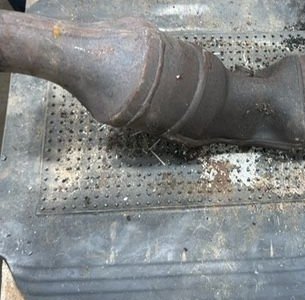
What Actually Happens to Your Catalytic Converter After You Sell It
Most converter sellers focus on one number: the payout. But few ever ask what happens between handing over that cat and getting a cheque. Understanding the assay and smelting process isn't just interesting — it directly affects whether you're getting a fair price or leaving money on the table. If you're in New Westminster or anywhere across British Columbia, knowing this process helps you ask the right questions and find the best catalytic converter price in New Westminster with confidence.
The short version: your converter goes through a precise, multi-step process to extract platinum, palladium, and rhodium — the three platinum group metals (PGMs) that give it value. Every step introduces variables. Those variables affect your payout. Here's how it all works.
What's Inside a Catalytic Converter That Makes It Worth Money
Before you can understand assaying and smelting, you need to understand what you're actually selling. A catalytic converter contains a ceramic or metalite substrate coated with a washcoat of PGMs. The substrate looks like a honeycomb and creates massive surface area for chemical reactions. The PGMs — platinum, palladium, and rhodium — are the active ingredients that convert harmful exhaust gases into less harmful ones.
These metals are rare. They're mined in South Africa, Russia, and Zimbabwe in small quantities. That scarcity drives value. Rhodium price today in particular can swing dramatically — it's the rarest of the three and historically the most volatile. A single ounce of rhodium has traded anywhere from a few hundred dollars to tens of thousands in recent market cycles. Palladium and platinum are more stable but still subject to meaningful swings tied to automotive manufacturing demand and mining output.
The weight of PGMs in a single converter is measured in troy ounces — and it's small. A typical passenger car cat might contain anywhere from 3 to 7 grams of combined PGMs. That's why assaying accuracy matters so much. A small error in measurement across a large volume of converters compounds into serious money.
How Catalytic Converter Assaying Works — Step by Step
Assaying is the process of determining exactly how much of each PGM is present in your converter. Buyers and processors can't just eyeball this. The process is scientific, and it determines the actual value of what you sold. Here's the standard flow:
- Decanning: The metal shell is cut away and the substrate — the honeycomb core — is removed. The shell itself has scrap metal value, but it's the core that contains the PGMs.
- Processing and milling: The ceramic substrate gets crushed and milled into a fine, homogenous powder. This is critical. PGMs aren't evenly distributed throughout the substrate, so grinding everything into powder ensures the sample taken for testing actually represents the whole unit.
- Sampling: A precise sample is pulled from the milled powder. This sample has to be statistically representative of the full lot. Most serious processors use automated sampling equipment to minimize human error.
- Fire assay or ICP analysis: The sample goes through one of two main analytical methods. Fire assay is the traditional method — the sample is melted with a flux and lead to collect PGMs into a bead, which is then tested. ICP (Inductively Coupled Plasma) analysis dissolves the sample in acid and passes it through a plasma torch to identify elements by their light emission. Both methods produce accurate PGM content data when done correctly.
- Results and settlement: The processor reports platinum, palladium, and rhodium content in grams per metric tonne of material. Your payout is calculated by multiplying the recovered weight of each metal by the current spot price, less a processing fee and refining charge.
This is why finding the best scrap converter prices in Canada means more than just calling one yard. The assay result — and the processor's refining terms — vary. Two buyers with identical converters can return meaningfully different payouts based on their processing agreements and how transparent they are about deductions.
The Smelting Process: Turning Powder Into Pure Metal
Once the assay confirms PGM content, smelting begins. This is where the actual metal is physically separated and refined into a usable form. The milled powder from your converter — along with material from many other converters processed in the same lot — gets combined and fed into a high-temperature furnace.
The smelting process uses temperatures above 1,400°C. The PGMs, which have high melting points, are collected into a metallic collector phase — usually iron or copper — while the ceramic waste floats off as slag. That collector phase is then further refined using chemical processes (hydrometallurgy) to separate platinum, palladium, and rhodium into individual pure metals.
This process happens at large-scale precious metal refineries. Most scrap yards and recyclers in New Westminster or elsewhere in British Columbia don't smelt in-house — they ship lots to specialized facilities in North America or Europe. The settlement your yard receives, and passes on to you, is based on the assay results from that refinery. The timeline from drop-off to final settlement is typically 30 to 90 days depending on processing volume and contract terms.
Want to track where scrap metal prices today are sitting while you wait for settlement? Check current Canadian scrap converter prices to keep a benchmark in front of you through the process.
Why Assay Accuracy Directly Affects Your Payout — and How to Protect Yourself
Here's where sellers get hurt. The assay process is only as good as the sampling. If the milling is incomplete or the sample is pulled incorrectly, the reported PGM content can be lower than actual content. Some processors benefit from under-reporting. Most reputable refineries are audited and accurate — but not every buyer your converter passes through before reaching the refinery operates with full transparency.
The gap between what a low-transparency buyer quotes you and what your converter actually contains can be significant. This is especially true for high-value cats — domestic and foreign pre-cats, exotic imports, diesel oxidation catalysts, and units from hybrid vehicles tend to carry higher PGM loads and attract the most pricing inconsistency.
A few ways to protect yourself:
- Know your converter type before you sell. Make, model, year, and engine size all affect expected PGM content. Use tools that cross-reference VINs and serial numbers to get a benchmark value before you accept any offer.
- Ask for assay-based pricing. Some buyers quote flat rates by unit type. Others offer return-on-assay deals. For high-value units, assay-based pricing typically returns more — but it also takes longer.
- Document everything. Photos, serial numbers, weights. If there's a dispute about what was delivered versus what was paid on, documentation is your only defence.
- Use competitive bids. A single buyer's quote is just their offer. It's not the market. Competition reveals the market.
This is exactly where platforms like SMASH change the outcome. Rather than calling one yard near you and hoping their number is fair, compare scrap metal bids from Canadian buyers through a structured auction process. SMASH brings vetted buyers to your inventory — cats, cores, loads — and lets competition do the work. More buyers bidding on your material means better price discovery. That's not a slogan. That's how markets work.
How SMASH Fits Into the Converter Selling Process
If you're a yard operator in New Westminster moving regular volume, or an individual seller with a few high-value cats, the SMASH platform gives you structure that a single phone call never will. You upload your inventory with photos, serial numbers, and documented weights. Vetted buyers see your lot. They bid. You see competing offers in real time.
No subscription fees. SMASH only wins when you win. The auto-invoicing and documentation tools mean your BOLs and packing lists are handled — which matters when you're dealing with buyers who need clean records for their own assay and settlement process.
You can read Canadian scrap converter pricing guides to understand what your specific unit types should be trading for before you list anything. Knowledge going in means you don't accept the first number that shows up.
The old way — one call, one quote, one buyer, guess and hope — isn't a pricing strategy. It's a coin flip. SMASH replaces the coin flip with a process.
Frequently Asked Questions
Q: How long does catalytic converter assaying and smelting take before I get paid?
Settlement timelines vary by processor and contract terms, but 30 to 90 days is typical for return-on-assay deals. Flat-rate buyers in New Westminster or elsewhere in British Columbia often pay faster — sometimes same-day — but that convenience usually comes at the cost of price accuracy.
Q: How do I know I'm getting the best catalytic converter price in New Westminster?
The only way to know your price is fair is to have multiple buyers compete for your material. A single quote is just one buyer's offer. Use a platform like SMASH to generate competitive bids, and cross-reference your unit types against current PGM spot prices before accepting anything.
Q: Does rhodium price today affect what I get paid for my catalytic converter?
Yes — directly. Rhodium content is one of the three PGMs in your converter's washcoat, and it's often the most valuable by weight. When rhodium spot prices are high, converters from vehicles known to carry higher rhodium loads — certain European makes, older trucks, performance vehicles — can pay out significantly more. Always check current PGM prices before selling.
Q: Can I sell catalytic converters in New Westminster without knowing the serial number?
You can, but you'll likely get a lower offer. Serial numbers and VINs allow buyers and platforms to accurately identify converter type and expected PGM content. Without that data, buyers apply a discount for uncertainty. Documenting your cats properly before listing them is always worth the extra few minutes.
Q: What's the difference between a flat-rate converter price and an assay-based price?
A flat-rate price is a fixed dollar amount per unit type — fast, predictable, but often conservative because the buyer is pricing in their assay risk. An assay-based price pays you based on actual recovered PGM content after smelting, which typically returns more for high-value units but takes longer to settle. For large lots or premium cats, assay-based pricing usually wins.
If you've been guessing at converter value or accepting the first quote you get, now you know why that's costing you. The assay and smelting process is precise — your pricing process should be too. Find the best Canadian scrap converter prices and get a free quote at best-scrap-converter-prices.ca. It's a simple starting point that gives you real market data before you hand anything over.
For ongoing updates on scrap metal markets, PGM prices, and industry news, follow SMASH on LinkedIn — it's where the industry conversation is happening.