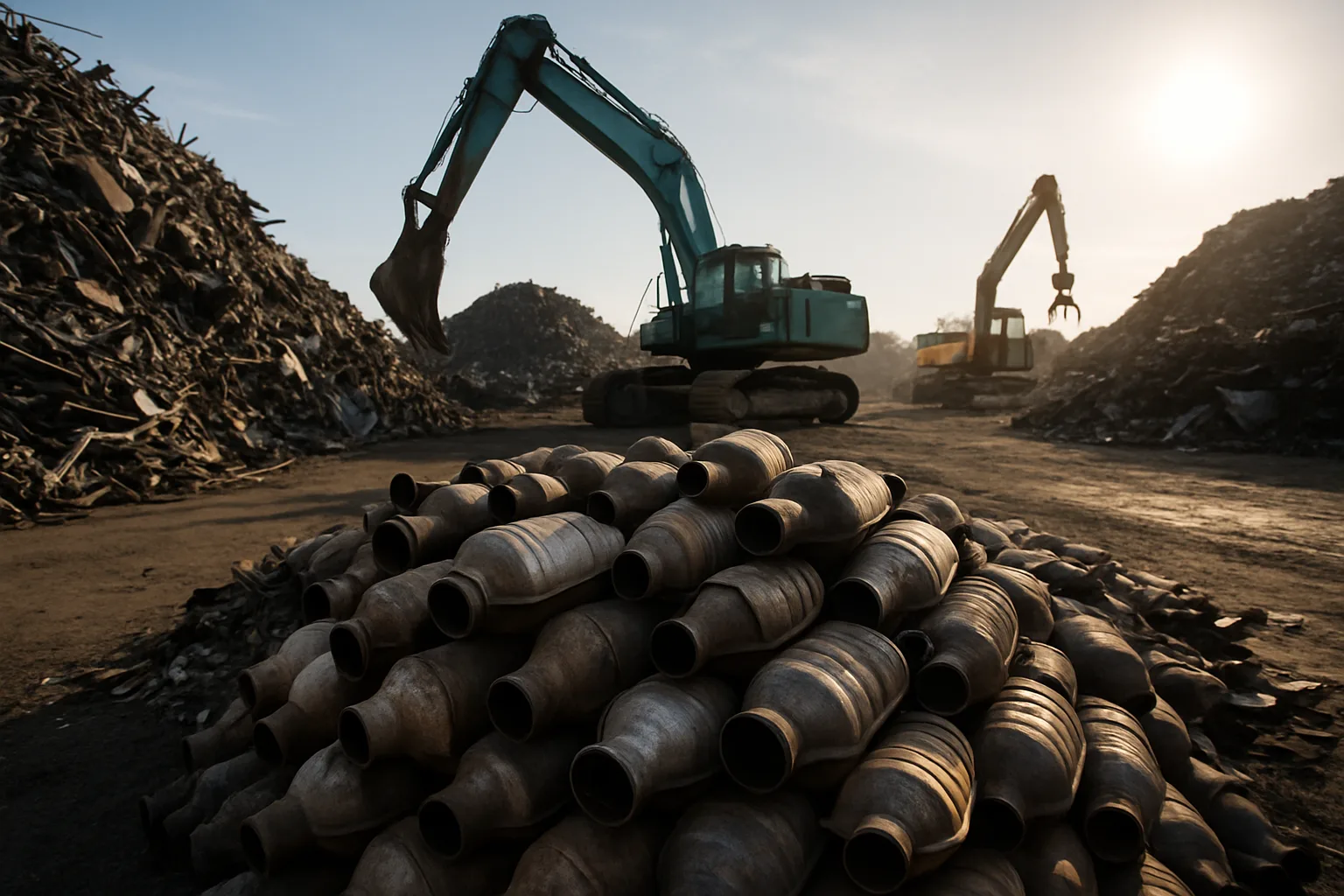
Most people pulling a catalytic converter off a scrap vehicle think about one thing: what's it worth? That's fair. But here's what doesn't get talked about enough — improper disposal of converters isn't just leaving money on the table. It's actively contaminating soil, groundwater, and communities. In Mississauga and across Ontario, the pressure to do this right is growing. Regulations are tightening. Buyers are getting more selective. And the yards doing it properly are the ones winning long-term.
If you're sitting on a load of cats, understanding the environmental side of catalytic converter recycling Mississauga isn't just good citizenship. It's good business. Here's why it matters — and how to make sure you're on the right side of it.
---What's Actually Inside a Catalytic Converter
Before you can appreciate why recycling matters, you need to understand what you're dealing with. A catalytic converter isn't just a metal shell. Inside that honeycomb substrate sits a concentrated load of platinum group metals (PGMs) — platinum, palladium, and rhodium. These are among the rarest and most valuable metals on earth. Rhodium alone has traded at multiples of gold's price in recent years. Palladium demand from automotive and industrial sectors has remained persistently high through 2026.
The quantities per converter are small — we're talking fractions of a gram per unit — but they add up fast across a full load. That's exactly why finding the best scrap converter prices in Canada requires precision: the value is real, it's measurable, and it's tied directly to live precious metal markets. If your buyer isn't referencing PGM spot prices, they're guessing. Or worse, they're guessing in their favour.
Beyond the PGMs, converter substrates also contain cerium, zirconium, and other rare earth elements used in the washcoat. None of these belong in a landfill. And none of them get recovered if the converter ends up crushed or buried.
---The Environmental Cost of Getting This Wrong
Here's the part most sellers don't hear: when catalytic converters are improperly processed — stripped, melted carelessly, or dumped — those rare metals don't just disappear. They leach. Substrate materials break down. Trace heavy metals from the converter housing and surrounding components enter soil and waterways. In a densely populated region like the Greater Toronto Area and Mississauga, that's not a theoretical problem. That's a real one.
The good news is that proper smelting and refining processes — the ones used by legitimate recycling operations — recover PGMs at high efficiency rates and contain any hazardous byproducts. The difference between a compliant operation and a backyard one isn't just regulatory paperwork. It's the difference between a closed-loop metal system and industrial contamination.
Across Europe, regulatory frameworks around PGM recovery have been tightening for years. Recycling researchers studying platinum group metals from a European perspective have documented that without structured recovery programs, significant quantities of these metals are permanently lost to landfill or uncontrolled processing each year. Canada is heading in the same direction with oversight. Ontario yards that build compliant, documented processes now won't be scrambling later.
---Why Ontario Sellers Are Under More Scrutiny in 2026
If you operate a recycling yard or deal in scrap converters in Ontario, you already know the compliance environment has shifted. Documentation requirements for converter transactions have increased. Authorities want to see that converters move through traceable, legitimate channels — from the seller through to the refiner. This isn't just about theft prevention, although that's part of it. It's about building accountability into a supply chain that historically had very little.
What does that mean for your operation? It means a buyer who can't provide proper documentation, or who doesn't track serial numbers and lot details, is becoming a liability. Not just ethically — legally. The yards winning right now are the ones who treat every converter load like it needs to be audited, because eventually it might be.
- Photo documentation: Every unit photographed before sale protects you and the buyer.
- Serial number tracking: Proves chain of custody from vehicle to transaction.
- Vetted buyers: You need to know who you're selling to, not just what price they're offering.
- Auto-invoicing: Creates a clean paper trail without manual admin work.
Platforms like SMASH are built around exactly this kind of documented, transparent transaction. When you smashrecycling.ca to list your converter inventory, you're not just finding buyers — you're building the documentation stack that protects your business.
---How Competitive Auctions Support Responsible Recycling
There's a direct line between competitive pricing and environmental outcomes. It sounds counterintuitive, so let's break it down.
When sellers get full market value for their converters, they have every incentive to route them through proper channels. When prices are suppressed — when a single local buyer lowballs you and you're not sure what else is out there — some sellers start looking for shortcuts. That's how material ends up in the wrong hands. The economics of transparency and the ethics of proper recycling point in the same direction.
SMASH runs vetted-buyer auctions on converter loads. Multiple buyers compete. Competition can help reveal the market. More buyers means better price discovery. And every transaction on the platform includes the documentation infrastructure that compliant recycling requires. You're not just getting a better price — you're getting a defensible, traceable transaction.
If you're in Mississauga or anywhere else in Ontario and you've been selling to one buyer on one phone call, you're doing both things wrong: leaving money on the table and skipping the documentation that protects you. That's the old way. It doesn't work anymore.
---Selling Catalytic Converters Online: What to Look For
If you want to sell catalytic converters online and do it right, the platform matters as much as the price. Not every online buyer is operating the same way. Some are aggregators with no real buyer competition. Some quote you a price without ever referencing PGM spot rates. Some can't produce documentation that would survive any kind of scrutiny.
Here's a practical checklist for evaluating any online converter buyer in Canada:
- Are prices tied to live PGM markets? Platinum, palladium, and rhodium move daily. A buyer quoting static prices is either hedging against you or uninformed.
- Is there real buyer competition? A single offer is not a market price. Multiple vetted buyers bidding on your load is.
- Can they handle volume and documentation? Packing lists, BOLs, photo records, serial tracking — this is table stakes for compliant transactions.
- Do they work with registered refiners? The backend of the process matters. Where does the material actually go?
- Is there an invoice trail? Auto-invoicing isn't just convenient. It's protection.
When you check current Canadian scrap converter prices, look for platforms that show you how the price is calculated — not just what the number is. Transparency at the quote stage signals transparency throughout the transaction.
To go deeper on how Canadian converter pricing works and what drives the numbers, read Canadian scrap converter pricing guides that break down the PGM factors behind every quote.
---The Long-Term Play: Building a Compliant Converter Business
The scrap converter market in 2026 is not the market of five years ago. PGM prices remain significant. Regulatory oversight is increasing. Buyers are getting more selective about where their material comes from. And the yards building transparent, documented operations right now are positioning themselves for long-term contracts and better relationships with refiners.
In Mississauga specifically — and across the broader Ontario market — the opportunity is real. The region generates significant volumes of end-of-life vehicles, industrial equipment, and fleet turnover. That's a steady converter supply. The yards capturing the most value from that supply are the ones combining competitive market access with airtight compliance practices.
The environmental argument and the business argument are the same argument: do this right, document everything, work with buyers who can compete on price and deliver on compliance, and you build something that lasts.
If you're ready to stop guessing at converter prices and start selling into real competition with full documentation, the path is straightforward. Find the best Canadian scrap converter prices and get a free quote at best-scrap-converter-prices.ca. No subscription fees. No cold-call guessing. Just a competitive, documented market for your material.
Disclaimer: Catalytic converter scrap prices fluctuate daily based on live platinum, palladium, and rhodium markets. Always verify current rates before committing to a sale.
---Frequently Asked Questions
Q: Why does catalytic converter recycling matter environmentally?
Catalytic converters contain platinum group metals and rare earth compounds that don't belong in landfills. Improper disposal allows these materials to leach into soil and groundwater. Proper recycling through certified refiners recovers these metals in a closed-loop process that prevents environmental contamination and puts valuable materials back into the supply chain.
Q: Where can I recycle catalytic converters in Mississauga?
Several scrap yards and recycling operations in and around Mississauga accept catalytic converters. For the best price and full documentation, consider using an online auction platform like SMASH that connects you with multiple vetted buyers across Ontario and North America, rather than selling locally to a single buyer at an uncompetitive rate.
Q: How do I know if I'm getting a fair price for my converters in Ontario?
Fair pricing for converters in Ontario is tied to live PGM spot prices — platinum, palladium, and rhodium. If your buyer can't tell you which metals are in your unit and what today's spot rate is, you're not getting a market price. Platforms that run competitive buyer auctions give you real price discovery rather than a single take-it-or-leave-it offer.
Q: Is it legal to sell catalytic converters online in Canada?
Yes, selling catalytic converters online in Canada is legal through legitimate channels. Documentation requirements vary by province, and Ontario has increased scrutiny on converter transactions in recent years. Working with a platform that provides serial tracking, photo documentation, and auto-invoicing ensures your transactions meet compliance standards.
Q: What precious metals are in a catalytic converter and why does it matter for pricing?
Every catalytic converter contains trace amounts of platinum, palladium, and rhodium — collectively called platinum group metals (PGMs). These metals are the primary driver of converter scrap value. Rhodium and palladium in particular have seen significant price movement in recent years, which is why converter prices change daily and why referencing live spot rates is essential to getting a fair quote.
---Stay current on scrap metal market shifts and converter pricing trends — follow SMASH on LinkedIn at linkedin.com/company/scrap-metal-auction-sales-hub for industry updates and market insights.