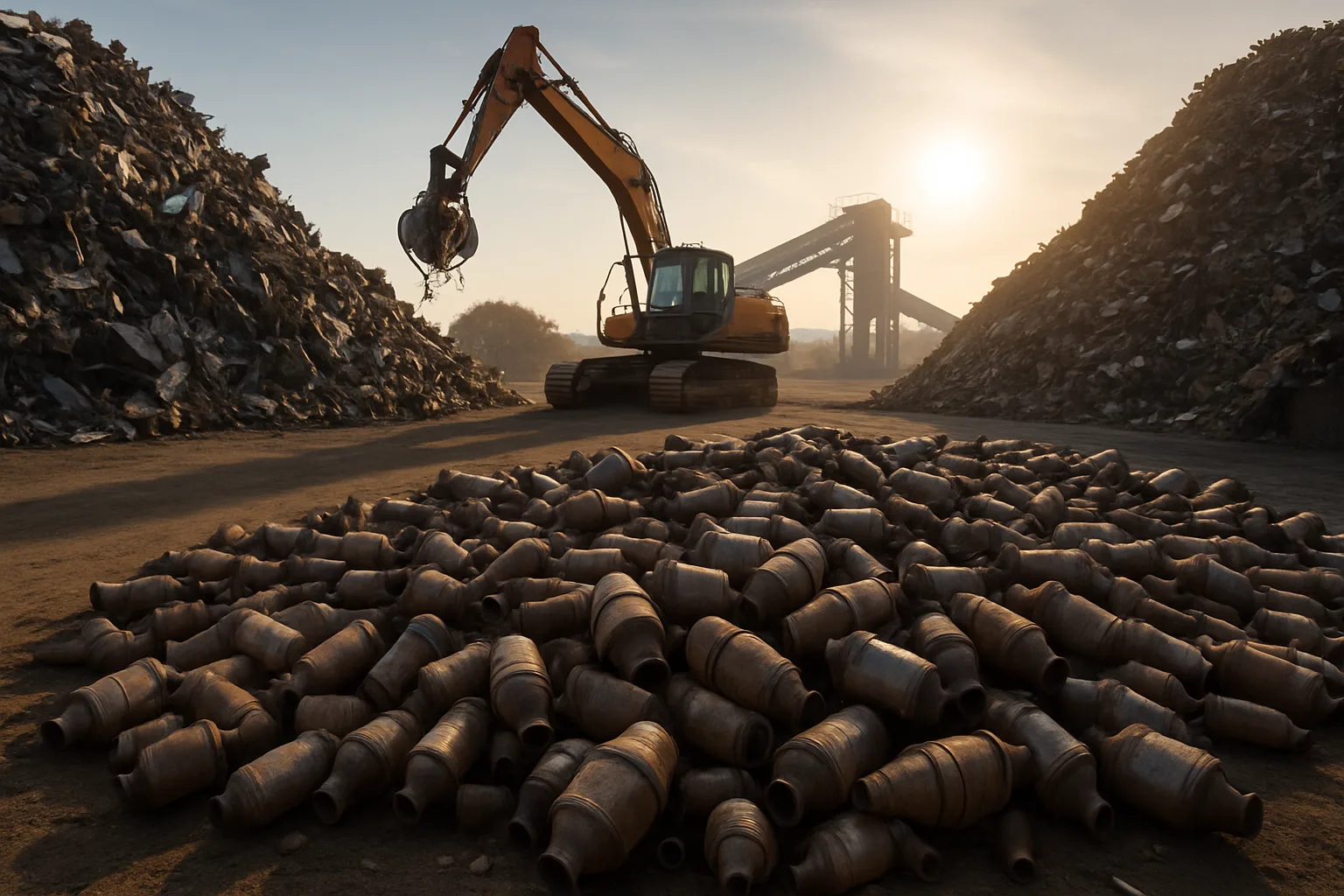
Most auto shops leave serious money on the table when they sell scrap catalytic converters. Not because the converters aren't valuable — they are. But because shops sell blind, without understanding what drives the platinum price today or how to position a bulk load to attract competitive offers. If your shop pulls 20, 50, or 100 converters a month, that gap adds up fast.
This guide is for auto shops that want to stop guessing and start selling smarter. Whether you're running a busy repair shop in Halifax or a high-volume fleet service operation anywhere in Nova Scotia, the fundamentals are the same: documentation, timing, and market access matter more than most shops realize.
---Understand What's Actually Inside Your Converters
Every catalytic converter contains a ceramic or metallic substrate coated with platinum group metals — platinum, palladium, and rhodium. These three metals are what buyers are actually paying for. The scrap value of a converter is directly tied to the spot prices of those metals on any given day, which is why tracking the platinum price today before you sell isn't optional — it's essential.
Platinum and palladium prices move independently and can swing significantly within a single week. Rhodium is notoriously volatile. A bulk load that's worth one number on Monday can be worth a meaningfully different number by Friday. Shops that batch converters for months without checking the market are rolling the dice.
- Platinum: Found in diesel converters and some older gasoline units. Prices fluctuate based on mining output, industrial demand, and currency movement.
- Palladium: Dominant in modern gasoline converters. Often the highest-value metal in the load.
- Rhodium: Present in smaller quantities but historically the most volatile of the three. Even small shifts in rhodium price change your load's value substantially.
You don't need to become a metals trader. But knowing the basics helps you recognize when a buyer's offer reflects actual market conditions — or when it doesn't. Platforms like Canada's B2B scrap recycling marketplace give you real market exposure rather than a single buyer's interpretation of what your load is worth.
---How to Prepare a Bulk Converter Load That Gets Better Offers
Presentation drives price discovery. A documented, organized load signals to buyers that you're a serious seller. It reduces their risk. And lower buyer risk translates directly into stronger bids on your material.
Here's what a well-prepared bulk load looks like:
- Sort by converter type. Group OEM, aftermarket, DPFs (diesel particulate filters), and foil units separately. Buyers price these differently. Mixing them without disclosure invites lowball offers.
- Photo-document every unit. Clear photos of the converter body, serial number or OEM stamp, and any visible damage. Photo documentation gives buyers confidence and supports accurate valuation.
- Record serial numbers. Serial tracking protects you legally and commercially. It also allows buyers to cross-reference against known databases for accurate precious metal content estimates.
- Note vehicle source where possible. Knowing a converter came from a 2019 F-150 versus a 2010 Civic tells the buyer a lot about expected PGM content. VIN lookup can help confirm this.
- Prepare a clean inventory list. Quantity, type, condition, and any notes. A proper packing list saves time in negotiation and eliminates disputes after the sale.
This level of preparation might feel like extra work upfront. It's not. It's the difference between one buyer making you a take-it-or-leave-it offer and multiple buyers competing for your load.
---Timing Your Sale Around the Platinum Price Today
Auto shops often sell converters when it's convenient — when the pile gets too big, or when cash flow gets tight. That's understandable. But shops with consistent volume have options that reactive sellers don't. You can build a strategic approach to timing without tying up your operation.
A few practical timing principles:
- Don't sell during confirmed PGM downturns unless you have to. If platinum and palladium are both trending down across the week, holding for a short window can preserve value. Check live metal markets before pulling the trigger on a large load.
- Batch your loads strategically. A load of 80 converters generates more buyer interest — and better competition — than three separate loads of 25. Bigger lots attract more serious buyers.
- Watch rhodium volatility specifically. If your load is heavy on late-model gasoline vehicles, rhodium content is significant. Rhodium can swing dramatically and relatively quickly.
- Avoid month-end dumping. Many shops rush sales at month-end for accounting reasons. That predictability works against you — it's when buyers expect rushed sellers.
The best time to sell is when market conditions are favorable and your load is well-documented. Those two things together — not just one — are what unlock real price discovery. You can find the best scrap converter prices in Canada when you approach the sale with both prepared.
---Why a Scrap Metal Auction Platform Changes the Math for Auto Shops
The old way works like this: you call one buyer, they make an offer, you take it or walk away. You have no idea if that offer reflects the market. You have no competing data. You sell based on trust and habit, not on competition.
A scrap metal auction platform changes that dynamic completely. Instead of one buyer, vetted buyers compete for your load. That competition creates price discovery — you see what the market actually thinks your converters are worth, not what a single buyer wants to pay.
For auto shops in Halifax running consistent monthly volumes, this model is particularly useful. Local buyers know that Halifax shops often don't have many alternatives. A catalytic converter buyer Halifax sourcing converters through a non-competitive channel has no incentive to bid aggressively. Bring that same load to an auction format with multiple catalytic converter buyers Nova Scotia and beyond, and the calculation changes.
SMASH connects sellers with vetted buyers across North America through a transparent auction process. Auto-invoicing, serial tracking, photo documentation, and structured inventory tools are built into the platform. You don't need to build a spreadsheet system from scratch — the infrastructure is already there. For shops looking to read Canadian scrap converter pricing guides, understanding the auction model is a logical first step.
---Legal and Compliance Basics for Bulk Converter Sales
Catalytic converter theft has driven regulatory changes across Canada and the U.S. over the past several years. As a legitimate auto shop selling converters pulled from repair and end-of-life vehicles, you already have documentation advantages that fly-by-night sellers don't. Use them.
Here's what compliance looks like for bulk auto shop sales:
- Maintain repair records. If a converter was pulled during a repair job, the invoice or work order is your provenance document. Keep these linked to your converter inventory records.
- Know your provincial requirements. Regulations around scrap metal transactions, including converter sales, vary by province. Nova Scotia sellers should confirm current requirements with their local recycling authority or a licensed dealer.
- Work with buyers who ask the right questions. A buyer who doesn't ask for documentation isn't doing you a favor — they're creating liability exposure for both parties. Vetted buyers on a structured platform have compliance requirements built in.
- Bill of Lading (BOL) documentation. For bulk shipments, proper BOLs protect both parties and are required for most commercial transport scenarios. Don't skip this step.
Legitimate documentation isn't just about compliance. It makes your load easier to sell at a better price. Buyers pay more confidently when provenance is clear. If you're searching for catalytic converter dealers near me or exploring buyers beyond your immediate market, documentation is what makes you a preferred seller rather than a question mark.
---Getting the Best Converter Price in Canada: What Auto Shops Should Do Next
You pull converters regularly. You have volume. That's leverage — but only if you use it correctly. The shops getting the best converter price in Canada aren't necessarily the ones with the biggest loads. They're the ones who document well, time thoughtfully, and sell into competitive markets rather than single-buyer relationships.
For Halifax-area shops specifically, connecting with Halifax scrap metal services that have broader market reach gives you access to buyers who aren't limited by local pricing norms. The same principle applies to shops across Nova Scotia selling into thin local markets — regional access is a ceiling until you remove it.
SMASH is built for exactly this. No subscription fees. The platform only wins when you do. If you want to check current Canadian scrap converter prices and understand what your bulk load could realistically bring in today's market, start there.
The metal in your scrap pile has real value. The platinum price today, combined with palladium and rhodium, determines what that pile is worth. Don't let a single buyer's offer be the only number you ever see.
---Frequently Asked Questions
Q: How does the platinum price today affect what I get for my scrap catalytic converters?
Catalytic converters contain platinum, palladium, and rhodium — all traded daily on global markets. Buyers base their offers on current spot prices for these metals. When platinum and palladium prices are elevated, your converters are worth more. When they drop, so does the offer. Checking live PGM prices before selling a bulk load helps you evaluate whether a buyer's offer reflects the market accurately.
Q: Is there a catalytic converter buyer in Halifax that works with auto shops selling in bulk?
Yes — several buyers operate in and around Halifax, but local options can be limited for shops looking to maximize competitive bidding. A scrap metal auction platform like SMASH connects Halifax sellers with vetted buyers across North America, which typically generates more price competition than relying on a single local buyer. This is especially useful for shops with consistent monthly converter volumes.
Q: What's the difference between OEM and aftermarket catalytic converters for scrap value?
OEM (original equipment manufacturer) converters generally contain higher concentrations of platinum group metals than aftermarket units. Buyers price them differently — sometimes significantly so. Sorting your load and identifying OEM units separately before selling helps ensure you're getting accurate valuations for each unit type rather than an averaged-down bulk price.
Q: Do I need to provide documentation when selling bulk catalytic converters in Nova Scotia?
Documentation requirements for scrap converter sales vary by province and have become stricter in recent years due to converter theft concerns. In Nova Scotia, it's good practice — and often required — to maintain repair records, work orders, or other provenance documents linking converters to legitimate vehicle service. Working with buyers who have compliance requirements built in protects both parties.
Q: How do I find the best scrap converter price in Canada for my bulk load?
The best way is to create competitive conditions: document your load well, sort by converter type, record serial numbers, and sell through a platform where multiple vetted buyers bid on your material. Single-buyer relationships rarely produce the best outcomes for sellers. Platforms like SMASH are designed to generate real price discovery rather than one-sided negotiations.
---Ready to stop guessing what your bulk load is worth? If you want to find the best Canadian scrap converter prices for your auto shop's inventory, get a free quote at best-scrap-converter-prices.ca — and see what real competition looks like.
Disclaimer: Catalytic converter scrap prices fluctuate daily based on platinum, palladium, and rhodium spot markets. Always check current rates before selling. Nothing in this article constitutes a guaranteed price offer.
Follow SMASH on LinkedIn for ongoing scrap metal market insights, pricing updates, and industry news across North America.