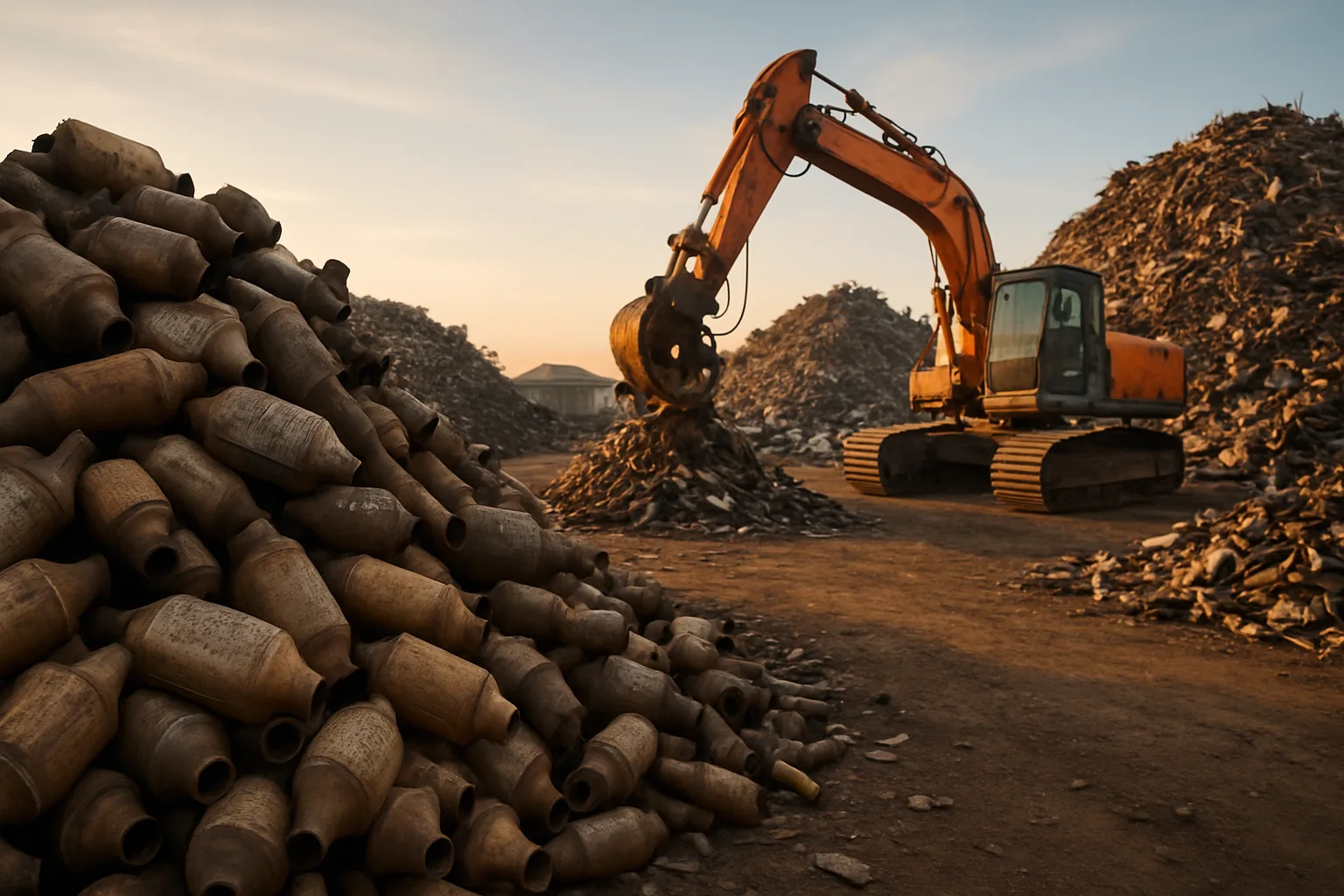
Why Proper Catalytic Converter Recycling Matters More Than Ever in 2026
Most people selling a scrap catalytic converter are thinking about one thing: what's it worth? That's fair. But there's a bigger story happening every time a converter gets recycled the right way — or the wrong way. Improper recycling of catalytic converters releases toxic compounds, strips value from the supply chain, and ultimately drives prices down for everyone. If you're a catalytic converter buyer Sydney or a seller trying to get fair value, understanding why proper recycling matters puts more money in your pocket and keeps the industry accountable.
Sydney, Nova Scotia sits at an interesting crossroads. The region has a real industrial history — Cape Breton's legacy in steel and heavy industry means scrap metal culture runs deep here. That context matters when we talk about environmental responsibility and converter recycling. Doing it right isn't just a regulatory checkbox. It's what separates yards and buyers who add value from those who just move volume.
What's Actually Inside a Catalytic Converter — and Why It's Dangerous If Mishandled
Catalytic converters contain platinum group metals (PGMs) — specifically platinum, palladium, and rhodium — embedded in a ceramic or metallic substrate called the honeycomb. These metals are what drive scrap converter prices. But that substrate also contains hazardous materials that require proper handling during processing.
When converters are crushed, cut, or processed without the right equipment or protocols, fine ceramic dust and metallic particles can become airborne. Depending on the converter's age and condition, the substrate may also contain traces of sulfur compounds, nitrogen oxides residue, and heavy metals like lead and cerium that accumulated from years of exhaust exposure. That's not a minor concern — it's an occupational health and environmental liability that regulators across Canada are paying closer attention to in 2026.
- Platinum (Pt): Used in diesel converters; highly recoverable with proper smelting
- Palladium (Pd): Dominant in gasoline converters; the highest-demand PGM in recent years
- Rhodium (Rh): Present in small quantities but commands exceptional value per troy ounce
- Ceramic substrate: Hazardous dust if improperly handled — requires contained processing
Understanding this composition is also why catalytic converter scrap price by vehicle varies so much. A late-model luxury SUV with a high-flow converter will carry far more PGM loading than an economy compact from a decade ago. The vehicle type, engine size, and manufacturer all influence how much recoverable metal sits inside — and what a responsible recycler can actually pay you for it.
The Environmental Case for Recycling PGMs Instead of Mining New Ones
Here's a number worth sitting with: mining one troy ounce of platinum from the earth requires processing roughly ten tons of ore. Recovering that same troy ounce through catalytic converter recycling requires a fraction of that energy, water, and land disruption. The environmental math on secondary PGM recovery is not even close.
Platinum group metals are among the rarest elements on earth. Primary mining is concentrated in South Africa and Russia — supply chains that carry their own geopolitical and environmental risk. Every catalytic converter that gets properly processed in Canada keeps that recovered metal in a cleaner, more stable supply chain. It reduces demand pressure on primary mining operations. And it means the PGMs already pulled from the earth get used again instead of ending up in a landfill or, worse, processed informally without emission controls.
For sellers in Sydney and across Nova Scotia, this isn't just abstract environmentalism. It's the practical reason why finding the best scrap converter prices in Canada through vetted, transparent channels matters — because buyers who process properly can justify paying more. Their cost to recover is predictable. Their output is certifiable. That confidence flows back to you as the seller.
The question of is platinum group metals a good investment also gets more interesting here. Urban mining — recovering PGMs from end-of-life vehicles — has become a genuine supply-side factor in global precious metals markets. As EV adoption grows and ICE vehicles phase out over the coming decades, the pool of recyclable converters will eventually shrink. That long-term supply dynamic is one reason PGM prices remain closely watched by metals traders worldwide.
Catalytic Converter Recycling Regulations in Canada — What's Changed in 2026
Regulation around catalytic converter recycling in Canada has tightened meaningfully over the past few years, with provincial environmental ministries and federal oversight both playing a role. In Nova Scotia, environmental compliance requirements for scrap metal processors — including handling of hazardous automotive components — have continued to evolve. Yards operating without proper containment, documentation, or licensed processing pathways face increasing scrutiny.
On the theft prevention side, regulations requiring photo documentation, seller identification, and serial tracking for converter purchases are now standard practice across most Canadian provinces. These aren't bureaucratic hurdles — they're part of what makes the market safer and more transparent for legitimate sellers. If a buyer isn't asking for documentation, that's a red flag, not a convenience.
Transparency in documentation also directly supports better scrap metal prices today. When a buyer can verify what they're purchasing — confirmed by photos, vehicle identification, and accurate condition notes — they can price more aggressively. Ambiguity in the transaction cuts the other way: buyers discount for what they can't confirm. Platforms like SMASH help sellers compare scrap metal bids from Canadian buyers in an environment where documentation is built into the process, not bolted on as an afterthought.
How Transparent Buying Channels Support Proper Recycling Outcomes
The recycling chain for a catalytic converter involves multiple steps: collection, sorting, decanning (removing the substrate from the shell), assaying (testing PGM content), and smelting. Each step requires expertise and equipment. When converters end up with buyers who skip steps or process without proper facilities, the PGM recovery rate drops and the environmental footprint goes up.
The old way of selling looked like this: one phone call, one price, no documentation, no competition. You took what was offered because you had no baseline for comparison. That's still how a lot of converters change hands — and it's bad for sellers, bad for the environment, and bad for market integrity.
SMASH was built to break that model. When you list converters through SMASH's auction format, vetted buyers compete for your load. Every bid reflects real market conditions — PGM spot prices, vehicle-specific recovery estimates, current demand. You get price discovery instead of a single guess from a single buyer. The platform's inventory tools, photo documentation requirements, and VIN lookup features mean the load is described accurately before bidding opens. That accuracy protects you and incentivizes compliant buyers to participate.
For sellers in Sydney wanting to check current Canadian scrap converter prices before committing to a buyer, having a transparent reference point is the difference between knowing you got a fair deal and hoping you did.
What Sellers in Sydney Should Know Before Selling a Catalytic Converter
If you're sitting on converters — whether from end-of-life vehicles, a shop cleaning out inventory, or a fleet turnover — a few practical points will help you get the right outcome.
- Document everything before you sell. Photos of the converter, the vehicle it came from, and any serial numbers or part markings protect you and increase buyer confidence. Better documentation can support a better price.
- Know your vehicle type. The catalytic converter scrap price by vehicle can vary significantly based on make, model, year, and engine. A half-ton pickup converter and a compact car converter are not the same load.
- Verify your buyer is processing properly. Ask about their recycling pathway. A legitimate buyer can tell you where the material goes. If they can't or won't, that's worth noting.
- Check spot prices before you sell. Palladium, platinum, and rhodium prices fluctuate daily. Selling into a low market without checking current rates costs real money. Use platforms and resources that reflect live market conditions.
- Competition beats a single quote. One buyer quoting you a price is better than nothing. Multiple vetted buyers competing for your load is better than one.
Sydney-area sellers have access to national buyers through digital platforms — geography no longer limits your options the way it once did. You don't have to accept the only local quote available when the national market is a form submission away. For deeper context on pricing and selling strategies, read Canadian scrap converter pricing guides that break down what actually drives converter values.
Disclaimer: Catalytic converter scrap prices fluctuate daily based on precious metal spot markets. Always check current rates before making selling decisions. No prices quoted in this article should be treated as a current market offer.
Recycling Right Is the Industry's Long-Term Bet
The scrap industry's credibility — and its pricing power — depends on doing this right. Converters that get recycled properly keep PGMs in circulation, reduce environmental harm, support regulatory compliance, and ultimately sustain the market that makes this work valuable. Corners cut today show up as lower prices, tighter regulations, and eroded trust tomorrow.
Whether you're a yard in Sydney processing a few converters a week or a larger operation moving volume across Nova Scotia, the fundamentals are the same: document it, verify it, sell it through a channel where buyers compete on merit. SMASH supports that model. The environment benefits. So does your bottom line.
If you're ready to stop guessing and start getting real market value for your converters, find the best scrap converter prices in Canada — get a free quote at best-scrap-converter-prices.ca and see what a competitive, transparent process actually looks like.
Frequently Asked Questions
Q: Where can I find a reliable catalytic converter buyer in Sydney, Nova Scotia?
Online platforms that connect sellers with vetted national buyers have made geography less of a barrier. Sellers in Sydney can access competitive bids from buyers across Canada without being limited to local options. Platforms like SMASH use an auction format to create real competition for your converters, which supports better price discovery than a single local quote.
Q: How does catalytic converter recycling Sydney differ from informal scrap selling?
Proper catalytic converter recycling in Sydney — and anywhere in Canada — involves documentation, accurate identification of converter type, and processing by licensed facilities that can safely handle ceramic substrate material and recover PGMs responsibly. Informal selling through uncertified channels may offer a quick transaction but often means lower recovery rates, reduced environmental accountability, and exposure to regulatory risk.
Q: What affects the scrap price of a catalytic converter by vehicle?
The primary driver is PGM loading — how much platinum, palladium, and rhodium is embedded in the converter's substrate. This varies by vehicle make, model, year, engine type, and whether the converter is OEM or aftermarket. Larger engines and higher-end vehicles generally carry more PGM content. Condition, completeness, and whether the substrate is intact also affect what a buyer will pay.
Q: Are platinum group metals a good long-term investment given the rise of EVs?
PGMs are a complex investment case in 2026. Palladium and rhodium are primarily used in gasoline catalytic converters, so long-term EV adoption does reduce that demand driver over time. However, platinum has growing applications in hydrogen fuel cells and industrial uses, which some analysts view as a demand offset. Like any commodities investment, PGMs carry significant price volatility — consult a qualified financial advisor before making investment decisions.
Q: Why do scrap metal prices today matter when selling a catalytic converter?
Catalytic converter scrap prices are calculated based on current precious metal spot prices — platinum, palladium, and rhodium trade daily on global markets. A price that was accurate last week may not reflect today's market. Checking current rates before accepting any offer ensures you're not leaving money on the table due to outdated pricing information.
---Follow SMASH on LinkedIn for industry updates, scrap metal market insights, and news affecting converter sellers across Canada.