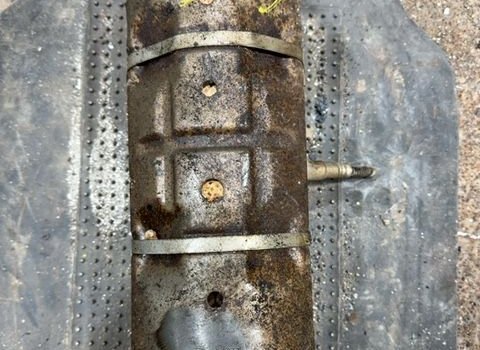
The Three Metals That Determine What Your Catalytic Converter Is Actually Worth
Most converter sellers walk away leaving money on the table. Not because they got scammed — but because they never understood what they were actually selling. The price a buyer quotes you isn't random. It's tied directly to three precious metals trading on global commodity markets right now: platinum, palladium, and rhodium. If you're doing catalytic converter recycling Toronto without understanding these metals, you're negotiating blind.
This article breaks down exactly how converter prices are calculated, what moves the market, and how to make sure you're getting a number that reflects real value — not a buyer's best guess at your ignorance.
Why Platinum, Palladium, and Rhodium Drive Scrap Converter Prices in Canada
Catalytic converters exist to reduce harmful emissions from combustion engines. Inside every converter is a ceramic or metallic substrate coated with a catalyst — and that catalyst is made from platinum group metals (PGMs). These metals trigger the chemical reactions that convert carbon monoxide, hydrocarbons, and nitrogen oxides into less harmful compounds.
When you find the best scrap converter prices in Canada, what you're really doing is recovering the value locked inside that substrate. The scrap yard doesn't want your steel shell. They want the grams of PGM coating inside it — and those grams are worth real money because PGMs are among the rarest metals on earth.
Here's a quick look at the role each metal plays:
- Platinum: Used primarily in diesel converters. Also found in many gasoline converters. Has broad industrial demand beyond automotive.
- Palladium: Dominant in gasoline converters built after the mid-1990s. Demand soared as stricter emissions regulations pushed automakers to use more of it.
- Rhodium: Used in smaller quantities but historically the most volatile of the three. Even trace amounts can significantly affect a converter's value.
The ratio of these metals varies by make, model, engine type, and converter generation. A late-model Toyota converter will have a very different PGM profile than a Ford diesel unit from a decade ago. That's why two converters that look identical on the outside can have wildly different scrap values.
How the Spot Price Affects What You Get Paid — and Why It Changes Daily
PGM prices are set on international commodity exchanges and move every trading day. Palladium hit extraordinary highs in recent years driven by tightening emissions standards globally and supply constraints from major mining regions. Rhodium has seen even more dramatic swings — from near-irrelevance to being worth multiples of gold at peak demand. Platinum has historically been the most stable of the three but still responds to shifts in diesel vehicle demand and industrial use.
When a scrap yard quotes you a price, they're working backward from today's spot price. They estimate the PGM content in your converter, apply their processing margin, and give you a number. The gap between spot price and what you actually receive depends on:
- The assay results — labs test the actual metal content after smelting. Estimates are used for upfront quotes.
- The buyer's margin — every buyer builds in a spread. Competitive buyers need less margin. Monopoly buyers take more.
- Volume and relationship — large, regular sellers often get better rates than one-time walk-ins.
- Market timing — locking in a price when PGMs are up versus waiting through a dip can mean a significant difference per unit.
This is exactly why selling to a single buyer on a phone call is a losing strategy. You're accepting one interpretation of your converter's value. Platforms like SMASH flip that dynamic by bringing multiple vetted buyers into competition — so the market sets your price, not one buyer's margin target. Find the best price for your scrap in Canada when competition works in your favour.
Converter Types Ranked: Which Units Carry the Most PGM Value
Not all converters are equal. If you're sorting through a pile of units or evaluating a load before you sell catalytic converters online or at a yard, knowing the general value tier of each type saves time and sets realistic expectations.
Here's a general ranking based on typical PGM loading — not current prices, which fluctuate daily:
- High-grade foreign converters (certain Japanese and European makes) — Dense substrates with high PGM loading. Often the most sought-after units in a mixed load.
- Large domestic truck and SUV converters — Bigger physical size often means more substrate and more total PGM content, even if loading density is moderate.
- Late-model OEM units — Newer vehicles use more efficient catalysts, so PGM loading is optimized but not always higher by weight. Check the specific part number when possible.
- Small foreign converters — Compact cars often carry converters with lighter substrate. Still worth selling, but expect lower per-unit values.
- Pre-converter/secondary converters — Often lower grade. Some buyers discount these or separate them from primary units.
- Aftermarket converters — Usually the lowest grade. Aftermarket units use less PGM coating to hit a price point. Experienced buyers identify these quickly and price them accordingly.
If you're working with Toronto scrap metal services and handling mixed loads, proper sorting by grade before you get a quote gives you more negotiating leverage. A buyer quoting a blended average on an unsorted load has every incentive to assume your average is lower than it actually is.
How to Sell Catalytic Converters in Ontario Without Getting a Low-Ball Quote
The scrap converter market in Ontario — and across Canada — has matured significantly. Buyers are more sophisticated. So are sellers. But information asymmetry still exists, and it almost always favors the buyer. Here's how to close that gap before you sell catalytic converters Ontario to anyone.
Document what you have. Photo documentation of your converters, including any visible serial numbers or part stamps, gives buyers enough information to make accurate offers. Vague descriptions produce conservative quotes. Clear photos and identifiable units produce competitive ones. SMASH's platform is built around this — inventory tools, serial tracking, and photo documentation are core features, not add-ons.
Know the difference between a quote and a contract. Some buyers quote high to win your load, then adjust after "assay results." Ask how the buyer handles price adjustments and what documentation you'll receive. A transparent transaction includes a packing list, weight confirmation, and clear invoicing.
Don't anchor on one number. If you call one buyer in Toronto and get a quote, that number becomes your reference point even if it's low. Get multiple offers before you decide. When you read Canadian scrap converter pricing guides, the consistent advice is the same: competition is the best pricing tool available to a seller.
Time your sale when possible. PGM markets are open Monday through Friday. If rhodium or palladium had a strong week, locking in Friday pricing can be advantageous. This isn't always practical for high-volume operations, but for individual sellers or smaller yards, market timing matters.
Why Selling Through an Auction Platform Changes the Equation
The old model — call your regular buyer, accept their number, move on — worked when there was no alternative. There's an alternative now. When you sell catalytic converters online through an auction-based platform, multiple vetted buyers compete for your load. That competition creates price discovery in a way that a single phone call never can.
SMASH operates exactly this way. No subscription fees. No lock-in. Buyers are vetted, so you're not handing your load to an unknown operator. Auto-invoicing handles the paperwork. And because SMASH only earns when a sale closes, the incentive is aligned with getting you a strong result — not just any result.
For sellers in Toronto and across Ontario running regular converter volume, the math is straightforward. More buyers mean more competition. More competition means tighter buyer margins and better returns for the seller. Check current Canadian scrap converter prices and see where the market sits before your next sale.
Disclaimer: Catalytic converter prices fluctuate daily based on live platinum, palladium, and rhodium spot prices. Any prices or ranges mentioned in this article are general reference points only. Always verify current rates before selling.
Frequently Asked Questions
Q: How do I know if I'm getting a fair price for my catalytic converter in Toronto?
Get multiple quotes before accepting any offer. Fair pricing reflects current PGM spot prices minus a reasonable processing margin. If a buyer can't explain how they calculated your quote, that's a red flag. Using a competitive platform like SMASH removes the guesswork by letting buyers compete for your load openly.
Q: Does the make and model of my vehicle affect the converter's scrap value?
Yes — significantly. The PGM content varies by manufacturer, engine type, and model year. Certain Japanese and European makes are known for higher-grade converters. Aftermarket replacement converters are almost always worth less than original equipment units from the same vehicle.
Q: Is it legal to sell catalytic converters in Ontario?
Yes, selling scrap catalytic converters is legal in Ontario. Regulations require proper documentation of ownership and seller identification. Reputable buyers and platforms will ask for this information — it protects both parties and keeps the transaction clean. Always sell to vetted, licensed buyers.
Q: What's the difference between selling to a local scrap yard versus selling catalytic converters online?
A local scrap yard gives you one price from one buyer. Selling online through an auction platform gives your load exposure to multiple buyers simultaneously. More competition typically means better price discovery. Online platforms also provide documentation and invoicing that protects you after the sale closes.
Q: How often do catalytic converter prices change in Canada?
PGM spot prices update every trading day. Your converter's scrap value moves with platinum, palladium, and rhodium markets globally. A converter worth a strong number on Monday could price differently by Friday depending on commodity market movement. Check current rates before you commit to a sale.
If you're ready to stop guessing and start selling based on real market data, find the best scrap converter prices in Canada at best-scrap-converter-prices.ca. Get a free quote and see what competition actually does to your bottom line.
Stay sharp on scrap metal market shifts — follow SMASH on LinkedIn for industry updates, PGM market insights, and converter pricing news across North America.