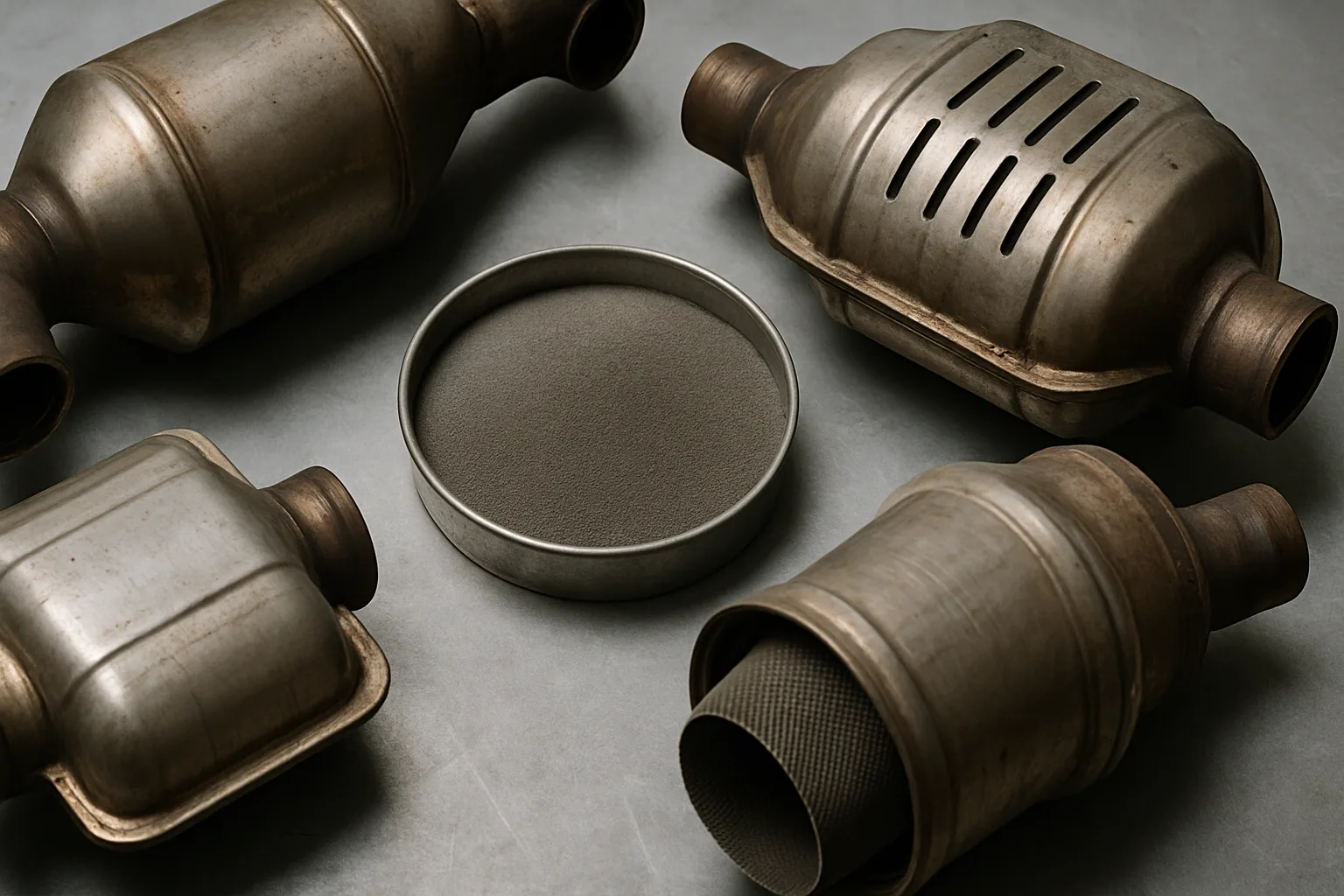
Why Bulk Converter Sales Require a Different Strategy Than Selling One-Off Units
Auto shops sitting on a bin full of spent catalytic converters face a different problem than the guy selling a single cat off a weekend project car. Bulk volume means more leverage — but only if you know how to use it. The rhodium price today is still a significant driver of converter value, and shops that treat bulk loads like individual sales are leaving real money on the table.
The core issue is price discovery. Most shops call one buyer, hear a number, and take it. That's not a sale — that's a guess. When you're moving ten, twenty, or fifty units at a time, the gap between a competitive price and a lazy one compounds fast. Getting this right starts with understanding what's actually inside those converters and how precious metal markets affect what they're worth.
Understanding OEM Catalytic Converter Value Before You Sell
Not all cats are equal — and that matters more in bulk. A mixed bin with OEMs from late-model domestic trucks sitting next to aftermarket replacements from economy vehicles will price out very differently per unit. OEM catalytic converter value tends to run higher because OEM units typically carry a richer precious metal loading of platinum, palladium, and rhodium. Knowing which units you have before you sell gives you a stronger negotiating position.
Before you quote a load, do the work on identification:
- Use the serial number or substrate code on each unit to look up the converter grade
- Separate OEM units from aftermarket (aftermarket foils are thinner, lower PGM content)
- Document make, model, and year of vehicle each cat came from where possible
- Photograph units clearly — top, bottom, and any visible substrate condition
Buyers pay more for documented loads. When you show up with a spreadsheet and photos versus an unmarked bin, you're not the same seller. Platforms like the SMASH Recycling auction platform are built around exactly this kind of documented inventory — because better documentation attracts more serious buyers and supports stronger price discovery.
How the Rhodium Price Today Affects Your Bulk Load Value
Rhodium is the wild card in catalytic converter pricing. It's the rarest of the three primary PGMs found in converters, and its price swings can be dramatic. When rhodium runs high, certain converter grades that might seem unremarkable suddenly become your most valuable units. When it pulls back, the math shifts toward palladium-heavy and platinum-heavy units.
As of this week's market recap, precious metal prices remain the single biggest variable in what your converters are worth. Checking the rhodium price today — along with platinum and palladium — before you commit to a sale is basic due diligence. Don't accept a flat-per-unit offer without understanding whether that number reflects current spot or last month's market.
Here's what to track weekly if you're accumulating inventory before a bulk sale:
- Rhodium spot price — highest volatility, biggest impact on premium grades
- Palladium spot price — dominant PGM in most gasoline engine converters
- Platinum spot price — more relevant in diesel converters and certain European OEMs
Timing your bulk sale around market conditions isn't speculation — it's inventory management. Auto shops that hold a month's worth of cats and sell on a schedule rather than on impulse tend to come out ahead over time. To stay sharp on find the best scrap converter prices in Canada and track what the market is doing in real time.
Sell Catalytic Converters Online — Why Competitive Auctions Beat Cold Calls
The old way: call your regular buyer, take whatever number they give you, load the van, done. It's fast, it's familiar, and it's probably costing you money. A single buyer has no incentive to sharpen their offer. Why would they? You called them.
When you sell catalytic converters online through a platform that pits vetted buyers against each other, the dynamic flips. Now the buyers compete for your load instead of you competing for their attention. That's not a pitch — that's how markets work. More buyers bidding on a documented load means better price discovery. Simple as that.
SMASH is built specifically for this. No subscription fees. The platform only wins when you win. For auto shops in Longueuil and across Quebec that have been relying on a single local contact for converter sales, the difference in realized price can be significant — especially on higher-grade OEM units where the spread between a casual offer and a competitive bid is widest. You can check current Canadian scrap converter prices to see what the market looks like before you list a load.
Practical Tips for Auto Shops Moving Bulk Converter Inventory
Selling bulk cats well is about process. Here's what separates shops that consistently get strong prices from shops that wonder why their competitor down the road always seems to come out ahead.
- Batch your inventory before selling. Selling five units at a time is less efficient than accumulating twenty to thirty and selling a documented lot. Buyers value volume — it reduces their per-unit handling cost, and they'll reflect that in their offer.
- Document everything before the load leaves your shop. Serial numbers, photos, vehicle source data where you have it. This isn't just good practice for price — it's important for compliance. Ontario and Quebec have both tightened documentation requirements for converter transactions in recent years, and proper records protect your shop.
- Separate your grades. Mixing high-value OEM units from late-model trucks with low-yield aftermarket units from economy cars drags your average down. Grade your load before you sell it.
- Know your weight. Buyers will weigh the load. Knowing your own numbers before the sale prevents surprises and lets you cross-check offers intelligently.
- Don't sell on a down day without a reason. If you have the flexibility to hold inventory for a week or two, watch the market. Selling when palladium or rhodium is trending down because you need the cash immediately is sometimes unavoidable — but it should be a conscious decision, not a default.
- Use a platform that tracks your history. VIN lookup, serial tracking, and photo documentation aren't just for one-off sales. For a busy auto shop in Longueuil or anywhere across Quebec, having a documented transaction history makes audits easier and gives you leverage when negotiating future loads.
For shops newer to selling catalytic converter scrap metal in volume, read Canadian scrap converter pricing guides to get grounded in how grading and pricing actually work before your first bulk sale.
Selling Catalytic Converters in Quebec — What Local Shops Need to Know
Quebec has specific regulatory context around scrap metal transactions, including record-keeping obligations for sellers and buyers. If your shop operates in Longueuil or elsewhere in the province, staying current with provincial requirements for converter sales isn't optional — and using a platform that handles documentation automatically reduces your compliance burden significantly.
SMASH handles auto-invoicing and documentation as part of the transaction process. For shops selling converters as part of a broader scrap metal operation, that kind of paper trail matters. The last thing a busy auto shop needs is a record-keeping gap creating headaches later.
Quebec shops also benefit from the broader buyer network that an online auction platform opens up. When you limit yourself to catalytic converter scrap price near me searches and local phone calls, you're capped at whatever your local market looks like. Opening the load to buyers across North America expands your competitive pool — and that competition is what actually determines market price, not what any single buyer tells you.
Whether you're running a multi-bay shop in Longueuil, a dealership service department in Montreal, or an independent garage anywhere in Quebec, the mechanics of getting the best price on bulk converter lots are the same: document well, understand the PGM market, and sell into competition rather than to a single contact.
Frequently Asked Questions
Q: How does the rhodium price today affect what I get for my bulk converter load?
Rhodium is one of three primary precious metals extracted from catalytic converters, alongside platinum and palladium. On high-value OEM units — particularly from larger displacement gasoline engines — rhodium content can significantly influence per-unit pricing. When rhodium spot prices are elevated, top-grade converters are worth materially more. Checking current PGM spot prices before committing to a bulk sale is basic due diligence, not speculation.
Q: What's the best way to sell catalytic converters in Longueuil, Quebec?
Local buyers are a starting point, but they're rarely your best option for bulk lots. Selling through an online auction platform like SMASH connects your documented load with vetted buyers across North America, which creates real price competition rather than a take-it-or-leave-it local offer. For shops in Longueuil and across Quebec, this expanded buyer pool can meaningfully improve realized prices — especially on higher-grade OEM units.
Q: How do I determine OEM catalytic converter value versus aftermarket value?
OEM converters carry higher precious metal loadings than aftermarket replacement units — that's the core reason OEM catalytic converter value runs higher. Serial numbers or substrate codes on each unit can be cross-referenced with grading databases to identify the specific grade. Separating your OEM and aftermarket units before selling a bulk load prevents your high-value units from being averaged down with lower-yield aftermarket cats.
Q: Is there a minimum quantity to sell catalytic converters online through SMASH?
SMASH is built for volume sellers like auto shops, dealerships, and recycling yards, but the platform isn't limited to only large lots. Reach out directly to discuss what makes sense for your inventory level. Well-documented loads — regardless of exact quantity — attract more buyer interest and support stronger price discovery.
Q: What documentation do auto shops in Quebec need to keep for converter sales?
Quebec, like other provinces, has record-keeping requirements around scrap metal transactions that apply to converter sales. At minimum, shops should document serial numbers, vehicle source information where available, and transaction records for each sale. Using a platform that handles auto-invoicing and serial tracking — like SMASH — simplifies compliance and gives you a reliable paper trail without extra administrative work.
If your shop has been calling the same buyer for years and accepting whatever number comes back, it's worth asking whether that's a strategy or just a habit. The SMASH platform is built to answer that question — documented inventory, vetted buyers, competitive auction format, and no subscription fees. When you're ready to find out what your bulk converter loads are actually worth, find the best scrap converter prices in Canada and get a free quote at best-scrap-converter-prices.ca.
Disclaimer: Catalytic converter scrap prices fluctuate based on daily precious metal spot markets. All pricing information in this article is directional only. Always verify current rates before committing to a sale.
Stay current on scrap metal market movements and converter pricing — follow SMASH on LinkedIn for weekly industry updates and North American market insights.