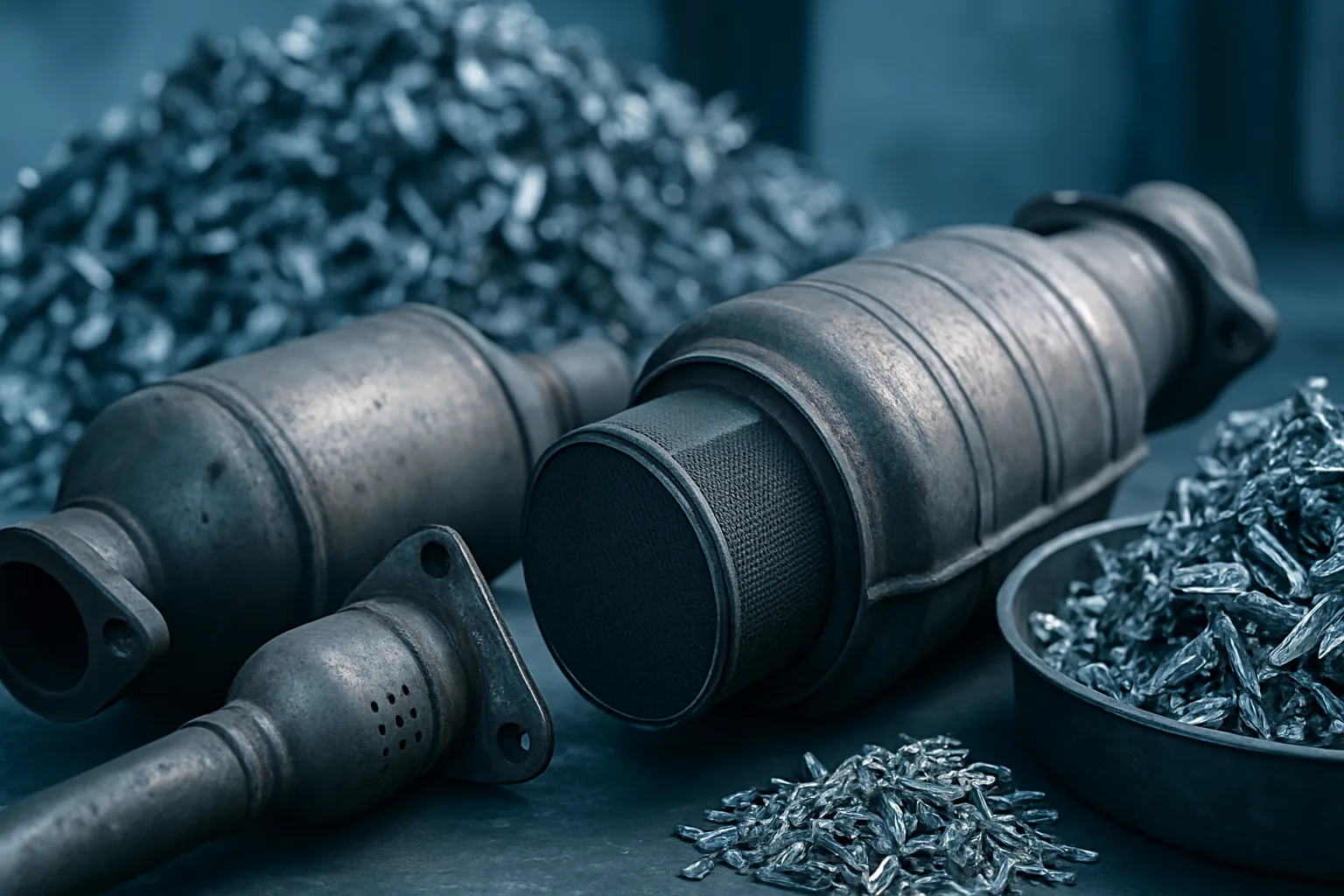
From Exhaust Pipe to Precious Metal: What Really Happens to a Scrap Catalytic Converter
Most people pulling a catalytic converter off an old vehicle have no idea what they're actually holding. It's not just a chunk of metal — it's a small canister carrying platinum, palladium, and rhodium. These are some of the most valuable materials on earth. Yet millions of converters get sold blind, with no documentation and no competition, for whatever one buyer decides to offer that day. That gap between what sellers get and what converters are worth is exactly why catalytic converter scrap value matters so much — and why understanding the full lifecycle of a converter changes how you should be selling.
This isn't a generic explainer. It's a walkthrough of the real journey a catalytic converter takes from the moment it leaves a vehicle to the moment those precious metals hit a refinery — and what that journey means for your bottom line in Regina, Saskatchewan, and across Canada.
Stage One: Removal and Initial Assessment
The lifecycle starts at the vehicle. Whether it's a fleet disposal, an insurance write-off, or an end-of-life passenger car coming through your yard, the converter gets pulled during dismantling. This is where most sellers make their first mistake: treating all converters the same.
A converter from a late-model Toyota Prius carries a very different precious metal load than one from a 2012 Ford F-150. Hybrid vehicles often run higher palladium and platinum concentrations because their engines operate in ways that demand more catalyst activity. Diesel converters lean heavier on platinum. Older domestic vehicles tend to carry more rhodium-loaded substrate. These differences aren't cosmetic — they translate directly into dollars per unit when a refinery assays the material.
Smart yards in Regina are already doing the work at this stage. They're using VIN lookups and serial number identification to sort converters before they even get quoted. That data shapes everything downstream. If you skip this step, you're negotiating blind, and buyers know it.
Stage Two: Documentation and Inventory — Where Catalytic Converter Scrap Price in Canada Gets Set
This is the stage most sellers in Saskatchewan skip entirely. They pull converters, throw them in a bin, and call their usual buyer. That buyer offers a flat rate or a per-unit price based on what they think the seller knows. Without documentation, there's no leverage and no way to verify whether the price reflects actual market conditions or just the buyer's margin.
Documentation changes the dynamic. When you photograph converters, log serial numbers, note the vehicle make, model, and year, and record substrate type, you're building a case file that buyers have to respond to. A vetted buyer looking at a well-documented lot of 40 converters from known vehicle sources isn't just guessing — they're pricing against real data. That data forces competitive pricing.
Platforms like SMASH are built around exactly this discipline. Inventory tools, photo documentation, and serial tracking mean that when a lot goes to auction, buyers are bidding on something they can evaluate — not just taking a flyer on an unknown pile. Check current Canadian scrap converter prices before you list anything, so you walk into negotiations with context, not just hope.
- Photograph every unit — top, bottom, and serial number visible
- Record the VIN of the source vehicle where available
- Note substrate condition — rattles, cracks, or contamination reduce value
- Sort by converter type — domestic, foreign, large GM, small foreign, diesel
- Track weight — buyers pricing by unit still want weight for verification
This process takes time upfront. It pays back at the auction stage — every time.
Stage Three: The Auction — How Competition Reveals True Catalytic Converter Scrap Value
Here's where the old way breaks down completely. You call one buyer. They offer a price. You accept or push back. Without knowing what the palladium price today is, what rhodium is trading at, or what three other buyers would have offered, you have no real reference point. You're negotiating in the dark against someone with full market visibility.
The SMASH model runs converters through a competitive auction format with vetted buyers across North America. Multiple buyers see the same documented lot and bid against each other. That competition is what actually reveals market value — not what one buyer decided to tell you on a Tuesday afternoon. More buyers means better price discovery. That's not a marketing line; it's how competitive markets work.
For yards in Regina and across Saskatchewan, this matters especially. You're not in Vancouver or Toronto. You don't have fifteen buyers calling you every week. Geographic reach has historically been a disadvantage for prairie yards. The ability to find the best price for your scrap in Canada without being limited to whoever happens to operate within driving distance changes the math entirely. Selling online means your lot competes in the same market as a yard in any major hub — regardless of your postal code.
This is also where palladium price today becomes a live variable instead of a footnote. Precious metal markets move daily. A well-timed auction against a strong palladium market can meaningfully change what a lot is worth. Understanding that timing — and having buyers who price against live spot — is a structural advantage that most single-buyer relationships don't offer.
Stage Four: Transport, Chain of Custody, and Why BOLs Matter
A catalytic converter lot moves from your yard to a processor. This stage has two risks: loss and dispute. Without proper bills of lading and documented chain of custody, you have limited recourse if a load comes in short or if there's a dispute about what was shipped versus what was received.
This is especially relevant in the Canadian regulatory environment, where provinces are tightening documentation requirements around converter sales. Saskatchewan yards selling converters need to maintain clean records — not just for compliance, but because refiners and processors increasingly require it before they'll engage. A load with no paperwork is a liability. A load with complete BOLs, packing lists, and photo documentation is a clean transaction.
SMASH builds auto-invoicing and documentation into the process. Nothing ships without a paper trail. For Regina yards looking to Regina scrap metal services, that documentation infrastructure is already in place — you don't have to build it yourself.
Stage Five: Refining and Precious Metal Recovery
Once converters reach a licensed processor or refinery, the substrate — that honeycomb ceramic or metallic core inside the converter body — gets sampled and assayed. The refinery measures the actual concentration of platinum, palladium, and rhodium present. This is the ground truth that all upstream pricing is supposed to reflect.
The gap between what a seller gets at the yard and what the refinery recovers is where margin lives in this industry. Refiners have costs — processing, smelting, sampling, settlement. But informed sellers who document well and sell into competitive markets close that gap significantly compared to sellers who guess and accept the first offer.
Precious metal recovery rates depend on substrate condition. A cracked or contaminated substrate loses recovery value. A clean, intact substrate from a well-maintained vehicle recovers more. This is another reason why the documentation stage matters — condition affects final value, and buyers who can see that condition clearly can price it more accurately. Read Canadian scrap converter pricing guides to understand how substrate condition affects what you'll receive at settlement.
The final settlement from a refinery typically comes in grams of platinum, palladium, and rhodium recovered, priced against spot at the time of settlement. That settlement is what backs every upstream price in the chain. When you understand that, you understand why catalytic converter scrap price Canada isn't a fixed number — it's a derivative of global precious metal markets, your converter grade, and your documentation quality.
What This Lifecycle Means If You're Selling in Regina
Regina yards have access to the same precious metal markets as anyone else in North America. The substrate inside a converter doesn't care where it was removed. Palladium recovered in Saskatchewan is the same palladium recovered in Chicago or Los Angeles. The difference is in the selling process — and that's entirely within your control.
If you're still relying on a single local buyer with no documentation and no competition, you're leaving the discovery stage of this lifecycle to chance. That's the stage that sets your price. Platforms like SMASH give you the tools to document properly, reach vetted buyers across the continent, and run a competitive process — without a subscription fee. No win for you means no win for SMASH. That alignment matters.
Whether you're processing a handful of units per month or moving significant volume, the lifecycle approach applies. Document what you have. Create competition for it. Settle against real market data. That's how you close the gap between what you're getting and what your converters are actually worth.
Ready to stop guessing? Find the best scrap converter prices in Canada — get a free quote and see what your documented lot is actually worth in today's market.
Disclaimer: Precious metal prices fluctuate daily. All converter values are subject to current palladium, platinum, and rhodium spot prices at the time of settlement. Always verify current rates before finalizing any sale.
Frequently Asked Questions
Q: What determines the scrap value of a catalytic converter in Canada?
Catalytic converter scrap value in Canada is driven by three main factors: the concentration of platinum, palladium, and rhodium in the substrate; the condition of the substrate (cracked or contaminated units recover less); and current precious metal spot prices. Vehicle make, model, and year also matter significantly — hybrid and foreign vehicles often carry higher precious metal loads than older domestic units.
Q: How do I know if I'm getting a fair catalytic converter scrap price in Canada?
Fair pricing comes from competition and documentation. If you're selling to a single buyer with no documentation and no competing offers, you have no way to verify whether the price reflects actual market conditions. Using an auction-based platform like SMASH, and checking current market references at best-scrap-converter-prices.ca, gives you the context to evaluate any offer you receive.
Q: Where can I sell catalytic converters in Saskatchewan or Regina?
Local yards in Regina and across Saskatchewan will buy converters, but geographic limitations can restrict your buyer pool. Online platforms let you reach vetted buyers across North America, which typically means more competitive pricing regardless of your location in Saskatchewan. Selling scrap metal online removes the constraint of who happens to be in your market.
Q: How does palladium price today affect what I get for my converters?
Palladium is one of the primary precious metals recovered from catalytic converters, and its spot price directly affects settlement values. When palladium prices rise, converters carrying significant palladium content are worth more. Buyers pricing against live spot will reflect those movements — which is why timing an auction to current market conditions can make a real difference to your final settlement.
Q: Do I need documentation to sell catalytic converters in Saskatchewan?
Saskatchewan, like other Canadian provinces, is increasingly requiring documentation for converter sales — including source vehicle information, seller identification, and transaction records. Beyond regulatory compliance, proper documentation (photos, serial numbers, VIN lookups) also improves buyer confidence and can result in better pricing when converters are sold through a competitive auction process.
Follow SMASH on LinkedIn for ongoing scrap metal market updates, converter pricing insights, and industry news across Canada.
```