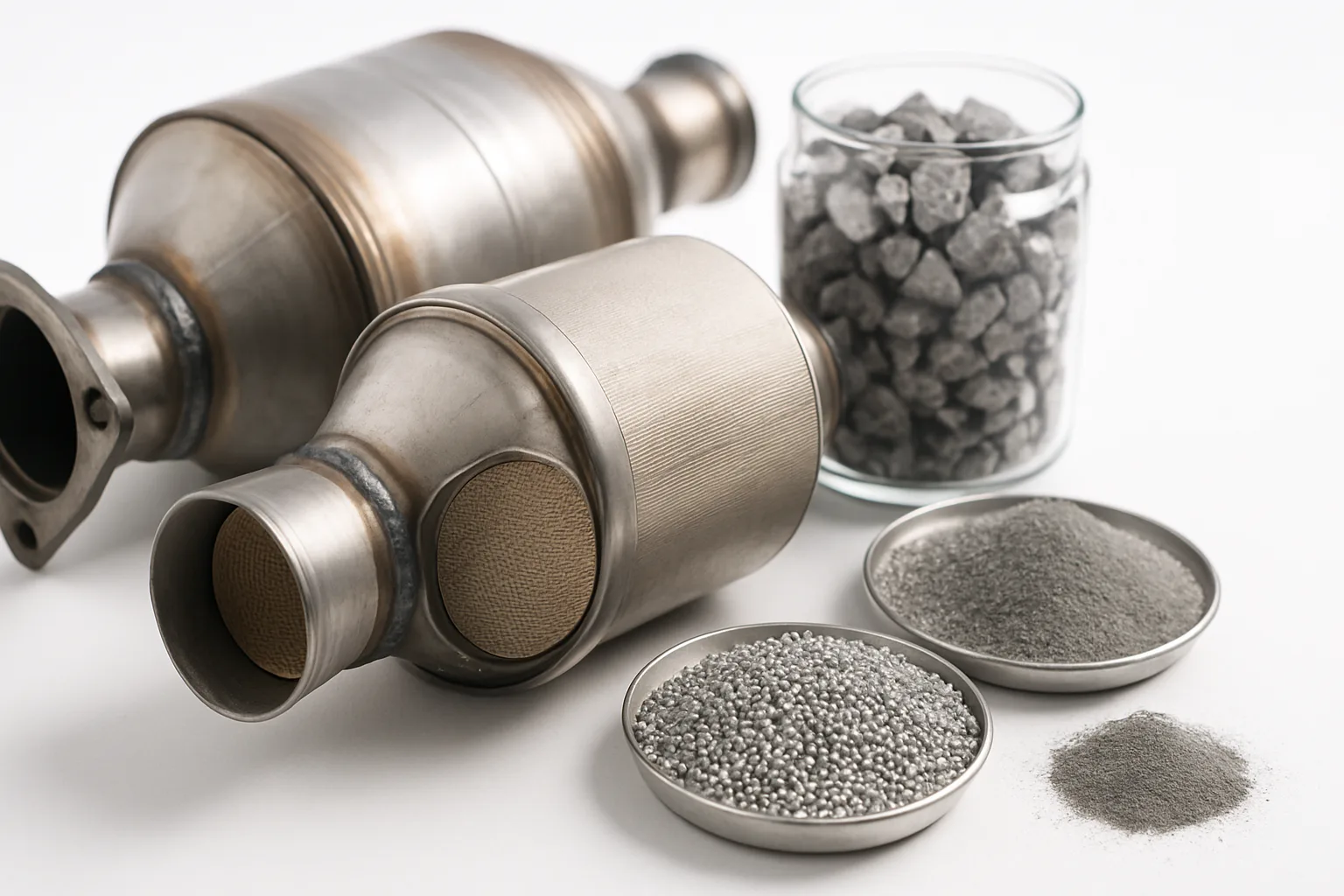
Why Platinum, Palladium, and Rhodium Prices Directly Determine Your OEM Catalytic Converter Value
Most converter sellers focus on the wrong number. They watch scrap metal prices at the yard gate and wonder why their payout feels disconnected from the headlines. Here's what's actually happening: your OEM catalytic converter value is set in Zurich, London, and New York — not at the recycler's counter. The precious metals locked inside your cats trade on global commodity exchanges 24 hours a day, and every swing moves your payout.
If you're selling converters in Calgary or anywhere else in Alberta, understanding this connection isn't optional anymore. It's the difference between leaving money on the table and getting a price that actually reflects the market.
The Three Metals That Control Catalytic Converter Prices Today
Every catalytic converter contains a washcoat loaded with platinum group metals (PGMs) — specifically platinum, palladium, and rhodium. These aren't trace amounts. A single OEM converter from a late-model truck can carry enough recoverable PGM content to make it worth hundreds of dollars at current market rates. The exact mix depends on the make, model, and engine type.
Here's how each metal plays a role in setting catalytic converter prices today:
- Platinum (Pt): Historically the most valuable of the three, platinum is dominant in diesel converters. Global supply is concentrated in South Africa and Russia, meaning geopolitical disruption creates immediate price volatility.
- Palladium (Pd): Palladium surged dramatically in the early 2020s driven by tight supply and strong gasoline engine demand. It remains a key driver of value in most North American OEM converters.
- Rhodium (Rh): Rhodium is the wildcard. It trades in thin markets with limited global supply, which means prices can spike or crash faster than platinum or palladium. Even small quantities in a converter significantly affect total recovery value.
When any one of these metals moves by even 5–10%, the value of your load shifts in real time. A recycler quoting you a flat per-unit price without referencing current PGM spot rates is either guessing or protecting their own margin. Neither outcome is good for you.
How Global Supply Chains Set the Floor on Converter Scrap Value in Canada
The PGM market is genuinely global. Mining output from South Africa accounts for a dominant share of both platinum and rhodium supply worldwide. Russian palladium production adds another layer of geopolitical sensitivity. When mines flood, strikes happen, or export regulations tighten — the market reacts within hours.
For sellers trying to find the best scrap converter prices in Canada, this matters because Canadian recyclers price their bids against the same London Platinum and Palladium Market (LPPM) spot fixes that large smelters and refiners use internationally. The margin you leave on the table isn't theoretical — it's priced in real metal you surrendered for nothing.
There are additional layers to track:
- Refinery capacity and backlogs: When processing demand exceeds capacity, refiners pay more to secure inventory. This pushes recycler bids higher.
- Currency exchange rates: PGMs are priced in USD globally. The CAD/USD exchange rate directly affects what Canadian buyers can pay in Canadian dollars — a strong USD means lower effective CAD payouts, all else being equal.
- Automotive production cycles: New vehicle output drives converter demand from manufacturers, which competes with recycled PGM supply. High vehicle production can tighten recycled PGM markets.
- Electric vehicle adoption rate: EVs don't use catalytic converters. As EV penetration grows, the long-term supply of end-of-life converters shifts. For now, ICE vehicles still dominate — but it's a factor smart buyers watch closely.
OEM vs. Aftermarket: Why the Label Changes Your Price More Than You Think
Not all converters are equal, and the market prices them very differently. OEM catalytic converter value consistently outperforms aftermarket units because original equipment converters are engineered with higher PGM loadings. Automakers specify precise metal concentrations to meet emissions targets — and they don't cut corners on loading because warranty liability and regulatory compliance demand performance.
Aftermarket converters, on the other hand, use lower PGM concentrations by design. They're cheaper to manufacture, meet minimum emissions thresholds, and carry a fraction of the recoverable metal value. Selling a load of mixed OEM and aftermarket units without separating them means your OEM value subsidizes the lower-grade units in the average.
When you check current Canadian scrap converter prices, always distinguish your units by type. Proper documentation and categorization — photos, serial numbers, VIN-linked records where applicable — gives buyers the confidence to bid higher. Platforms like SMASH support this through serial tracking and photo documentation built into the listing process, so your inventory speaks for itself before the first bid comes in.
Scrap Metal Inventory Management: The Hidden Lever on Your Payout
Here's a comparison most recyclers don't talk about openly: a yard with documented, categorized converter inventory consistently receives higher bids than a yard selling the same units in an unsorted pile. Buyers price uncertainty into their offers. Give them certainty and they'll pay for it.
Strong scrap metal inventory management practices directly affect your converter payout in several ways:
- Sorted by type: Separating OEM from aftermarket, diesel from gasoline, and high-value makes (certain European and North American trucks command premium prices) lets buyers evaluate accurately rather than discount for unknowns.
- Photo documentation: Clear photos of converters — both ends, visible serial numbers — reduce buyer risk. Lower risk means higher bids.
- Serial and VIN tracking: Regulatory requirements around converter documentation are tightening across North America. Proper records protect you legally and increase buyer confidence simultaneously.
- Timing your sale: Selling into a rising PGM market versus a falling one is not luck — it's data. Tracking spot prices and understanding market cycles lets you hold inventory strategically when the math supports it.
For Calgary yards and Alberta recyclers managing significant converter volume, the administrative side of this used to mean spreadsheets, phone calls, and manual reconciliation. That's changed. A SMASH scrap metal auction listing workflow handles documentation, buyer vetting, and competitive bidding in one place — replacing the one-call, one-price model with actual market competition.
To see how this applies locally, explore available Calgary scrap metal services and compare what a documented, competitive sale looks like versus a standard yard drop-off.
Why Competitive Auctions Beat Single-Buyer Quotes for Converter Loads
The old model is straightforward: you call your buyer, they give you a price, you take it or leave it. There's no reference point, no competing offer, and no way to know if the number reflects today's PGM market or last week's. Most sellers take the number.
The SMASH scrap metal auction model puts multiple vetted buyers against each other on documented inventory. Competition reveals the market. More buyers means better price discovery — not a guaranteed higher number on every load, but a price you can actually trust reflects current conditions.
For sellers in Calgary and across Alberta, this matters more than it might in major U.S. markets. Buyers in Canada have thinner local competition in some regions. Without a transparent auction process, a single-buyer quote can diverge significantly from where the market actually sits. You don't know what you don't know — until you run the competition.
There are no subscription fees with SMASH. The model only works when the seller wins. That alignment matters when you're deciding where to list your next load of cats.
You can also read Canadian scrap converter pricing guides to build your market knowledge before you list — understanding seasonal trends, PGM cycles, and documentation best practices before you sell is always the better position.
How to Read the Market Before You Sell Your Next Converter Load
Timing a converter sale perfectly is impossible. But selling without any market awareness is just giving away margin. Here's a practical framework for how to approach the market in 2026:
- Track daily PGM spot prices. Platinum, palladium, and rhodium quotes are publicly available from the LPPM and major commodities data providers. Check them before you get a quote, not after.
- Understand the CAD/USD exchange rate. If the Canadian dollar weakens against the USD, your CAD payout from a fixed USD-denominated PGM price drops. Factor this in when evaluating quotes.
- Know your units before you list them. OEM, aftermarket, diesel, gas, high-grade makes — sort before you sell. This isn't extra work; it's extra money.
- Use a vetted buyer network. Single-buyer quotes are pricing black boxes. Competitive bids from multiple qualified buyers give you actual market information.
- Document everything. Photos, serials, weights. Not just for better bids — for regulatory compliance that's only going to get stricter.
Whether you're running a high-volume recycling yard in Calgary or managing a smaller Alberta operation with converter inventory building up, the approach is the same: document well, sell competitively, and track the metals that actually set your price. To get started, get competitive bids for your scrap in Canada and see what a documented auction process returns versus a one-call quote.
When you're ready to move your next load, the smartest first step is to find the best Canadian scrap converter prices — get a free quote at best-scrap-converter-prices.ca and find out what your converters are actually worth in today's market.
Disclaimer: Catalytic converter prices fluctuate daily based on platinum, palladium, and rhodium spot markets, exchange rates, and regional demand. Always verify current rates before selling.
Frequently Asked Questions
Q: What makes OEM catalytic converter value higher than aftermarket units?
OEM converters are manufactured to automaker specifications, which require higher platinum group metal (PGM) loadings to meet emissions performance and warranty standards. Aftermarket converters use lower PGM concentrations to reduce manufacturing costs. This means the recoverable metal value from an OEM unit is consistently higher than from an aftermarket replacement, often significantly so depending on the vehicle make and model.
Q: How do global precious metal prices affect what I get paid for converters in Calgary?
Canadian recyclers and buyers price converter bids against international PGM spot markets — primarily platinum, palladium, and rhodium prices set on exchanges like the LPPM. When spot prices rise, competitive bids in Calgary should rise with them. The CAD/USD exchange rate adds another layer: a weaker Canadian dollar reduces effective CAD payouts even when USD-denominated metal prices hold steady.
Q: How often do catalytic converter recycling prices change?
PGM spot prices update continuously during global trading hours, and recycler bids typically reflect these movements on a daily or weekly basis. Rhodium in particular can move sharply in short periods due to thin market liquidity. Checking catalytic converter prices today before you sell — rather than relying on a quote from earlier in the week — can make a real difference on large loads.
Q: What documentation do I need to sell scrap converters in Alberta?
Alberta, like most Canadian provinces, has regulations around the sale of catalytic converters to deter theft and ensure traceability. Sellers are typically required to provide identification and transaction records. Beyond legal minimums, good documentation — photos, serial numbers, unit categorization — also improves your price by reducing buyer risk and supporting competitive bidding.
Q: Why should I use a SMASH scrap metal auction instead of calling a local buyer directly?
A single buyer quote gives you one price with no reference point. A SMASH auction puts vetted buyers in competition on your documented load, which means price discovery based on actual market conditions rather than one buyer's margin. There are no subscription fees — SMASH only wins when you do, making it a straightforward choice for yards that want to know their converters are selling at a competitive price.
Follow SMASH on LinkedIn for scrap metal market updates, PGM price insights, and industry news relevant to recyclers across North America.