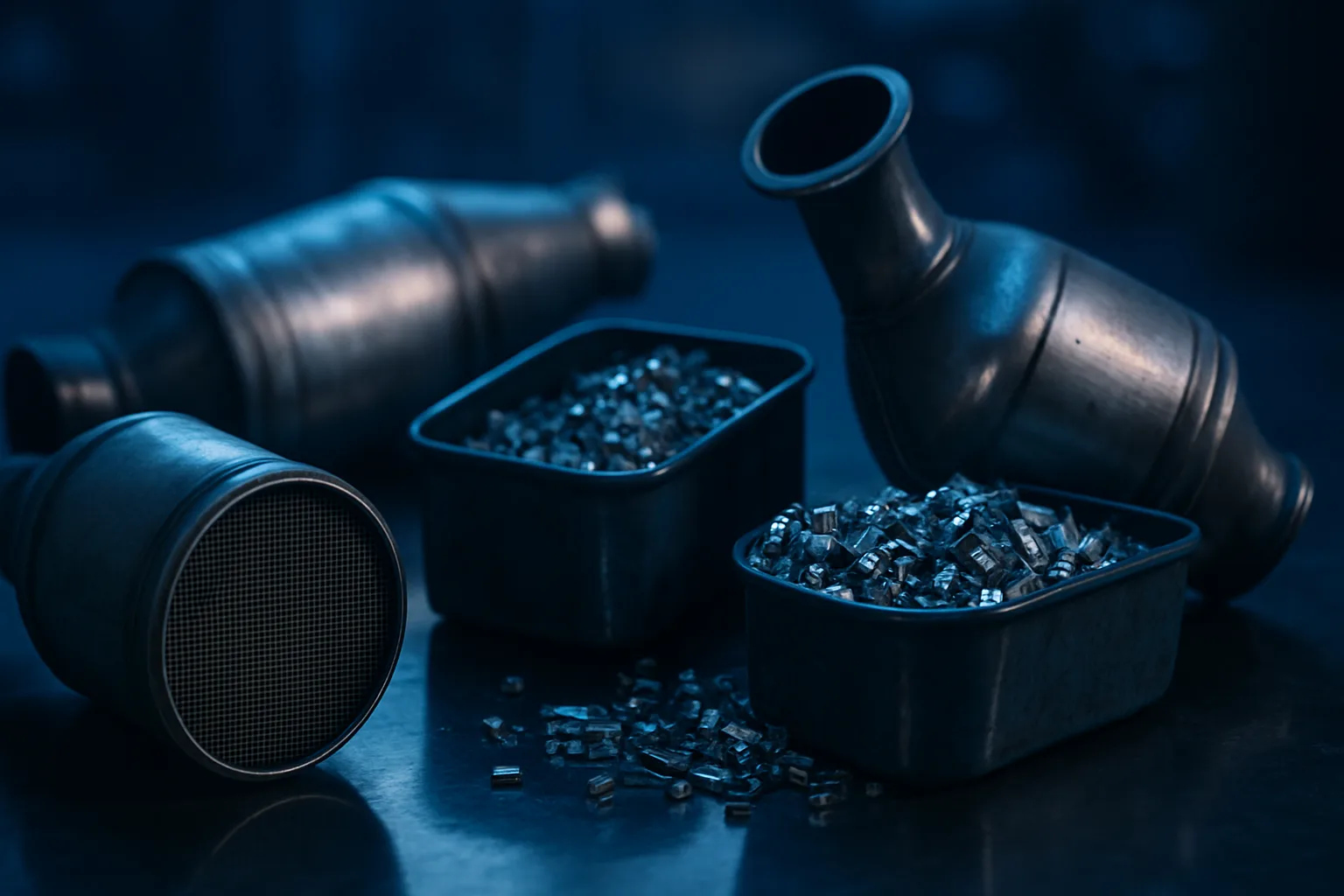
Why Your Phone Is the Most Valuable Tool When Selling a Catalytic Converter
Most Surrey sellers leave money on the table before the conversation even starts. Not because their cat is worth less — but because the buyer can't see what they have. A blurry photo taken at the wrong angle can tank your quote before you've said a word. Clear, deliberate documentation is the difference between a lowball offer and a price that reflects your converter's actual catalytic converter scrap value.
Buyers pricing your cat remotely are working off two things: the serial number and what they can visually confirm. Give them both, clearly, and you give them confidence. Confident buyers quote higher. That's not a theory — that's how competitive markets work. If you want to find the best scrap converter prices in Canada, the process starts before you ever hit send.
Understanding What Buyers Are Actually Looking At
Before you pick up your phone, understand the buyer's perspective. When a buyer receives your photos, they're trying to answer three questions fast: What is this unit? Is it intact? Is the substrate still viable? If your photos don't answer all three clearly, they'll price it conservatively — or pass entirely.
Catalytic converter pricing in 2026 is driven by platinum group metals (PGMs): platinum, palladium, and rhodium. The substrate inside the converter holds those metals. Buyers need to assess which substrate grade applies to your unit, and they verify that by cross-referencing the serial number against their pricing database. Substrate damage — from overheating, cracking, or rattling — directly affects the catalytic converter scrap metal value you'll receive. Your photos either prove the unit is solid or raise doubts that cost you money.
Here's what a buyer needs to confirm from your images:
- The serial number or OEM code — legible, fully visible, no shadow
- Both end pipes (inlet and outlet) — shows if the unit has been cut or tampered with
- The body of the converter — looking for dents, damage, or aftermarket shells
- Any relevant markings, stamps, or manufacturer logos
- General condition of the outer casing
Step-by-Step: How to Photograph a Cat Converter for the Best Quote
You don't need a professional camera. You need good light, a clean surface, and a methodical approach. These steps apply whether you're dealing with a single unit from your own vehicle or a load of cores pulled from a Surrey recycling yard.
- Clean the converter first. Wipe off excess grease, dirt, and road grime. You don't need it spotless, but the serial number area should be readable. A rag and a bit of solvent does the job.
- Shoot in natural daylight. Shade is better than direct sunlight, which creates harsh shadows. Avoid photographing under artificial warehouse lighting if you can — it distorts color and flattens contrast on stamped markings.
- Shoot the serial number first, close up. Hold your phone 15–20 cm from the stamp. Focus manually if needed. The number must be fully readable — no partial digits, no blur. This is the single most important photo you'll take.
- Get a full-length shot of both sides. Lay the converter on a flat, neutral surface. Photograph one full side, then rotate and photograph the other. These shots confirm the body condition and pipe ends.
- Photograph both pipe openings. Buyers want to see that the substrate is present and intact. A quick photo looking directly into each pipe end confirms this. If the substrate is cracked, rattling, or missing — it will show. Don't hide it. Honest documentation builds trust and protects you.
- Include a size reference if you can. Placing a tape measure or a common object beside the unit helps buyers confirm dimensions on unusual or unfamiliar converters.
- Batch photos by unit. If you're submitting multiple converters, keep photos grouped by unit. Label them numerically. A disorganized submission makes the buyer's job harder — and they'll price accordingly.
Six to eight photos per unit is a reasonable target. More is fine. Less risks a vague or conservative quote. Platforms like SMASH make it straightforward to compare scrap metal bids from Canadian buyers when your documentation is clean and complete.
The Serial Number: Your Most Critical Shot
If the serial number photo is unusable, nothing else matters. The serial number is how buyers identify the exact converter spec — the substrate type, loading levels, and precious metal content. Without a readable serial, a buyer is guessing. Guessing means low offers or no offer at all.
In British Columbia, serial number documentation has also taken on a compliance dimension. Provincial regulations in 2026 require scrap dealers to record converter identification data before purchase. This means your serial number photo isn't just a pricing tool — it's part of the transaction record. Buyers working within regulated yards will need this documentation regardless. Having it ready speeds up your sale and signals you're a seller worth dealing with.
Tips specifically for serial number photography:
- Use your phone's torch/flashlight at an angle — not directly over the stamp, but slightly to the side — to create contrast on stamped digits
- If the stamp is faded or worn, try photographing in different lighting conditions before giving up
- Never edit or enhance serial number photos — buyers flag altered images immediately
- If the serial is genuinely unreadable, note that clearly in your submission. Honesty beats a suspicious-looking image every time.
Why Documentation Drives Better cat converter prices Surrey Sellers Receive
Here's the honest reality of how remote quoting works: buyers price uncertainty into their offers. When you submit five strong photos and a sharp serial number shot, you remove uncertainty. The buyer knows exactly what they're bidding on. That's when competition between buyers starts to work in your favor — and competition is exactly what drives better outcomes on cat converter prices Surrey sellers actually pocket.
SMASH is built on this principle. The platform connects documented converter loads with multiple vetted buyers, letting market competition — not a single phone call to one buyer — determine your price. More buyers seeing the same well-documented load means better price discovery. You're not hoping one buyer feels generous. You're letting the market tell you what your load is worth.
The sellers who consistently get stronger quotes share one thing in common: they treat documentation like part of the job, not an afterthought. Read Canadian scrap converter pricing guides to understand how documentation practices connect to the numbers you actually receive.
Common Photo Mistakes That Cost Surrey Sellers Money
A few recurring errors show up in converter submissions from sellers across British Columbia. Avoiding these doesn't require skill — just awareness.
- Photographing through glare. Reflective converter shells in direct sun create glare that obscures serial numbers and surface detail. Move to shade.
- Shooting on a cluttered background. A concrete floor covered in other parts makes it hard to isolate the unit. A clean pallet or a plain tarp works fine.
- Mixing up units. Submitting photos from multiple converters without labeling them creates confusion and delays. Number your units, number your photos.
- Cropping out the pipe ends. Buyers need to see the ends. Don't crop them out trying to center the frame on the serial number. Take a separate close-up for the serial, and a separate full-body shot for context.
- Sending a single photo. One photo is never enough. It signals a seller who isn't serious. Multiple clear angles signal a seller who knows what they have and values their time.
- Over-filtering or adjusting images. Auto-enhance features on phone cameras can blur stamped text. Shoot in standard mode. What buyers want is accurate — not attractive.
If you're dealing with a larger volume of converters or cores, consider whether Surrey scrap metal services that specialize in converter documentation and pickup can streamline your process. Some buyers will send representatives for larger loads, which eliminates the photo submission step entirely — but for most individual sellers, strong photos remain your best leverage.
What Happens After You Submit Your Photos
Once your documentation is submitted through a platform like SMASH, the quoting process moves fast. Vetted buyers review your submission, run your serial numbers against current PGM market pricing, and return offers. The speed of that process depends almost entirely on how clean your documentation is.
If follow-up questions come back — usually asking for a clearer serial shot or a photo of a specific pipe end — respond quickly. Delays in the back-and-forth cost you time and sometimes price movement, since scrap metal prices today can shift with PGM spot markets. A slow documentation process on a falling palladium day is nobody's friend.
When offers arrive, compare them. Don't accept the first number reflexively. The whole point of competitive quoting is that the market sets the price, not the buyer's preferred margin. If you've documented thoroughly and submitted to multiple buyers, you'll have real data to work with instead of a gut feeling.
You can check current Canadian scrap converter prices to benchmark incoming offers against general market conditions before you decide.
Disclaimer: Catalytic converter scrap values fluctuate with live PGM spot prices for platinum, palladium, and rhodium. Any pricing reference in this article reflects general market conditions as of August 2026 and may not reflect current rates. Always verify live pricing before finalizing a sale.
The bottom line: your photos are your pitch. A well-documented converter load submitted through a competitive platform gives you the best realistic shot at a strong return. If you're serious about getting an accurate quote, take the extra five minutes and do the documentation right. Start now and find the best scrap converter prices in Canada — get a free quote at best-scrap-converter-prices.ca.
Frequently Asked Questions
Q: How many photos do I need to submit for an accurate cat converter price quote in Surrey?
Six to eight photos per unit gives buyers enough to quote confidently. You need at minimum: a close-up of the serial number, both full-side body shots, and photos of both pipe end openings. If any shots are unclear, add more rather than fewer.
Q: What if the serial number on my catalytic converter is worn or unreadable?
Try photographing the stamp at different angles using your phone's flashlight held to the side rather than directly over the surface — this creates contrast on stamped letters and digits. If the serial is genuinely unreadable after multiple attempts, note that honestly in your submission. Buyers can sometimes identify converters by size, shape, and pipe configuration, though pricing may be less precise.
Q: Does converter condition affect my scrap value, and will photos show that?
Yes on both counts. A cracked substrate, heavy external damage, or a rattling interior all reduce catalytic converter scrap value, and experienced buyers can identify these issues from photos. Don't try to obscure damage — honest documentation builds trust and prevents disputes at pickup or payment.
Q: Are there catalytic converter buyers near me within 8.1 km of Surrey that accept photo submissions?
Several buyers operating in and around Surrey, British Columbia accept photo-based remote quotes. Platforms like SMASH connect you with vetted buyers who review your documentation and return competitive offers without requiring an in-person visit as a first step. This is especially useful if you're comparing offers before committing to a buyer.
Q: How often do scrap metal prices today affect what I'll actually receive for my converter?
Converter prices move with live PGM spot markets — sometimes daily. Palladium and rhodium in particular can shift meaningfully within short windows. It's worth checking current market rates on the day you submit your documentation, so you can evaluate incoming offers against an accurate benchmark rather than a number you saw a week ago.
Follow SMASH on LinkedIn for industry updates, scrap metal market insights, and practical guidance for yards and sellers across North America.
```