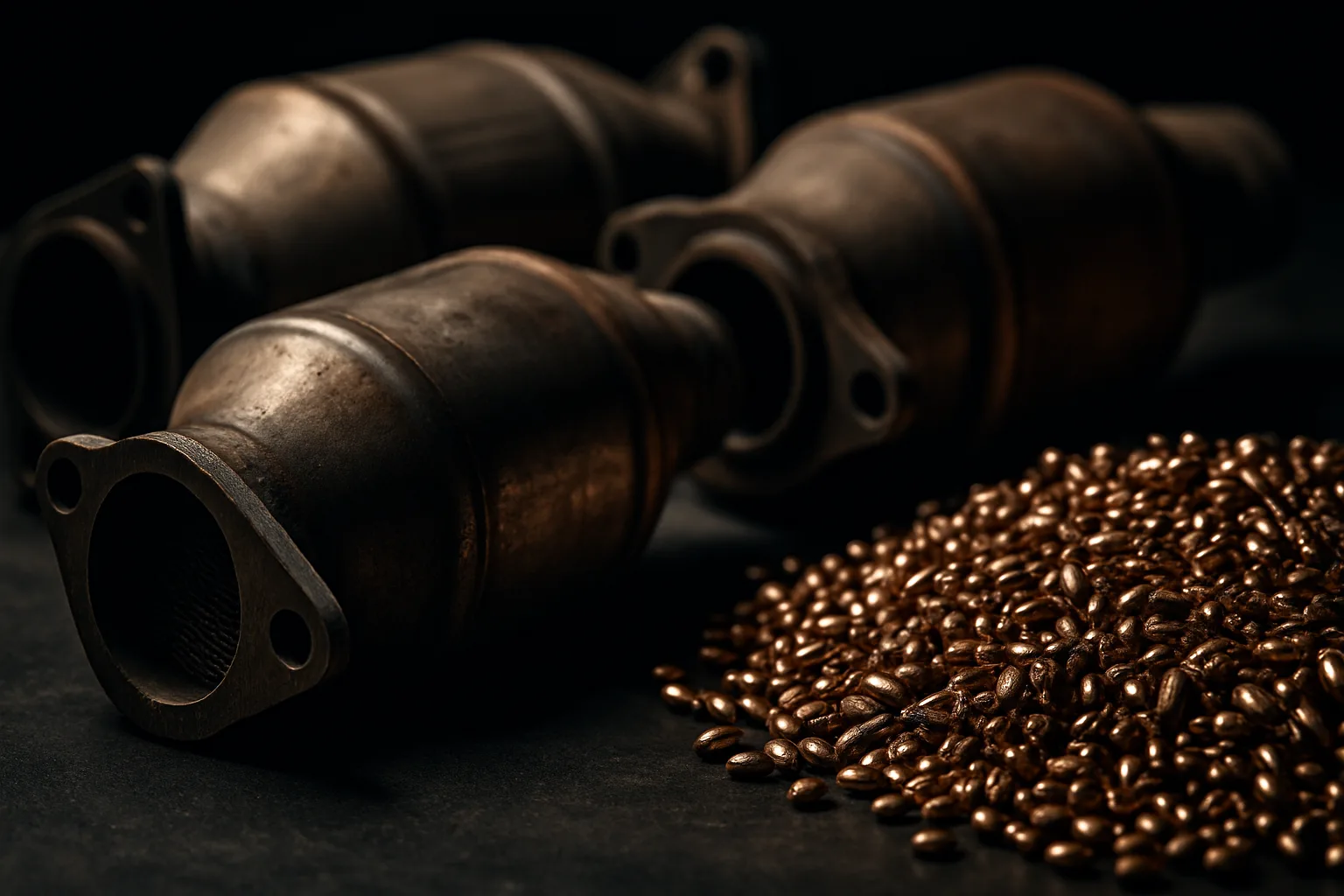
Why Auto Shops in Laval Are Leaving Money on the Table With Their Scrap Cats
Your shop pulls converters every week. They pile up in a bin, you call the same buyer, and you take whatever number they give you. Sound familiar? Most auto shops in Laval — and across Quebec — operate exactly this way. The problem isn't that you're selling. It's that you're selling blind, to one buyer, with zero leverage.
Bulk converter sales are one of the most significant revenue opportunities sitting in your shop right now. When you understand scrap catalytic converter prices Laval and how they're actually calculated, you stop guessing and start negotiating from a position of knowledge. This guide breaks down exactly how to do that.
How Scrap Catalytic Converter Prices Are Actually Set
Before you can sell smart, you need to understand what drives converter value. Catalytic converters contain platinum group metals — platinum, palladium, and rhodium. Those three metals are traded on global commodity markets daily. That means the price your shop gets today can be different from what you'd get next Tuesday.
The value of any given converter depends on several factors:
- PGM loading: How much platinum, palladium, and rhodium the unit actually contains. This varies significantly by vehicle make, model, and year.
- Converter type: OEM converters typically carry more PGM content than aftermarket units. Diesel cats and direct-fit units are valued differently than standard honeycomb types.
- Physical condition: Crushed, cracked, or rattling cats (where the substrate is damaged) are worth less. Intact substrate means more recoverable metal.
- Volume: Buyers pay better per unit when you come with a load, not a handful. That's the core advantage of selling in bulk.
If you've ever wondered how much is my catalytic converter worth calculator free — those tools can give you a directional number based on VIN or OEM part number. They're a useful starting point, but they're not the final word. Market conditions shift, and your actual payout depends on the buyer and the assay process. To check current Canadian scrap converter prices, you need a source that's tied to live market data, not a static table.
Bulk Selling Strategy: What Auto Shops Should Do Differently
Selling one or two cats at a time is the most expensive way to move your inventory. When you aggregate volume and approach the market strategically, your per-unit return improves. Here's how to do it right.
1. Track and Identify Every Unit Before It Goes Out the Door
This sounds obvious. Most shops skip it anyway. Before any converter leaves your building, photograph it, note the OEM part number if visible, and log the vehicle it came from. This documentation does two things: it protects you legally and it gives buyers the data they need to price accurately. Buyers who can identify what they're buying pay more confidently than buyers quoting blind.
Platforms like SMASH Recycling — where verified buyers bid on your metal support photo documentation and serial tracking as part of the listing process. That's not a minor feature — it's the difference between a buyer guessing low and a buyer pricing accurately.
2. Set a Minimum Accumulation Threshold
Decide in advance how many units you'll hold before going to market. Many shops in Quebec find that holding 20–50 units before selling lets them command better per-unit pricing. This takes discipline, especially when cash flow is tight. But a buyer looking at 40 units behaves differently than a buyer looking at 4.
3. Separate Your Grades
Not all cats are equal, and mixing high-value OEM units with low-grade aftermarket pieces pulls your average down. Sort your inventory. High-grade OEM converters, diesel cats, and large-format units should be grouped separately. Present them that way to buyers. This isn't just good practice — it's how you get properly compensated for your best material.
4. Stop Calling One Buyer
This is the single biggest mistake shops make. If you have one buyer relationship, you have no price discovery. That buyer knows you'll call them regardless. Competition changes behavior. When multiple catalytic converter buyers Quebec-wide are bidding against each other for your material, you find out what your load is actually worth — not what one buyer wants to pay.
A catalytic converter auction format removes that dynamic entirely. Instead of you calling one contact and accepting their number, verified buyers compete for your inventory. That's how the market is supposed to work.
What to Look for in a Catalytic Converter Buyer or Platform
Not every buyer operates the same way. When you're moving bulk converter inventory from your Laval shop, here's what separates a quality buyer from a problematic one.
- Transparency on pricing methodology: Good buyers can explain how they price. They'll reference PGM markets, assay results, and the type of converter. Vague buyers with "we'll let you know" pricing should raise a flag.
- Verified credentials: Are they licensed? Do they have a track record? In Quebec, recyclers operate under provincial environmental and business regulations. Know who you're dealing with.
- Clear settlement terms: When do you get paid? How? Reputable buyers and platforms spell this out before the transaction happens.
- Competitive tension: If your buyer is the only one looking at your material, they have no reason to stretch on price. Platforms that use a catalytic converter auction model create that competition for you.
You may have heard of local options like Brown's Aluminum & Catalytic Converter Scrap Yard and similar regional buyers. Local relationships aren't bad — but they work best when you use them alongside a broader market, not instead of one. Knowing what the broader market is paying gives you something to compare against.
How SMASH Helps Auto Shops Sell Smarter
SMASH is built around one idea: more buyers mean better price discovery. The old model — one buyer, one phone call, one number — doesn't serve sellers. It serves buyers.
SMASH connects you with vetted buyers across North America. Your inventory gets documented properly, listed clearly, and put in front of multiple buyers who compete for it. Auto shops benefit specifically because bulk loads are exactly what serious buyers want. You come with volume, they come with competitive bids. No subscription fees. SMASH only wins when you do.
For shops in Laval looking to find the best scrap converter prices in Canada, SMASH offers a structured alternative to informal single-buyer relationships. You get documentation, buyer vetting, and competitive tension — all in one process.
If you want to understand how the process works before you commit, read Canadian scrap converter pricing guides that break down the market from the seller's perspective.
Cat Converter Prices Laval: What the Market Looks Like Right Now
As of August 2026, platinum, palladium, and rhodium markets have continued to show the volatility that's defined PGM trading throughout the 2020s. Rhodium in particular remains subject to wide swings. This matters directly to your shop because a converter's payout is tied to metal prices at the time of settlement — not at the time you pull it off the vehicle.
Disclaimer: Catalytic converter prices fluctuate daily based on live PGM commodity markets. The figures your shop receives today may differ significantly from what you'd receive next week. Always verify current rates before committing to a sale.
What this means practically: if you're holding bulk inventory and metals move favorably, timing your sale matters. Platforms that give you real-time visibility into cat converter prices Laval and broader Canadian markets help you make that call with data instead of gut feel.
Quebec-based shops also benefit from working with buyers and platforms familiar with provincial logistics and regulatory context. Cross-border shipments of hazardous materials involve documentation requirements. Dealing with buyers who understand Quebec's regulatory environment reduces headaches at the back end of the transaction.
Practical Steps to Get Started This Week
You don't need to overhaul your operation overnight. Start with these steps:
- Audit your current inventory. How many units do you have? What types? Are they documented?
- Set a hold threshold. Decide the minimum volume you'll accumulate before going to market.
- Photograph and log every unit going forward. Part number, vehicle source, condition. Five minutes of documentation per unit changes your negotiating position.
- Research current market rates. Don't rely solely on what your current buyer tells you. Check platforms, consult pricing tools, and understand what the broader market is doing.
- Introduce competition. Put your next bulk load in front of more than one buyer. See what happens to the number.
Auto shops in Laval — and across Quebec — that move from reactive selling to strategic selling consistently recover more value per unit. The metal doesn't change. The approach does.
If you're ready to stop guessing and start selling with real market data behind you, find the best Canadian scrap converter prices and get a free quote at best-scrap-converter-prices.ca. It costs you nothing to find out what your load is actually worth.
Frequently Asked Questions
Q: How do I get the best scrap catalytic converter prices in Laval?
The most effective way is to sell in bulk, document your inventory thoroughly, and expose your load to multiple buyers rather than relying on a single contact. Platforms that use a competitive auction model give buyers a reason to bid their best number. Local options in Laval are worth knowing, but comparing them against a broader market is always smart.
Q: How are cat converter prices in Laval calculated?
Prices are based on the platinum group metal (PGM) content of each converter — specifically platinum, palladium, and rhodium. Buyers reference live commodity market prices at the time of settlement, then apply a recovery rate and margin. The vehicle make, model, year, converter type, and physical condition all affect the final number.
Q: Is there a free catalytic converter worth calculator I can use in Canada?
Several online tools let you enter a VIN or OEM part number to get an estimated value based on PGM content and current metal prices. These calculators are useful for setting expectations, but they're directional — not a guarantee of what you'll receive. Actual payouts depend on the buyer, current market rates, and assay results for larger loads.
Q: What's the benefit of a catalytic converter auction versus selling to a single buyer?
A single buyer has no incentive to offer their best price — they know you're calling them regardless. An auction format creates competition, which tends to produce better price discovery for the seller. Multiple vetted buyers bidding on the same load is structurally more transparent than a one-on-one negotiation where only one party knows what the material is worth.
Q: How many converters should I accumulate before selling in bulk from my Quebec shop?
There's no universal rule, but many shops find that holding a minimum of 20–50 units before going to market improves their per-unit return. The right threshold depends on your shop's volume and cash flow situation. The key principle: buyers treat bulk loads differently than small batches, and that difference shows up in pricing.
Follow SMASH on LinkedIn for scrap metal market updates, pricing insights, and industry news: linkedin.com/company/scrap-metal-auction-sales-hub