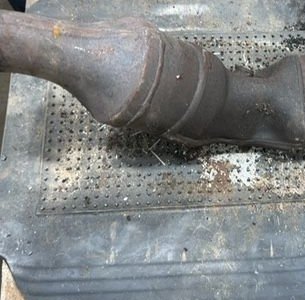
From Your Exhaust System to a Refinery: What Actually Happens to a Catalytic Converter
Most converter sellers focus on one number: what they'll get paid. Fair enough. But understanding the full journey — from the moment a converter leaves your vehicle to the moment precious metals get recovered — gives you serious leverage at the negotiating table. It tells you why catalytic converter scrap value swings so dramatically, and why where you sell matters just as much as when you sell.
This is the lifecycle of a catalytic converter. And it's more sophisticated than most people realize.
Stage One: Removal and Initial Grading
The process starts at the shop, the salvage yard, or the driveway. A converter gets cut off the vehicle — either with a saw, a torch, or a reciprocating blade depending on the setup. From that moment, the clock starts ticking on its value.
What happens next depends entirely on who's doing the buying. A knowledgeable buyer immediately begins assessing the unit. They're checking:
- The housing condition — Is it intact? Is the substrate cracked or crushed?
- The brand markings and serial number — This determines the OEM source and expected precious metal content.
- The foil versus ceramic substrate — Metallic foil substrates (common on European and performance vehicles) often carry higher platinum group metal (PGM) concentrations than standard ceramic honeycomb.
- Visual signs of thermal damage — Overheating can destroy the substrate and dramatically reduce recovery yield.
If you're selling in Markham — where a large volume of late-model imports and Korean-brand vehicles move through the used car market — the mix of converter types you encounter will skew differently than in rural Ontario. That matters. Import converters, particularly those from Honda, Toyota, and Hyundai platforms, often carry meaningful palladium concentrations.
Stage Two: Identification, Database Matching, and Price Discovery
Once a converter is graded visually, the real valuation work begins. Serious buyers don't guess. They match the unit against assay databases — large repositories of historical refinery data that link specific converter models to their average precious metal yield in grams of platinum, palladium, and rhodium.
This is where transparency becomes the difference between a fair deal and getting clipped. Buyers who rely on opaque internal pricing systems don't have to show you their work. You just get a number. Platforms like Canada's B2B scrap recycling marketplace SMASH are changing that dynamic — bringing vetted buyers into a competitive format where the data drives the offer, not the relationship.
The key inputs to any converter price at this stage include:
- Palladium price today — Palladium is the dominant PGM in most gasoline-engine converters, and it's historically volatile. A swing of 10–15% over a few weeks isn't unusual.
- Platinum spot price — More relevant for diesel converters and certain European units.
- Rhodium price — Smaller volumes, but rhodium can carry enormous weight in the final calculation when prices spike.
- Refinery return rates — Not all refiners offer the same percentage return. Sophisticated sellers know this.
If you want to check current Canadian scrap converter prices before you walk into any negotiation, that's not just smart — it's standard practice among serious sellers in Ontario.
Stage Three: Consolidation, Sorting, and Shipment to the Processor
Individual converters — whether they come from a single Markham auto shop or a large dismantler running dozens of units per week — eventually get consolidated into loads. This is where the B2B layer of the scrap converter market operates.
Processors who accept converter material typically require:
- A minimum quantity threshold (which varies by processor)
- Accurate packing lists with unit descriptions and counts
- Photo documentation for high-value or unusual units
- Proper manifesting for cross-border movement when material moves to U.S.-based refiners
This documentation layer is not bureaucratic overhead — it's value protection. A well-documented load is a load that gets properly assayed. Undocumented or poorly sorted material gives processors room to downgrade their offer after the fact. SMASH's platform includes inventory tools, photo documentation, and serial tracking specifically to close that gap for sellers across Ontario and the rest of Canada.
Markham-area sellers operating at scale — multi-bay shops, fleet dismantlers, used parts dealers — benefit most from getting this logistics layer right. One mis-sorted load or missing packing list can cost more than the time it takes to do it properly.
Stage Four: Decanning and Sample Preparation at the Refinery
When the material arrives at a licensed precious metals refinery, the outer steel shell (the "can") gets removed — this is called decanning. The ceramic or metallic substrate inside is then crushed and milled into a fine powder called "black powder" or "converter powder."
This powder is then sampled rigorously. A representative portion of the batch is taken for chemical assay — typically fire assay or ICP (Inductively Coupled Plasma) analysis — to determine the exact concentration of platinum, palladium, and rhodium per unit of material.
This is where the actual catalytic converter scrap value gets locked in. The assay result, multiplied against current spot prices and adjusted for the refinery's processing fee and return rate, produces the final settlement number.
What most sellers don't realize: the difference between refineries in terms of return rates and processing charges can represent thousands of dollars on a large load. This is not a small variable. If you want to understand how to find the best scrap converter prices in Canada, refinery access and return rates are part of that answer.
Stage Five: PGM Recovery and Re-entry Into Global Markets
Once assayed, the precious metals are chemically separated from the base material through a smelting and refining process. The output is high-purity platinum, palladium, and rhodium — refined to 99.9%+ purity in most commercial operations.
These recovered metals re-enter the global supply chain. Palladium recovered from a converter that left a vehicle in Markham last month may end up in a new catalytic converter manufactured in Japan, South Korea, or Germany within the same year. That's the closed-loop nature of PGM recycling.
From a market perspective, secondary (recycled) palladium and platinum play a meaningful role in global supply. For sellers, this means your material is not a niche commodity — it feeds real industrial demand. That demand is what sustains converter scrap value Canada-wide, even as automotive technology shifts toward electrification.
If you want to go deeper on the technical side, resources covering recycling the platinum group metals from an industrial chemistry perspective are worth studying — they illustrate exactly why refinery methodology directly affects how much value gets returned to sellers.
What This Means When You Sell Scrap Metal Online
Understanding the lifecycle isn't just academic. It changes how you sell. Here's what it tells you in practice:
- Documentation protects value. The more accurate your inventory data — serial numbers, photos, unit counts — the less room processors have to grade you down.
- Timing matters. Palladium and rhodium price swings are real. Watching spot prices before you move a load is basic due diligence, not obsession.
- Not all buyers are equal. A buyer with direct refinery relationships will consistently pay closer to true market than a middleman stacking multiple margins.
- Competition reveals true value. Single-buyer relationships are comfortable but rarely optimal. When you sell scrap metal online through a competitive auction format, you let the market decide — not one buyer's internal pricing model.
SMASH exists specifically to close the gap between what sellers know their material is worth and what a single buyer is willing to offer on a cold call. The platform brings vetted buyers into competition over your load. That's not a marketing claim — it's how price discovery is supposed to work.
If you're a converter seller in Ontario — from a small shop in Markham to a full-scale dismantler running hundreds of units per month — you should be reading the Canadian scrap converter pricing guides available online and treating your sale as a business decision, not a convenience transaction.
The converter that left your vehicle at the beginning of this lifecycle was worth real money. Make sure you capture it. Get a free quote at best-scrap-converter-prices.ca and go into your next sale knowing what your material is actually worth in today's Canadian market.
Disclaimer: Catalytic converter prices fluctuate daily based on palladium, platinum, and rhodium spot prices. Always check current rates before selling.
Frequently Asked Questions
Q: What determines catalytic converter scrap value in Canada?
Three precious metals drive the number: platinum, palladium, and rhodium. Their spot prices change daily, and the specific concentration in your converter depends on the make, model, and year of the vehicle it came from. Refinery return rates and processing fees also affect the final settlement — which is why comparing buyers matters.
Q: How does palladium price today affect what I get paid for my converter?
Palladium is the primary PGM in most gasoline-engine catalytic converters, so it has the biggest influence on your payout. When palladium spot price rises, converter values rise with it — and vice versa. Checking live precious metal prices before you negotiate a sale is standard practice for serious sellers.
Q: Where can I sell catalytic converters in Ontario, including Markham?
Scrap yards, auto recyclers, and specialty converter buyers operate across Ontario. For sellers in Markham and the broader GTA, the more important question is not just who will buy — but who will pay closest to true market. Competitive platforms like SMASH connect you with vetted buyers so you're not locked into one offer.
Q: Is it worth sorting converters by type before selling?
Yes — significantly. High-value units like large foil-substrate converters or certain diesel units can be worth multiples of a standard ceramic unit. Mixing them into a bulk load means they get averaged down. Sorting, documenting with photos, and matching units to assay data protects your per-unit return.
Q: How do I know I'm getting a fair converter scrap value Canada-wide?
Fair value means your offer reflects current precious metal spot prices minus realistic processing costs — not an arbitrary number a buyer set last month. Use pricing resources, compare multiple offers, and consider platforms that bring buyers into competition. Best-scrap-converter-prices.ca exists specifically to give Canadian sellers a transparent reference point.
Stay current on scrap metal market shifts and converter pricing trends — follow SMASH on LinkedIn for industry updates and insights from Canada's B2B scrap recycling marketplace.
```