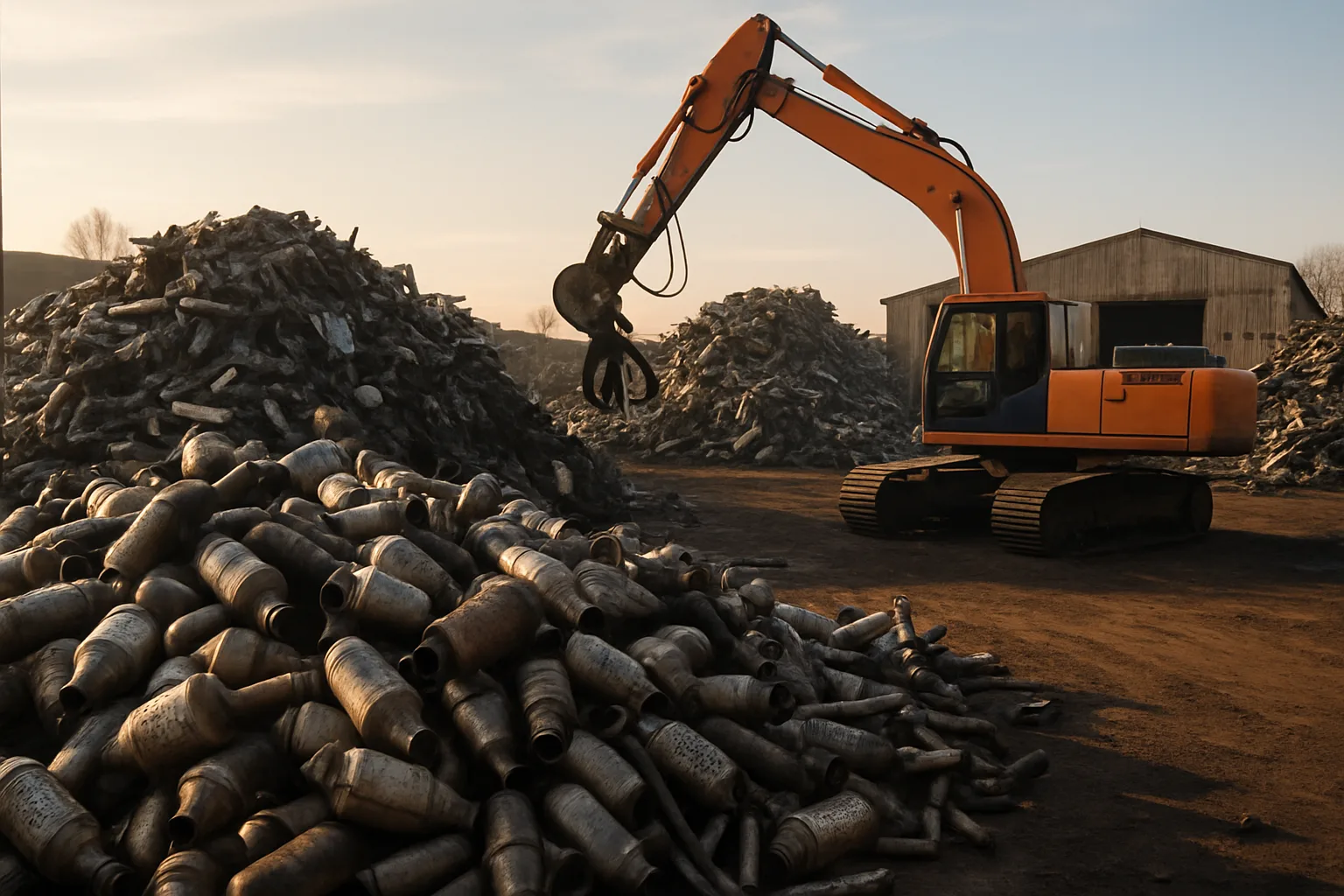
Catalytic Converter Theft Is Costing Legitimate Recyclers Real Money
Catalytic converter theft in Canada jumped sharply in the early 2020s — and the ripple effects are still hitting legitimate recyclers hard in 2026. If you run a yard in Edmonton, you already know the headache. Stricter documentation rules, buyer skepticism, and tanked resale confidence are now facts of life in the converter market. This isn't a petty crime problem. It's a market distortion problem.
Understanding how theft affects the legitimate recycling supply chain matters — especially if you're trying to get the best catalytic converter price Edmonton buyers will actually pay. Stolen units suppress documented inventory, inflate buyer caution, and push pricing power away from honest sellers. Here's how the damage breaks down, and what legitimate sellers can do to fight back.
How Catalytic Converter Theft Distorts the Scrap Metal Recycling Market in Canada
When stolen converters flood the secondary market, they don't stay neatly separated from legitimate supply. They blend in. That creates a verification crisis for buyers across scrap metal recycling Canada-wide. Buyers can't easily tell a properly documented unit from one cut off a parking lot victim at 2 a.m. So they respond the way any rational buyer would — they get cautious, they discount more aggressively, and they ask harder questions.
That caution costs legitimate sellers. Yards that have clean, documented inventory get lumped into the same skeptical pricing bucket as questionable supply. The result: honest recyclers take a hit on price that has nothing to do with the actual precious metal content in their cats. Rhodium, palladium, and platinum values haven't disappeared — but buyer confidence has taken damage across the board.
Here's what the distortion looks like in practice:
- Tighter documentation requirements — buyers now demand VINs, bills of sale, photos, and serial tracking before they'll bid competitively on a converter load.
- Slower deal cycles — verification takes time. Deals that used to close in hours now take days as buyers do compliance checks.
- Regional pricing fragmentation — markets like Edmonton and Alberta feel the squeeze differently than southern Ontario, creating inconsistent price discovery across provinces.
- Risk premiums baked into offers — some buyers quietly discount their bids to cover compliance exposure, even when your paperwork is clean.
5 Ways Theft Specifically Hurts Edmonton and Alberta Converter Sellers
Edmonton yards and Alberta recyclers face some specific friction that sellers in other regions don't deal with at the same intensity. The province's regulatory environment and the volume of fleet vehicles in the industrial corridor create a unique market context — one that theft has complicated further.
- Fleet vehicle documentation gaps. Alberta's industrial sectors — oil and gas support, heavy equipment, logistics — generate significant converter volume from legitimate fleet retirements. But when theft is rampant, buyers scrutinize fleet-sourced cats harder than ever, even when the chain of custody is clean.
- Lower competition from wary buyers. Some processors have pulled back from certain markets or converter types entirely because of theft-related compliance risk. Fewer active buyers means weaker price discovery — the opposite of what you want when rhodium price today is already volatile.
- Insurance cost bleed. Yards holding converter inventory face higher insurance exposure when theft rates are elevated. That overhead comes out of your margin somewhere.
- Regulatory scrutiny on purchases. Alberta legislation has tightened reporting requirements for scrap dealers buying converters. That compliance burden falls on honest yards, not the people actually committing the theft.
- Reputational risk on load rejections. If a buyer rejects a load mid-process due to documentation concerns — even unfounded ones — you're eating freight, storage, and delay costs. That's a real financial hit for Edmonton sellers moving volume.
If you're trying to find the best scrap converter prices in Canada, working around these friction points requires better documentation and access to more buyers — not just one phone call to the same contact you've used for years.
The Documentation Advantage: How Clean Records Get You Better Converter Prices
Here's the contrarian take: the theft crisis has actually created an opportunity for well-documented sellers. Buyers are actively looking for clean supply. If your converter inventory has proper photo documentation, VIN verification, and a clear chain of custody, you're now a premium seller in a market full of question marks. That's leverage — if you know how to use it.
What good documentation looks like for converter sales in 2026:
- VIN-linked records — tying each converter to a specific vehicle, verified at intake.
- Serial number tracking — not all cats have readable serials, but when they do, capture them. Buyers notice.
- Photo documentation — clear photos of each unit, ideally with the substrate visible, before and after cleaning.
- Source records — bills of sale, auction records, or fleet retirement paperwork. The more complete, the better.
- Packing lists and BOLs — proper shipping documentation when moving loads between buyers.
Platforms like SMASH are built around exactly this kind of inventory documentation. The SMASH inventory tool lets you capture and store all of this before a load ever goes to auction — so buyers bid with confidence instead of hedging against uncertainty. You can check current Canadian scrap converter prices and then back that up with the documentation buyers need to bid at full value.
Competitive Bidding vs. Single-Buyer Deals: Why Auctions Win in a Skeptical Market
The old way of selling converters — call your one buyer, take their number, move on — was already leaving money on the table before the theft crisis. Now it's actively working against you. A single buyer facing compliance uncertainty has every incentive to discount heavily and call it "market conditions." You have no way to verify whether that's true.
Competitive auctions change that dynamic entirely. When multiple vetted buyers are bidding on your documented inventory, each buyer's caution works in your favor. One buyer might be conservative. Another might be actively seeking clean supply for a specific smelter run. In a competitive format, you find out which is which — and you get paid accordingly.
This is where comparing scrap metal bids from Canadian buyers through a platform like SMASH makes a tangible difference. More buyers means better price discovery. A vetted buyer pool means less compliance risk on your side. And the auction format means the market, not one phone call, sets your price.
Compare that to what sellers chasing a catalytic converter scrap price Winnipeg or trying to sell catalytic converter Houston face when going it alone — one contact, one number, no competition. The converter theft crisis has made that approach even more costly. You need buyers who have already cleared compliance hurdles and are ready to bid on good inventory.
What Legitimate Sellers Should Do Right Now
If you're a converter seller in Edmonton or anywhere in Alberta dealing with tighter buyer scrutiny and slower deal cycles, the path forward is clear: document everything, access more buyers, and stop letting one relationship determine your market price.
Practical steps to protect your pricing in the current environment:
- Audit your intake process. If you can't quickly pull documentation on a unit, buyers will assume the worst.
- Invest in photo infrastructure. A basic photo station at intake pays for itself fast when it unlocks better bids.
- Get onto a platform that connects you to vetted buyers — not just the one down the road.
- Track precious metal spot prices. Rhodium price today and palladium movements directly affect what your cats are worth. Don't go into a negotiation blind.
- Read the guides. Understanding how different converter types — domestic, foreign, aftermarket — are priced helps you sort inventory intelligently before it goes to market.
For more on pricing strategy and market intelligence, read Canadian scrap converter pricing guides that break down how precious metal values translate into real converter payouts.
The theft problem isn't going away overnight. But the sellers who build documentation systems and access competitive buyer markets today will have a significant pricing advantage over those who don't. Whether you're in Edmonton scrap metal services or running a yard across the province, the opportunity is in positioning yourself as the clean, trustworthy supply that serious buyers want.
Don't let the theft crisis be your problem. Make it your competitor's problem instead. If you want to see what your documented load is actually worth in today's market, SMASH puts that question in front of multiple vetted buyers — no subscription fees, no single-buyer guessing games. Start with a free quote at best-scrap-converter-prices.ca and find out what competition actually does for your converter price.
Frequently Asked Questions
Q: How does catalytic converter theft affect the price I get for my legitimate scrap converters in Edmonton?
Theft increases buyer skepticism across the board, which can compress offers even on well-documented inventory. Buyers hedge against compliance risk by discounting bids — meaning honest sellers in Edmonton absorb costs they didn't create. Using a platform with vetted buyers and strong documentation tools helps counteract this by signaling that your supply is clean.
Q: What documentation do I need to get the best catalytic converter price in Edmonton?
At minimum, buyers want VIN-linked records, clear photos of each unit, and source documentation like bills of sale or fleet retirement paperwork. Serial numbers and proper packing lists strengthen your position further. The more complete your documentation, the more confidently buyers can bid — and that competition is what drives your price up.
Q: Does the rhodium price today directly affect my converter payout?
Yes. Rhodium, palladium, and platinum spot prices are the underlying driver of converter scrap value. Processors and refiners price loads based on assay results tied to current precious metal markets. Staying current on rhodium and palladium prices helps you understand whether an offer is fair before you accept it.
Q: Is there a difference between converter prices in Edmonton versus other Canadian cities like Winnipeg?
Regional pricing variation exists because of buyer concentration, freight costs, and local market conditions. Edmonton and Alberta sellers may face different effective net prices than sellers in other markets. That's exactly why accessing multiple buyers through a competitive auction platform matters — it lets the actual market, not your geography, determine your price.
Q: How do I know if a buyer I'm selling converters to is legitimate and won't cause compliance problems for my yard?
Vetting buyers before you sell is critical in the current environment. Platforms like SMASH pre-screen buyers before they can bid on your inventory, reducing your compliance exposure. Avoid any buyer who won't provide clear documentation of their processing chain or who discourages you from keeping records.
Disclaimer: Catalytic converter prices fluctuate based on daily precious metal spot prices, converter type, and market conditions. All pricing information should be verified against current market rates before making selling decisions.
Follow SMASH on LinkedIn for industry updates, scrap metal market insights, and converter pricing news: linkedin.com/company/scrap-metal-auction-sales-hub.
```