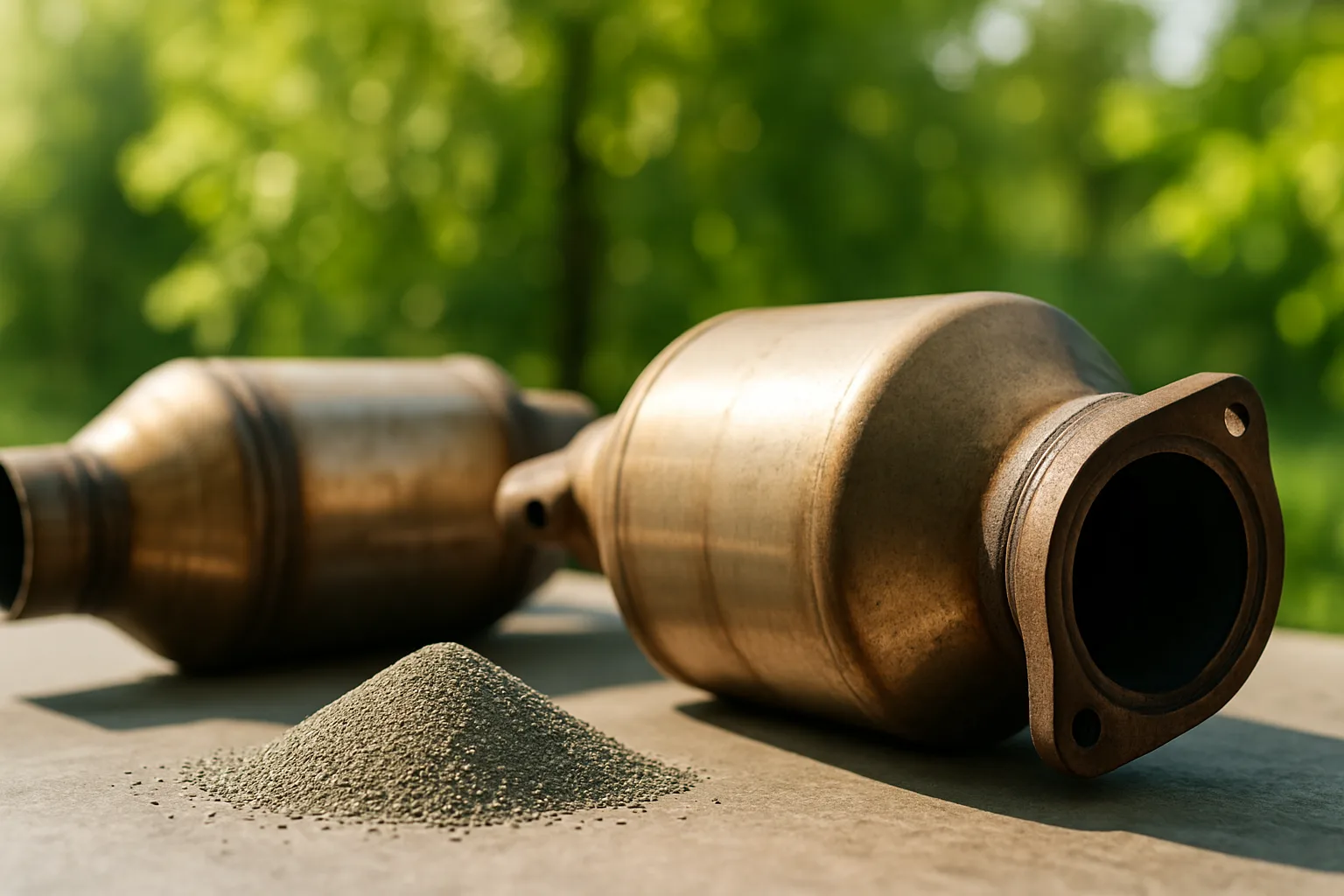
Why Your Phone Camera Is Costing You Money on Catalytic Converter Quotes
Most converter sellers leave money on the table before a buyer ever sees their metal. Not because their cats are low-grade — because their photos are. If you want to sell catalytic converters online and get a quote that actually reflects market value, the photos you submit matter more than you think.
Buyers price what they can verify. A blurry shot of a converter sitting in a dark corner tells them almost nothing. They default to a conservative number. That conservative number costs you. In a market where platinum, palladium, and rhodium prices shift weekly, you need buyers competing on accurate information — not guessing.
This guide walks you through exactly how to photograph your catalytic converters for the strongest possible online quote. Whether you're clearing out a few pulls from a Halifax yard or moving a full pallet of mixed cats, these steps apply.
What Buyers Are Actually Looking For in Your Converter Photos
Before you pick up your phone, understand what a buyer needs to see. They're not admiring your photography. They're identifying the unit, assessing condition, and cross-referencing it against a known price matrix tied to current precious metal values — including the platinum price today and its palladium and rhodium equivalents.
Here's what a buyer is trying to confirm from your images:
- Unit identification — the serial number, part number, or OEM markings stamped on the body or endcap
- Substrate condition — is the honeycomb intact, rattled out, melted, or missing?
- Physical size and type — small import foil, large domestic, diesel particulate filter (DPF), or torpedo style
- Signs of tampering — cut ends, opened shells, or evidence the substrate has been removed
- End pipe condition — are the flanges intact? Are the pipes crushed or torched?
Miss any of these, and you'll either get a lowball quote or no quote at all. Platforms like SMASH Recycling — where verified buyers bid on your metal connect your documented inventory with multiple competing buyers, which means better price discovery when your photos do the job right.
The 5-Photo Formula Every Converter Seller Should Use
You don't need a DSLR. You don't need a light box. You need a consistent five-shot sequence that gives buyers everything they need to price with confidence. Follow this for every unit, every time.
- Shot 1 — Serial number or part number, close-up. Get within 15–20 cm of the stamp. Use your phone's tap-to-focus on the number itself. If the stamping is faint, try shooting at a slight angle with a flashlight held to the side — raking light makes shallow stamps readable. This is the single most important photo. No serial = no accurate quote.
- Shot 2 — Full body, both sides. Lay the converter on a flat surface. Take one shot from each side so the buyer can see the entire shell, any heat discoloration, physical damage, or weld seams that indicate it's been opened.
- Shot 3 — Both open ends (substrate view). This is where the value lives. The buyer needs to see the honeycomb material clearly. Shoot straight into the pipe opening. Use your flashlight app or have someone hold a light source directly behind you. What they're looking for: a full, intact substrate vs. rattled-out, crumbled, or missing material.
- Shot 4 — End pipes and flanges. Torched ends, crushed pipes, and missing flanges all affect handling and processing. Give buyers a clear view of how the converter was removed.
- Shot 5 — Batch or pallet overview (if selling multiples). If you're quoting a load, include one wide shot showing all units laid out. Number them if you can. This helps buyers correlate your close-up shots to specific units in the lot.
This five-shot approach maps directly to what good scrap metal inventory management looks like in practice. When every unit in your system is documented this way, you create a traceable, defensible record — useful not just for pricing, but for any audit or dispute down the road.
Lighting, Background, and the Mistakes That Kill Your Quote
Lighting is where most sellers fail. A poorly lit converter photo hides exactly the details buyers need to price accurately. Here's what works and what doesn't:
Use natural daylight whenever possible. Take your photos outside in open shade — not direct sunlight, which blows out contrast and washes out serial numbers. Overcast days are actually ideal. If you're shooting indoors, position the converter near a large window and supplement with a flashlight for the substrate shots.
Background matters more than you think. Shoot against a plain surface — concrete, plywood, a pallet board. Avoid shooting converters in bins, piles, or against cluttered backgrounds. Buyers need to isolate the unit visually. A clean background makes your photos look professional and makes identification faster.
Common mistakes that get quotes rejected or lowballed:
- Photo taken at an angle that obscures the serial number
- Fingerprints, grease, or dirt completely covering the stamp — wipe it down first
- Substrate photo taken from too far away — if you can't read the honeycomb pattern, neither can the buyer
- Flash photography that creates glare directly over the stamped area
- Mixing multiple converters in a single photo without numbering them
- Blurry images caused by moving the phone before the shutter fires — hold it steady or prop it
Halifax yards deal with coastal salt air, and converters pulled from Maritime vehicles often have heavy surface rust. Don't let that stop you — but do wipe the stamp area clean with a rag before shooting. Rust is expected. An unreadable serial number is not.
How to Organize and Submit Your Photos for the Fastest Quote
Taking great photos is half the job. Submitting them in a way that makes sense to buyers is the other half. Disorganized photo dumps slow the quoting process and frustrate buyers — especially when you're moving multiple units.
Here's a simple system that works:
- Name your files clearly. If you're submitting digitally, rename photos before uploading: converter_01_serial.jpg, converter_01_substrate.jpg, etc. This saves buyers from hunting through 40 unlabeled images.
- Group photos by unit. Keep all five shots for a single converter together before moving to the next unit. Don't alternate randomly between units.
- Include a count and brief description. "14 units — mixed import and domestic, all intact substrates, some torched ends" gives buyers context before they even open the folder.
- Note anything unusual. DPFs, pre-cats, aftermarket converters, or anything that doesn't look standard should be flagged. Buyers appreciate honesty — surprises in person create disputes.
When you find the best scrap converter prices in Canada, you'll notice that platforms designed for converter transactions have built-in submission workflows. Use them. They're structured around exactly the information buyers need, which means faster turnaround and stronger offers. If you're in Nova Scotia and looking for a streamlined process, Halifax scrap metal services built around this kind of documentation make the whole process faster and cleaner.
Why Documentation Gives You Leverage When Precious Metal Prices Are Moving
The scrap converter market doesn't stand still. Precious metal prices — platinum, palladium, and rhodium — move on global commodities markets continuously. The platinum price today in August 2026 reflects supply pressures, automotive production shifts, and trading activity completely outside your control. What you can control is how accurately your inventory is documented when you go to market.
Here's why this matters: when you submit a well-documented load with clear photos, verified serial numbers, and accurate substrate condition notes, buyers can price with confidence. That means tighter spreads and stronger bids. When documentation is poor, buyers build in a risk buffer — and that buffer comes out of your pocket.
SMASH was built around exactly this dynamic. More documented inventory equals more buyer confidence equals more competitive bidding. Read Canadian scrap converter pricing guides to understand how market conditions feed into the quotes you receive — because knowing why prices move helps you time your sales better.
If you've ever searched for cat converter buyers near me and ended up with a single phone call and a take-it-or-leave-it number, you already know the problem. One buyer means no competition. No competition means no price discovery. Good photos submitted to a competitive platform change that equation entirely.
Whether you're running a small Halifax operation or managing a high-volume yard across Nova Scotia, the principle is the same: documented inventory drives better outcomes. Check current Canadian scrap converter prices before you list, know what the market is doing, and let competition work in your favor.
If you're ready to stop guessing and start getting real market-driven quotes on your cats, the process starts with a good photo. Take the five shots. Clean the stamp. Shoot the substrate. Submit through a platform that puts your inventory in front of verified buyers — and let the bids tell you what your metal is actually worth. That's what SMASH is built to do.
Frequently Asked Questions
Q: Do I need special equipment to photograph my catalytic converter for an online quote?
No. A modern smartphone with a decent camera is all you need. The key is lighting and technique — natural daylight, a clean background, and a steady hand. A flashlight app helps significantly when shooting the substrate through the open pipe ends.
Q: What if the serial number on my converter is worn or partially stamped?
Shoot it anyway and note the issue in your submission. Try raking light from a flashlight held at a sharp angle — this often makes faint stamps visible. Buyers can sometimes identify units from partial numbers, size, and physical description. Full identification is ideal, but partial documentation is still better than none.
Q: Can I sell catalytic converters online from Halifax without physically shipping them first?
Yes. You submit photos and documentation to get a quote. Once you accept an offer, logistics are arranged — which may involve shipping, local pickup, or drop-off depending on the buyer. Platforms that connect you with multiple buyers give you more flexibility on how the transaction is completed.
Q: How do precious metal prices affect the quote I receive for my converters?
Catalytic converter values are directly tied to the platinum, palladium, and rhodium content inside the substrate. When those commodity prices rise, converter values rise. When they fall, so do quotes. Checking the platinum price today before submitting your load helps you understand whether the market is in your favor or whether waiting makes sense.
Q: Why do some buyers reject photo submissions or offer very low quotes on the same converters?
Single buyers have no incentive to offer market-rate pricing — they profit from the spread between what they pay you and what they recover. Competitive platforms with multiple vetted buyers change this dynamic. Poor photo quality is the other main reason quotes come in low: if a buyer can't confirm what they're buying, they price for uncertainty. Clean, documented submissions consistently attract stronger offers.
Ready to put your documentation to work? Find the best Canadian scrap converter prices and get a free quote at best-scrap-converter-prices.ca — your photos are worth more than you think.
Follow SMASH on LinkedIn for scrap metal market updates, converter pricing insights, and industry news across North America.