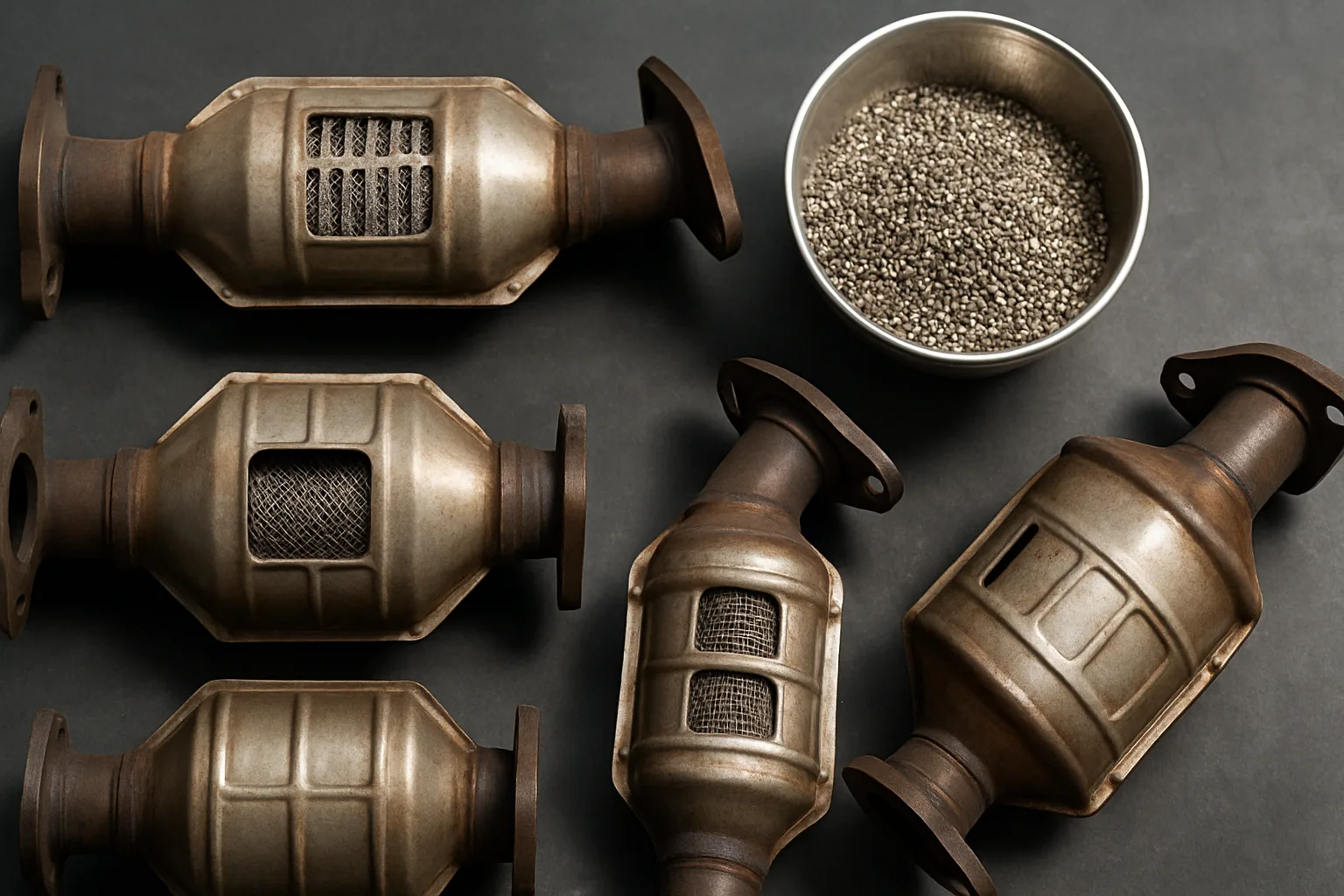
Why Auto Shops Leave Money on the Table When Selling Scrap Converters
Most auto shops in St. Catharines aren't getting the best catalytic converter price — not because they're doing anything wrong, but because they're selling the old way. One buyer. One phone call. One price, take it or leave it. That's not price discovery. That's guessing.
If your shop pulls converters regularly — whether you're servicing domestic fleets, import vehicles, or high-mileage work trucks — you're sitting on real money. Catalytic converters contain platinum, palladium, and rhodium. Those metals trade on global markets every single day, and their value swings hard. A bulk lot sold without competitive bids is almost always a bulk lot sold short.
This article breaks down what auto shops need to know before selling scrap converters in bulk — from documentation and sorting to how platforms like SMASH are changing the way recyclers and shops move inventory across Ontario and beyond.
Understanding What Drives Catalytic Converter Scrap Price in Ontario
Before you call any buyer, you need to understand what you're actually selling. The catalytic converter scrap price in Ontario isn't set by your local buyer — it's derived from the London Platinum and Palladium Market (LPPM) and the broader precious metals spot markets. Rhodium price today, palladium spot, and platinum price all feed directly into converter valuations. When rhodium spikes, certain cat codes spike with it. When palladium softens, you feel it on your European import cores.
What this means practically for your shop:
- The price you were quoted last month may not reflect today's market
- Not all converters are equal — a Ford F-150 cat and a Toyota Prius cat carry very different PGM (platinum group metal) loads
- Buyers who quote you a flat rate per unit aren't accounting for variance — and that difference usually comes out of your pocket
- Bulk lots sold with proper identification typically attract stronger bids than anonymous mixed loads
Shops in St. Catharines, Ontario deal with a wide range of vehicles — everything from GM trucks to import sedans to commercial vans. That diversity in your converter inventory is actually an asset, but only if you sort and document it properly before you sell.
Sort First, Sell Second: How Bulk Prep Affects Your Final Price
The single biggest mistake shops make when selling converters in bulk is treating them like scrap iron — toss them in a bin, call a buyer, done. That approach destroys value. Buyers who can't identify what's in a lot will price it conservatively to protect their margin. You absorb that discount.
Here's how to prepare a bulk lot correctly before you go to market:
- Sort by vehicle make and model. OEM converters from Toyota, Honda, Ford, and GM have well-documented PGM profiles. Grouping by type gives buyers confidence and justifies higher bids.
- Photograph each unit or group. Clear photos of the converter body, inlet/outlet, and any visible part numbers go a long way. Documentation reduces buyer risk — and lower buyer risk means higher offers.
- Record serial numbers or OEM part numbers where visible. Some converter codes are directly linked to assay data. A buyer who can match your unit to assay history will pay more.
- Separate aftermarket from OEM. Aftermarket converters carry significantly lower PGM loads. Mixing them into an OEM lot pulls your average down. Keep them separate and price accordingly.
- Note the condition. Cracked substrates, heat damage, or contamination all affect recoverable metal. Be upfront about condition — transparency builds trust with buyers and speeds up transactions.
This kind of prep doesn't take long once you build it into your workflow. Shops that sort consistently find the best scrap converter prices in Canada because they give buyers the data they need to compete aggressively.
Why Bulk Selling Without Competition Is a Broken Model
Single-buyer pricing is the norm in most shops. You've got a guy you call. He shows up, looks at the pile, throws out a number. You've been doing business with him for years. You trust him.
That's not a knock on your buyer. But it's not a market — it's a relationship. And relationships, however valuable, don't create competition. Competition creates price discovery.
Think about it this way: if you're moving 30, 50, or 100 converters a month, a difference of even $10 per unit on average adds up to real money over a year. On a 50-unit bulk lot, that's $500 per transaction. Run 24 transactions a year and you're leaving $12,000 on the table — not because anyone cheated you, but because no one else was bidding.
This is exactly the problem that SMASH was built to solve. The SMASH scrap metal auction platform connects verified sellers with vetted buyers across North America. When you list a documented bulk lot of converters on SMASH, multiple buyers compete for your inventory. That competition surfaces the real market price — not one buyer's comfortable margin.
No subscription fees. SMASH only wins when you win. It's that straightforward.
Documentation, Compliance, and the Regulatory Landscape in 2026
Selling catalytic converters in bulk isn't just about price — it's also about staying clean on the compliance side. Across Canada, regulations around converter sales have tightened considerably. Ontario auto shops need to be aware of the documentation requirements that apply to secondary metals transactions, particularly for converters given their history as a target for theft.
For legitimate auto shops, this is mostly an administrative reality rather than a burden — but it does matter:
- Bill of Sale / Proof of Ownership: Every converter you sell should be traceable to a vehicle repair transaction. Keep your RO (repair order) records organized and accessible.
- Business identification: Buyers in Ontario are increasingly required to verify the seller's business identity before completing a transaction. Have your HST number and business registration on hand.
- Transaction records: Maintain records of each sale — date, buyer, quantity, and payment amount. This protects you in any audit or regulatory review.
- Weight documentation: For bulk lots, accurate weight documentation at the time of sale matters. It becomes part of the paper trail and helps resolve any post-sale disputes.
Platforms like SMASH build a lot of this documentation into the transaction process automatically — photo uploads, inventory descriptions, buyer/seller records, and auto-invoicing. For shops in St. Catharines, Ontario looking to streamline compliance while also improving price outcomes, that's a meaningful operational advantage. You can also read Canadian scrap converter pricing guides to stay current on regulatory and market developments.
What Auto Shops Should Know About Rhodium Price Today and Market Timing
Timing a bulk converter sale around precious metal prices sounds smart in theory. In practice, most shops don't have the luxury of holding inventory for months waiting for a rhodium rally. But there are practical ways to make market awareness work for you without turning your parts room into a commodities trading desk.
A few principles that help:
- Check spot prices before you quote or accept a price. Rhodium, palladium, and platinum are all publicly quoted daily. Knowing where the market sits when you get a bid helps you evaluate whether it's fair.
- Batch your inventory strategically. If you pull 5-10 converters a week, hold them for 4-6 weeks and sell as a meaningful lot. Bulk lots attract more serious buyers and better bids than single units or tiny mixed lots.
- Avoid panic selling when prices dip. Precious metal markets are cyclical. Unless your cash flow demands immediate liquidation, a short hold period often pays off.
- Use documented assay-linked pricing where available. Some buyers offer assay-back pricing on larger lots — meaning payment is reconciled against actual smelter assay results. This can yield higher returns on high-grade OEM inventory.
The bottom line: price awareness plus documentation plus competitive bids is the formula. All three together. Not one without the others. To check current Canadian scrap converter prices and understand how the market is moving, make it a habit before every sale.
How SMASH Helps Ontario Auto Shops Get More for Bulk Converter Lots
Auto shops across Ontario — including shops in St. Catharines — are increasingly turning to SMASH to move their converter inventory because the math just works. More vetted buyers. Documented listings. Auction-format competition. Transparent transaction records. It's a cleaner process than cold-calling recyclers and hoping for a fair number.
Here's what the SMASH process looks like for a bulk converter lot:
- List your inventory using SMASH's inventory tool — add photos, part descriptions, condition notes, and weights
- SMASH's vetted buyer network reviews your listing and submits competitive bids
- You see the bids, evaluate them against current market data, and accept or decline
- Auto-invoicing handles the paperwork — your compliance documentation is built into the process
- You get paid, with a clear record of the transaction for your files
There's no subscription fee to list. SMASH takes a transaction fee only when a deal closes — meaning you're never paying to list inventory that doesn't sell. For shops running lean operations in a competitive market, that structure makes sense. Get competitive bids for your scrap in Canada without committing to platform costs upfront.
If you're an auto shop in St. Catharines or anywhere across Ontario selling converters regularly, the old single-buyer model is costing you money you can't see. That's the worst kind of loss. Visit St. Catharines scrap metal services to explore options specific to your area and start selling smarter.
The market for scrap converters is real, it's competitive, and it rewards sellers who show up prepared. Document your inventory, sort your lots, understand the precious metals driving your value, and put your converters in front of more than one buyer. That's how you stop leaving money on the table and start capturing the price your inventory actually deserves. Find the best Canadian scrap converter prices and get a free quote at best-scrap-converter-prices.ca.
Disclaimer: Catalytic converter scrap prices fluctuate daily based on platinum, palladium, and rhodium spot markets. All pricing references in this article are illustrative. Always check current rates before completing a transaction.
Frequently Asked Questions
Q: How do I get the best catalytic converter price in St. Catharines?
The best way to maximize your converter price in St. Catharines is to sort your inventory by make and model, photograph each unit, and sell through a competitive platform like SMASH rather than to a single buyer. More buyers competing for your lot means better price discovery and a higher chance of getting fair market value based on current PGM spot prices.
Q: Does rhodium price today affect what I get for scrap converters in Ontario?
Yes — directly. Rhodium is one of the three platinum group metals (PGMs) recovered from catalytic converters, alongside platinum and palladium. Certain converter types, particularly from diesel vehicles and some European imports, carry higher rhodium loads. When rhodium spot price rises, the value of those specific converters rises with it. Checking current PGM prices before accepting a bid is always worth the five minutes it takes.
Q: What's the difference between OEM and aftermarket catalytic converter scrap value?
OEM (original equipment manufacturer) converters contain significantly more platinum group metals than aftermarket replacements. An aftermarket converter might be worth a fraction of a comparable OEM unit from the same vehicle platform. Always separate OEM and aftermarket inventory before you sell — mixing them into one lot drags your average price down considerably.
Q: Do I need special documentation to sell bulk converters in Ontario in 2026?
Yes. Ontario regulations require that converter sellers be able to demonstrate lawful possession — meaning your repair orders or vehicle records should connect each converter to a legitimate service transaction. You'll also typically need business identification (HST number, business registration) and should maintain records of each transaction. Platforms like SMASH build transaction documentation into the process, which simplifies compliance.
Q: How many converters should I accumulate before selling in bulk?
There's no universal minimum, but most buyers engage more seriously — and bid more competitively — on lots of 20 units or more. For high-volume shops pulling 10+ converters per week, a 4-6 week accumulation period is a common and practical approach. For lower-volume shops, 30-60 day batching still beats selling units one at a time with no competition on price.
---Stay current on scrap metal markets and converter pricing trends — follow SMASH on LinkedIn for industry updates and insights that matter to recyclers and auto shops across North America.
```