Why Your Converter's Serial Number Determines the Platinum Price Today You'll Actually Get
Most sellers leave money on the table — not because they have a bad converter, but because they can't tell a buyer what they have. That small string of numbers and letters stamped into your catalytic converter is the difference between guessing and knowing. And in a market where the platinum price today directly drives your payout, knowing what you have matters more than ever.
If you're in London, Ontario looking to sell a load of cats, this guide will walk you through how serial numbers work, how buyers use them, and how platforms like SMASH help you stop guessing and start getting paid fairly.
What a Catalytic Converter Serial Number Actually Is
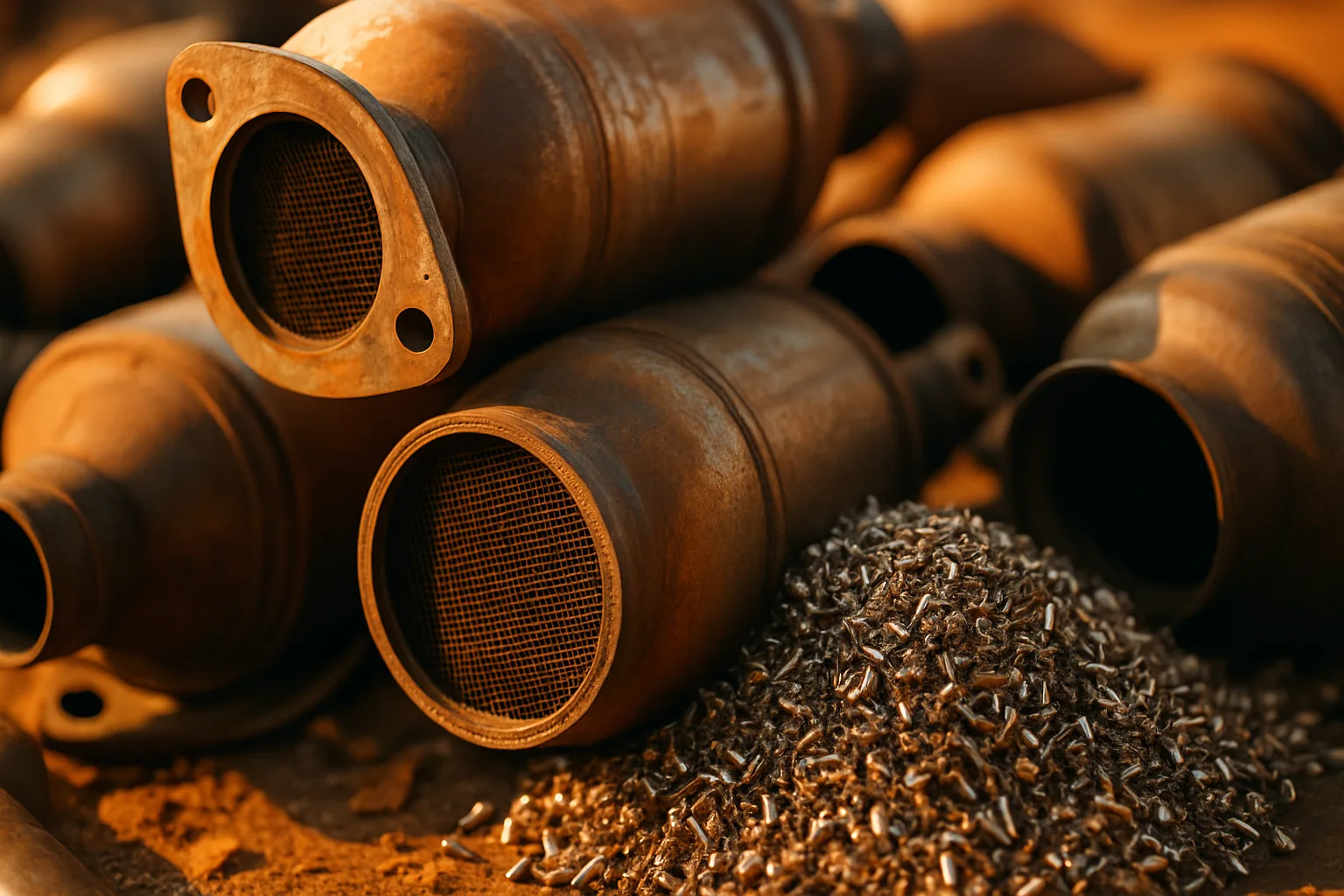
A catalytic converter serial number — sometimes called a part number or OEM number — is a manufacturer's identifier. It tells buyers what's inside the converter before they crack it open. Inside the ceramic substrate is a precise mixture of platinum group metals (PGMs): platinum, palladium, and rhodium. The serial number maps directly to a known PGM loading for that specific unit.
Buyers don't guess what's in your cat. They look up the serial number in a reference database and immediately know the expected metal content. That content, multiplied by the platinum price today, palladium spot price, and rhodium spot price, determines the theoretical value. Your offer is a percentage of that value. No serial number? You're handing the buyer all the leverage.
Serial numbers vary by manufacturer and vehicle platform. You'll encounter:
- OEM part numbers — stamped directly by the original manufacturer (GM, Ford, Honda, etc.)
- Aftermarket part numbers — from suppliers like Walker, Davico, or Eastern
- Recycled or secondary market codes — from salvage and remanufacture operations
Aftermarket converters typically carry far less PGM content than OEM units. A buyer who can't verify your serial number will assume the worst — or simply lowball you.
Where to Find the Serial Number on Your Catalytic Converter
Location varies by make and model, but there are a few reliable places to check. Run your hand along the body of the converter and look for a stamped or laser-etched code. It's usually located on the heat shield, the inlet pipe collar, or pressed directly into the shell of the unit.
For high-value cats — diesel units, large-displacement trucks, and hybrids — the code is often paired with a VIN-traceable part number. This matters because platforms like SMASH support VIN lookup, connecting your converter directly to verified vehicle data so buyers know exactly what they're bidding on.
Here's where to check:
- Heat shield edge — stamped into the outer lip, sometimes partially rusted over
- Inlet or outlet pipe collar — just above or below the welded seam
- Bottom of the converter shell — look for embossed digits, not just stickers
- Attached tag or foil label — usually found on newer aftermarket units
Stickers and foil labels don't survive outdoor storage well. If you're buying or pulling converters in the field, photograph the serial number the moment the unit comes off the vehicle. That photo is documentation you'll actually use later. SMASH's photo documentation tools are built for exactly this — captured at intake, linked to the lot, visible to every buyer before they bid.
How to Read Serial Number Formats by Manufacturer
There's no universal format. That's the frustrating part. But once you learn a few of the common patterns, you can start making educated reads in the yard without a database in front of you.
General Motors cats often carry part numbers beginning with sequences like 25161xxx or 55561xxx. Ford units frequently use five-character alphanumeric strings tied to their EEC emissions codes. Honda and Toyota OEM converters often stamp their part numbers in multi-digit sequences that correspond to the engine platform. European units — BMW, Mercedes, Volkswagen — tend to use longer strings with hyphenated segments.
Aftermarket converters are where it gets complicated. Brands like Walker use their own internal numbering, which doesn't always cross-reference cleanly with OEM databases. If you're sorting a load and you see a Walker or Eastern part number, flag it separately. The PGM content in an aftermarket unit can be 50–80% lower than its OEM equivalent. Mixing those in a lot without disclosure is the fastest way to lose a buyer's trust.
Practical sorting approach for a London yard or individual seller:
- Pull all OEM units and photograph every serial number before stacking
- Separate aftermarket and domestic-recycled units into a clearly labelled group
- Set aside any foil/unreadable codes for manual ID or assay
- Record any units with obvious physical damage — cracked biscuit, crushed shells, blown substrates
That sort takes time up front. It saves disputes, adjustments, and short-paid invoices later. To find the best scrap converter prices in Canada, documentation is the foundation. Buyers pay more for lots they can verify.
How Serial Numbers Connect to the Platinum Price Today and Your Final Payout
Here's the link between your homework and your cheque. A buyer prices your converter like this: they look up the serial number, find the PGM assay data, calculate the gross metal value using current spot prices, apply a processing margin, and make you an offer. Every step in that chain is more accurate when the serial number is readable and documented.
The platinum price today is one of three PGM spot prices driving your payout. Palladium and rhodium round out the picture. Rhodium in particular can swing dramatically — it's been known to move hundreds of dollars per troy ounce in a short window. The serial number data tells the buyer how much rhodium is in your specific converter, not just a generic average. That specificity works in your favour on premium OEM units.
Sellers who provide clean serial number documentation tend to attract more competitive bids. More buyers confident in what they're buying means real price discovery — not a gut-feel offer from whoever picks up the phone. That's the core principle behind how getting competitive bids for your scrap in Canada works on a platform like SMASH. Multiple vetted buyers, bidding on documented lots, with live metal markets informing every offer.
There's no subscription to list your converters on SMASH. No monthly fee eating into your margin. The platform only works when you do — and it starts with the data you bring to the listing.
Documenting Converters Properly Before You List or Sell
Good documentation doesn't require a lab. It requires a process. Whether you're running London scrap metal services at volume or selling a small lot as an individual, the same habits apply.
Before you list or hand off a load:
- Photograph each converter individually — top, bottom, serial number close-up
- Note the vehicle make, model, and year if known (VIN lookup helps here)
- Record approximate weight per unit where possible
- Flag any damaged, crushed, or melted-out substrates separately
- Keep aftermarket and OEM units grouped and clearly separated
This level of documentation gives buyers confidence. Confidence drives competition. Competition is what checking current Canadian scrap converter prices is actually built on — not one phone call, not one offer, not one buyer with all the information and none of the accountability.
Ontario yards that move volume already know this. The sellers getting shorted are usually the ones calling one buyer, handing over the load, and accepting whatever the invoice says. That's the old way. It's still common. It doesn't have to be yours.
Sell Smarter — What London and Ontario Sellers Should Do Next
You've sorted your load. You've photographed the serials. You know the difference between an OEM three-way cat and an aftermarket straight-through. Now what?
List on a platform where buyers compete. Document your inventory so they know what they're bidding on. Let the platinum price today and current palladium and rhodium markets do the work. That's how price discovery actually functions — not guessing, not relationships, not favours. Competition, transparency, and data.
SMASH connects sellers with vetted buyers across North America. No cold calls. No mystery pricing. Auto-invoicing built in, photo documentation linked to your lot, and a format that puts competitive pressure on the buyer side of the equation. If you're in London or anywhere across Ontario selling catalytic converters at any volume, this is where to start.
To read Canadian scrap converter pricing guides and stay current on market conditions, keep that resource close. Markets move. The platinum price today isn't the platinum price next week. The sellers who track it — and document properly — are the ones who stop leaving money on the floor.
Find the best Canadian scrap converter prices and get a free quote at best-scrap-converter-prices.ca. It costs nothing to find out what your load is actually worth.
Disclaimer: Catalytic converter prices fluctuate daily based on platinum, palladium, and rhodium spot markets. Always check current rates before committing to a sale.
Frequently Asked Questions
Q: Where is the serial number on a catalytic converter?
The serial number is typically stamped on the heat shield, the inlet pipe collar, or directly into the converter shell. On newer aftermarket units, it may appear on a foil label. Always photograph it before storage — labels fade and stamps rust over time.
Q: How does the platinum price today affect what I get for my catalytic converter?
Buyers calculate converter value using current PGM spot prices — platinum, palladium, and rhodium. The serial number tells them how much of each metal is in your specific unit. A higher platinum price today means higher theoretical value, but buyers apply a processing margin on top of that. Documented serial numbers help you get a fairer share of that value.
Q: Are aftermarket catalytic converters worth less than OEM units?
Yes, significantly. Aftermarket converters typically contain 50–80% less platinum group metal than their OEM counterparts. Sorting and declaring them separately is important — mixing them into an OEM lot without disclosure will damage your credibility with buyers and result in adjustments at settlement.
Q: How do I find a catalytic converter buyer in London, Ontario?
Local yards operate in London and across Ontario, but your best offer rarely comes from one phone call. Platforms like SMASH connect you with vetted buyers across North America who compete on documented lots. More competition means better price discovery — especially on high-value OEM units where serial number data matters most.
Q: Do I need to sort my converters before listing them on an auction platform?
Sorting isn't mandatory, but it directly affects your result. Buyers price uncertainty into unsorted lots. A well-documented, sorted load — OEM separated from aftermarket, serials photographed, damaged units flagged — gives buyers the confidence to bid aggressively. That confidence is where better pricing comes from.
Follow SMASH on LinkedIn for scrap metal market updates, PGM price movements, and industry insights: linkedin.com/company/scrap-metal-auction-sales-hub