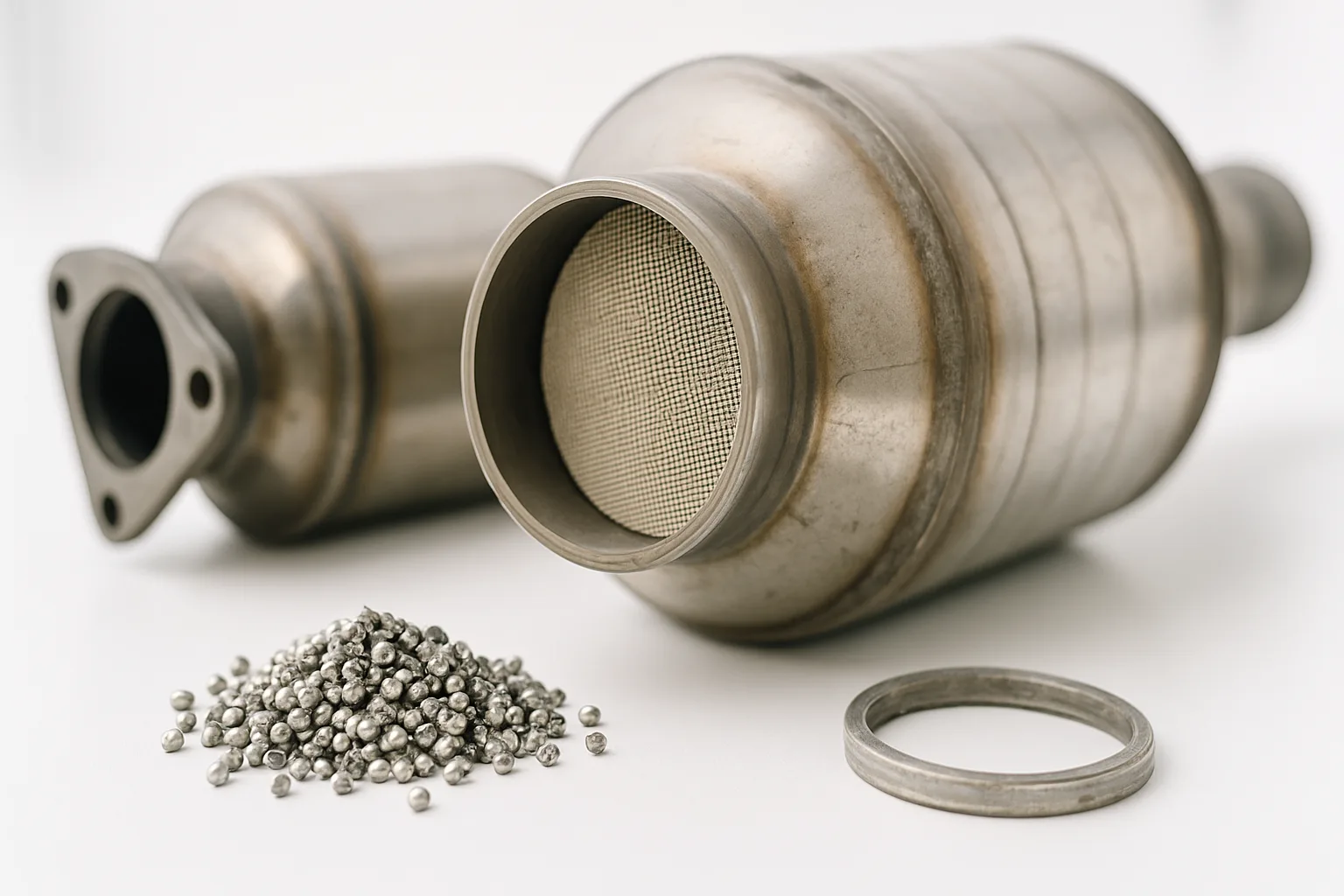
What's Actually Inside Your Catalytic Converter — And Why It Matters for OEM Catalytic Converter Value
Most converter sellers in Abbotsford know they're sitting on something valuable. What most don't know is why. The difference between getting a fair price and getting lowballed almost always comes down to one thing: understanding what's inside the converter and how those materials are priced. Once you understand that, you stop guessing and start negotiating.
This isn't a chemistry lecture. It's a practical breakdown of the precious metals inside OEM catalytic converters, how they drive OEM catalytic converter value, and how platforms like SMASH help Canadian sellers stop leaving money on the table.
The Three Precious Metals That Drive Catalytic Converter Prices Today
Every OEM catalytic converter contains a ceramic or metallic substrate coated with a washcoat of precious metals. Those metals do the actual work of converting harmful exhaust gases into less harmful emissions. They're also the reason your old converter is worth real money at a scrap yard.
The three primary metals are:
- Platinum (Pt) — One of the rarest metals on earth. Used extensively in diesel converters and many OEM gasoline units. Platinum pricing is tracked on global commodity markets and fluctuates daily.
- Palladium (Pd) — Found in high concentrations in gasoline engine converters. Palladium has seen significant price swings over recent years and remains one of the most valuable elements by weight in a typical OEM converter.
- Rhodium (Rh) — Present in smaller quantities but extremely valuable. Rhodium is almost exclusively sourced from catalytic converter recycling. Even a small amount can significantly affect a converter's total scrap value.
These three metals — collectively called PGMs, or platinum group metals — are what buyers actually pay for. When a yard or a processor quotes you a price on a converter, they're working backward from current PGM spot prices, the specific converter type, and estimated PGM loading. That loading varies significantly by vehicle make, model, year, and engine size.
OEM vs. Aftermarket: Why the Difference Hits Your Wallet Hard
Not all catalytic converters are created equal. An OEM (Original Equipment Manufacturer) catalytic converter is installed at the factory, engineered to exact emissions standards, and loaded with significantly higher concentrations of platinum, palladium, and rhodium than a replacement aftermarket unit.
Aftermarket converters are built to meet minimum legal thresholds for emissions compliance. They use less PGM loading to keep manufacturing costs down. That's fine for driving — but when it comes time to scrap, the difference in value can be substantial. A genuine OEM unit from a higher-end vehicle can be worth multiples of what an aftermarket replacement fetches.
This is why it matters whether you know what you're selling. If you've replaced your original converter at some point — or bought a used vehicle that had a replacement installed — you may be working with a lower-value unit. Experienced buyers and processors check this. You should too. When you find the best scrap converter prices in Canada, knowing OEM versus aftermarket status is one of the first questions that comes up.
How PGM Loading Varies by Vehicle — and What That Means for Scrap Converter Prices Canada
Here's where converter pricing gets genuinely complicated. Two converters that look identical on the outside can carry very different PGM content. The amount of precious metal loaded onto the substrate depends on:
- Engine displacement and fuel type (diesel vs. gasoline)
- Vehicle emission standards at the time of manufacture
- Manufacturer-specific formulations and engineering choices
- The position of the converter in the exhaust system (pre-cat vs. main cat)
- Model year — stricter emission standards over time have sometimes increased PGM loading
Luxury vehicles, larger trucks, and certain foreign-market OEM units often carry higher PGM loading. A converter from a full-size pickup with a large displacement engine is typically worth more than one from a small economy car — but not always. Some surprisingly modest vehicles have high-value converters because of the emission standards they were built to meet.
This is exactly why accurate identification matters. Processors use serial numbers, physical measurements, and proprietary databases to categorize converters by PGM content. If you're selling a load of mixed converters, proper identification and documentation can meaningfully affect your total payout. Platforms built around transparency — like SMASH — push for this kind of documentation upfront, which gives buyers the confidence to bid competitively.
For sellers in Abbotsford and across British Columbia, understanding these variables before you call a buyer puts you in a much stronger position. To read Canadian scrap converter pricing guides that break this down further by vehicle type, the resources are there — use them.
Why Transparency in Converter Identification Changes the Price You Get
The old way of selling converters in Canada looks like this: you call one buyer, describe what you have, get a verbal quote, and take it or leave it. You have no idea if that number reflects current PGM markets. You have no idea how the buyer categorized your units. You're trusting someone whose interests are the opposite of yours.
That's not cynicism — it's just how single-buyer transactions work. The buyer holds the price information. You don't. That information gap costs Canadian sellers money every day.
The SMASH approach is different. SMASH is a B2B scrap metal marketplace built around competitive auctions and documented inventory. When you list your converters through SMASH, you document them properly — photos, serial numbers, categorization — and vetted buyers compete for your load. Competition is what creates real price discovery. More buyers bidding on the same documented inventory means the price reflects actual market demand, not what one buyer decides to offer.
For a yard or a seller moving volume through Abbotsford or anywhere else in British Columbia, the difference between a single-buyer quote and a competitive auction outcome can be significant. You don't have to guess. You let the market tell you what your load is worth.
To find the best price for your scrap in Canada, the process starts with knowing what you have and putting it in front of qualified buyers who actually compete for it.
How the SMASH Platform Supports Converter Sellers in Canada
SMASH wasn't built for tire kickers. It's a SMASH scrap metal auction platform designed for yards, dismantlers, and volume sellers who move real product and need real pricing. The platform handles the friction points that kill deals in traditional converter sales — documentation, buyer vetting, invoicing, and price transparency.
Here's how it works in practice for converter sellers:
- Inventory documentation — You photograph and record your converters. Serial numbers, condition, and categorization are captured upfront. This gives buyers the data they need to bid with confidence.
- Vetted buyer network — SMASH buyers are qualified processors and end users, not random cold callers. They have the capacity to purchase and the incentive to compete.
- Auction format — Your load goes to multiple buyers simultaneously. They bid. You see the competition. The price reflects the market, not a single buyer's opening offer.
- Auto-invoicing and documentation — Deal closes, paperwork generates. No chasing buyers for paperwork or reconciling handwritten notes.
- No subscription fees — SMASH earns when you earn. No upfront cost to list.
For Abbotsford scrap metal services, connecting to a buyer network that extends well beyond local options changes the competitive landscape entirely. You're no longer limited to who happens to be operating in your area. Your converters reach buyers across North America.
When you're ready to check current Canadian scrap converter prices and understand what your load could bring in a competitive environment, the starting point is knowing your product. The PGM content inside your OEM converters is real, measurable, and tied directly to global commodity markets. You deserve a price that reflects that.
Frequently Asked Questions
Q: What makes an OEM catalytic converter worth more than an aftermarket one?
OEM converters are engineered to factory emission specifications and typically carry significantly higher loadings of platinum, palladium, and rhodium than aftermarket replacement units. Aftermarket converters use minimal PGM content to meet basic legal requirements while keeping manufacturing costs low. When you scrap them, that difference in precious metal content translates directly into a difference in payout.
Q: How do catalytic converter prices today connect to precious metal spot prices?
Converter prices are directly tied to live platinum, palladium, and rhodium spot prices on global commodity markets. Processors calculate converter value based on estimated PGM content multiplied by current spot prices, minus refining costs and margin. This means converter scrap values shift daily — sometimes significantly — based on what's happening in commodity markets globally. Always check current rates before committing to a sale.
Q: How do I find catalytic converter buyers near me in Abbotsford?
Local scrap yards and dismantlers in Abbotsford will purchase converters, but local options represent a limited buyer pool with limited competition. Platforms like SMASH connect you to vetted buyers across North America who compete for your inventory, which generally results in better price discovery than calling one local buyer and accepting their first offer.
Q: Does converter condition affect OEM catalytic converter value?
Yes, but less than most sellers expect. The PGM content is embedded in the substrate and is not significantly affected by external damage, rust, or age. What does matter is whether the substrate itself is intact — a cracked or "rattled" converter with a broken-up substrate may be graded differently than an intact unit of the same type. Document condition accurately and let buyers factor it in.
Q: Is SMASH available to converter sellers across British Columbia?
Yes. SMASH operates as a North American B2B scrap metal marketplace, and sellers across British Columbia — including yards and individual sellers in Abbotsford — can list converters through the platform. There are no subscription fees, and the auction format means your load reaches multiple qualified buyers regardless of your physical location.
If you're sitting on OEM converters and wondering whether you're getting a fair price, you probably aren't — not if you're relying on a single local quote. The precious metals inside those units are priced on global markets every day. Your sale price should reflect that. Start by doing the homework, document your inventory properly, and put your load in front of buyers who actually compete. When you're ready, find the best scrap converter prices in Canada and get a free quote at best-scrap-converter-prices.ca.
Disclaimer: Catalytic converter prices fluctuate daily based on PGM spot markets. All pricing information in this article is general in nature. Check current rates before making any selling decisions.
Follow SMASH on LinkedIn for ongoing scrap metal market updates, converter pricing insights, and industry news across North America.