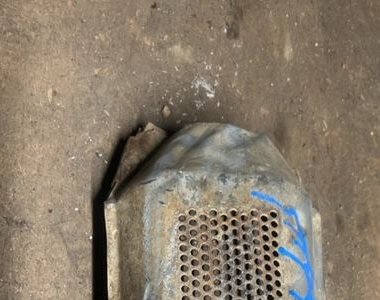
Catalytic Converter Theft Is Costing Legitimate Recyclers — Here's What's Actually Happening to the Market
The rhodium price today sits at levels that would have seemed impossible a decade ago. That's not just a trivia point — it's the reason catalytic converter theft has become one of the most disruptive forces in the scrap recycling industry across North America, including right here in Saskatoon. When a single converter can contain metals worth hundreds of dollars, it stops being scrap and starts looking like opportunity to the wrong people.
This article isn't about scare tactics. It's about what's actually happening, why it matters to legitimate recyclers and sellers in Saskatchewan, and how transparent platforms are helping honest yards separate themselves from the chaos.
Why Rhodium Price Today Drives Converter Theft — And Legitimate Demand
Catalytic converters contain three precious group metals (PGMs): platinum, palladium, and rhodium. Rhodium is the one that changes everything. It's rarer than gold, has no substitute in autocatalyst applications, and its price swings can be violent. When the rhodium price today spikes, converter values spike with it — and so does theft.
Here's the problem: thieves don't care about documentation, chain of custody, or what the legitimate market needs. They pull converters in parking lots and driveways, flood the grey market with units that have no provenance, and drive down trust across the board. Legitimate sellers — auto recyclers, repair shops, fleet operators in Saskatoon and across Saskatchewan — end up competing in a market that's been distorted by stolen inventory.
- Rhodium, palladium, and platinum content varies significantly by vehicle make and converter type
- OEM converters from high-value vehicles (Toyota Prius, Ford F-250, RAM trucks) are primary targets
- A single OEM converter from certain luxury SUVs can contain PGMs worth several hundred dollars at current refinery rates
- Theft volume directly impacts how buyers price incoming inventory — they price in risk, which hurts honest sellers
The result: when theft is high, buyers tighten up. They add documentation requirements, lower their opening offers, and become more selective. That's not unreasonable — but it punishes the legitimate side of the market for a problem they didn't create.
How Converter Theft Distorts OEM Catalytic Converter Value and Market Pricing
When stolen converters flood a region, it creates a pricing paradox. On paper, high rhodium price today should translate to stronger converter values for sellers. In practice, buyers dealing with grey-market supply become more cautious — and that caution shows up as lower offers, more friction, and slower payouts for everyone, including honest yards.
OEM catalytic converter value is determined by assay — the actual PGM content recovered through smelting and refining. But before a converter reaches assay, it has to get through a buyer who's pricing blind. They're looking at the outside of a unit, making judgments about make, model, and condition, and factoring in their own risk tolerance. When stolen units are circulating — often misrepresented, sometimes altered — buyers get burned. Their response is predictable: offer less, ask for more documentation, or walk away from certain load types entirely.
For a yard in Saskatoon sitting on a legitimate load of OEM converters pulled from insurance write-offs or end-of-life vehicles, this matters. Your real converter's value gets dragged down by market-wide distrust that you had nothing to do with.
What Saskatchewan Yards Are Dealing With Right Now
Saskatchewan isn't immune. Theft has been reported in Saskatoon, Regina, and smaller communities across the province. Trucks, SUVs, and hybrid vehicles are consistent targets. Taller vehicles get hit hardest — easier access, faster removal.
Beyond the theft itself, the downstream effects hit legitimate recyclers hard:
- Tighter buyer scrutiny: Buyers now routinely ask for VINs, vehicle ownership records, and photo documentation before quoting loads — even on clearly legitimate inventory.
- Delayed payouts: Verification takes time. If your documentation is incomplete, you wait longer for your money.
- Inconsistent pricing: Without transparency in the buying process, sellers in Saskatchewan have no way to know if a quote is fair or low. One buyer, one price — that's a guessing game.
- Reputation risk for yards: Operating under scrutiny means every load needs to be airtight. Missing a BOL or a packing list can flag your shipment even when everything is above board.
The legitimate recycling market is essentially absorbing the cost of an enforcement problem. That's not sustainable — and it's why documentation, competition, and transparency matter more than ever when you sell catalytic converters in Saskatchewan.
Why Selling Catalytic Converters Online Changes the Equation
The old model — call one buyer, take their price, ship the load — was never great. In a distorted market, it's even worse. If your single buyer is pricing in elevated theft risk, you have no way to know. You just take the number and move on.
When you sell catalytic converters online through a competitive auction platform, the dynamic shifts. Multiple vetted buyers are bidding against each other on your documented load. They're competing for your business. That competition helps reveal what your load is actually worth in the current market — not what one buyer decides to offer on a slow Tuesday.
Platforms like SMASH are built specifically for this. Find the best price for your scrap in Canada by putting your load in front of buyers who are actively competing for it, not just taking it at their convenience. SMASH uses photo documentation, serial tracking, and VIN lookup to help your load stand up to buyer scrutiny — which matters especially now, when the market is hyperaware of provenance issues.
When you sell catalytic converters Saskatchewan sellers, you're not in isolation anymore. You're connected to a North American buyer network that prices based on real PGM markets, not rumor or a single buyer's risk appetite. To find the best scrap converter prices in Canada, you need more than one offer — you need a process that generates real competition.
Documentation Is Your Best Defense — And Your Best Leverage
If theft has made buyers more documentation-hungry, the answer isn't frustration — it's preparation. A well-documented load of converters is worth more than an identical undocumented load in today's market. Full stop. Buyers will pay more — or at least offer faster — when they can see exactly what they're getting and confirm it's clean.
Here's what strong documentation looks like for a converter load:
- VINs or serial numbers for units that came from identifiable vehicles
- Photo documentation of each converter, showing the substrate opening, condition, and any visible part numbers
- Bill of lading (BOL) and packing list that match the physical load
- Source documentation — whether that's a vehicle title, insurance paperwork, or purchase record from another yard
- Accurate converter type identification — foil, ceramic, DPF, OEM versus aftermarket
SMASH's inventory tools are built around this. The platform walks you through what buyers need before your load even goes to auction. That structure doesn't just protect you — it positions your load to get stronger bids. Buyers bidding on a documented load are bidding with confidence. Confidence translates to money. To read Canadian scrap converter pricing guides and understand what documentation does to your per-unit value, you'll find the difference isn't trivial.
If you're operating Saskatoon scrap metal services, getting your documentation process right now — before a buyer challenges your load — is the move that protects your business long-term.
How to Protect Your Value When Selling Converters in a Distorted Market
The rhodium price today is only one variable. Your actual return depends on how you sell, who you sell to, and whether your load is positioned to attract real competition. Here's a practical framework for Saskatchewan recyclers navigating this market:
- Know your load before you list it. Identify converter types, pull part numbers where visible, and photograph everything. Don't ship blind.
- Don't accept a single quote as the market. One buyer's number is not the market. The market is what multiple informed, competing buyers are willing to pay.
- Use platforms that vet their buyers. SMASH works with vetted buyers — that means you're not just getting random offers, you're getting offers from buyers who have skin in the game and are priced to win your business.
- Track PGM market movements. Rhodium, palladium, and platinum prices move. Knowing generally where the market is helps you time larger loads and evaluate whether an offer makes sense.
- Keep your documentation clean and consistent. Every load, every time. Build the habit now so it's not scramble when a buyer asks.
The theft problem isn't going away overnight. But the sellers who come out ahead in a distorted market are the ones who treat documentation and competition as standard practice — not as extras. Check current Canadian scrap converter prices and get a sense of where the market sits before your next load ships.
If you want to sell catalytic converters online and actually capture what your load is worth — not what one nervous buyer feels like offering — the starting point is a platform that puts buyers to work competing for you. That's what SMASH is built for. No subscription fees. We only win when you win.
Ready to stop guessing and start competing? Find the best Canadian scrap converter prices — get a free quote at best-scrap-converter-prices.ca.
Disclaimer: Converter prices fluctuate based on daily precious metal markets including rhodium, palladium, and platinum. Always check current rates before committing to a sale.
Frequently Asked Questions
Q: How does the rhodium price today affect what I get paid for my catalytic converters in Saskatoon?
Rhodium is one of three precious group metals (PGMs) recovered from catalytic converters, alongside platinum and palladium. When the rhodium price today is high, converters with significant rhodium content — typically from late-model OEM units — are worth more at assay. But your actual payout depends on how your load is sold: one buyer versus competitive bidding makes a real difference in what that PGM value translates to in your pocket.
Q: What is my OEM catalytic converter worth at a scrap yard?
OEM catalytic converter value varies based on vehicle make, model, year, and the actual PGM loading in the substrate. Toyota, Honda, and certain GM and Ford applications are often higher-value units. A scrap yard will typically offer a flat per-unit or per-pound price, which may not reflect true assay value. Selling through a competitive platform can help close that gap by getting multiple buyers bidding on your specific load.
Q: Is it legal to sell catalytic converters in Saskatchewan?
Yes — selling converters from vehicles you own or have sourced legitimately is legal in Saskatchewan. However, provincial regulations increasingly require proof of ownership and source documentation at the point of sale. Keeping clean records — VINs, purchase paperwork, BOLs — protects you and speeds up the transaction process with buyers who are rightfully asking for documentation.
Q: How do I sell catalytic converters online from Saskatoon?
Platforms like SMASH allow you to list your converter inventory, document your load with photos and serial information, and receive competitive bids from vetted buyers across North America. The process is designed for legitimate recyclers and yards — not a grey-market free-for-all. You ship once you've accepted a bid, and auto-invoicing handles the paperwork.
Q: Why are scrap yards offering lower converter prices than I expected?
Theft-driven market distortion is a real factor — buyers tighten their offers when grey-market supply is high and provenance is uncertain. Beyond that, a single buyer has no incentive to offer their best number upfront. Getting multiple buyers competing for your load is the most reliable way to find out what your converters are actually worth in the current market. Don't mistake one low offer for the market rate.
Stay current on scrap metal market movements and converter pricing trends — follow SMASH on LinkedIn for industry updates straight from the yard floor.