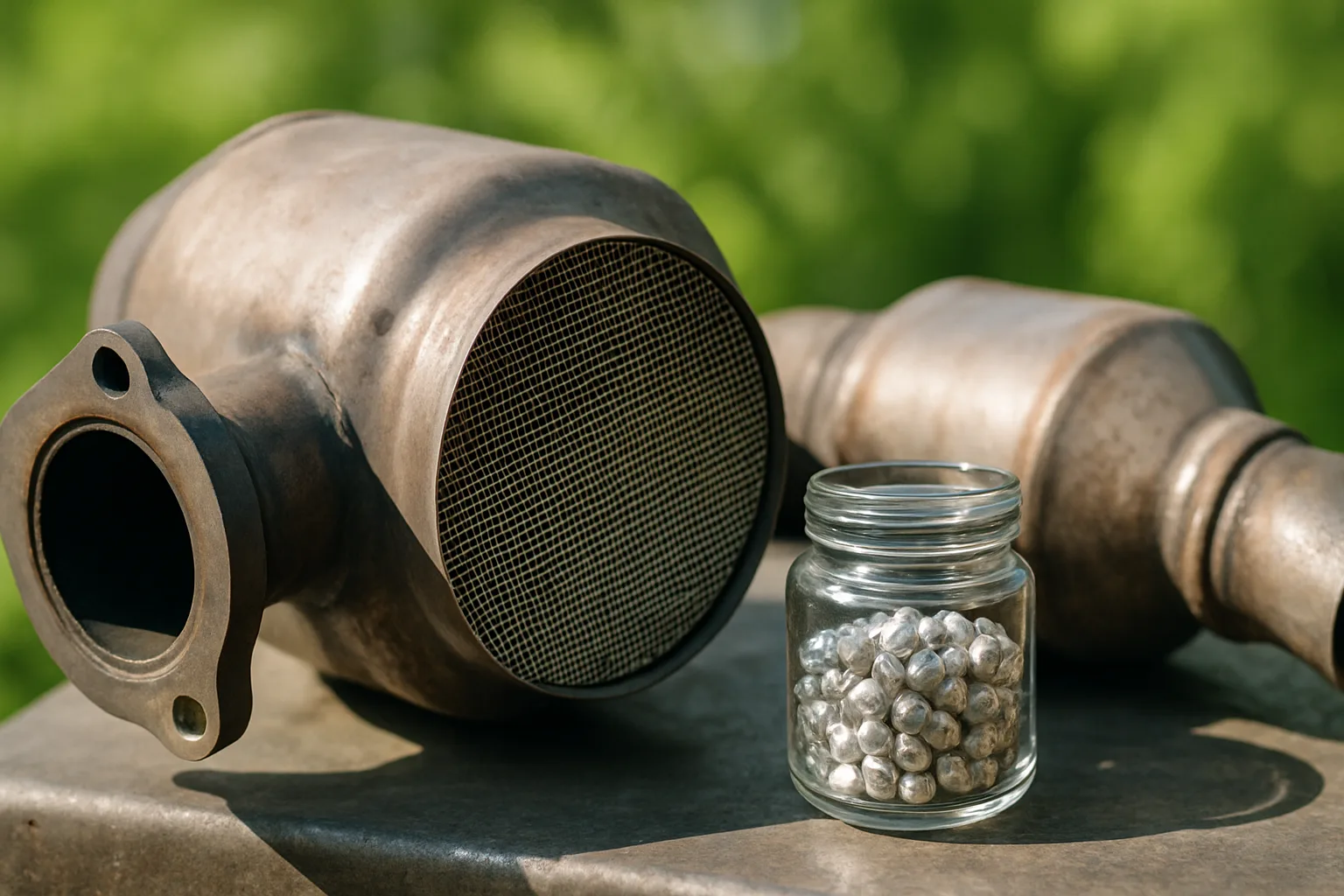
Diesel vs. Gasoline Catalytic Converters: What's Actually Inside and Why It Matters When You Sell
Most converter sellers treat every cat the same. Pull it off the vehicle, toss it in a bin, and hope for a decent price. That's leaving money on the table. Diesel catalytic converters — specifically DPFs (Diesel Particulate Filters) and DOCs (Diesel Oxidation Catalysts) — are fundamentally different from gasoline converters in construction, precious metal content, and scrap value. Knowing the difference helps you sell catalytic converters online with confidence instead of guessing.
This is especially relevant right now in mid-2026, as platinum group metals (PGMs) continue to see pricing volatility tied to global mining supply constraints and shifting emissions regulations in North America. If you're in Saint John processing fleet equipment, heavy trucks, or older diesel vehicles coming off lease, you need to understand exactly what you're holding before you price it.
How Gasoline Converters Work — and What Makes Them Valuable
Gasoline catalytic converters use a three-way catalyst design. They handle three jobs at once: oxidizing carbon monoxide (CO), oxidizing unburned hydrocarbons (HC), and reducing nitrogen oxides (NOx). That triple function requires a precise blend of precious metals — typically platinum, palladium, and rhodium — coated onto a ceramic or metallic substrate inside the canister.
The substrate is the washcoat carrier. It's engineered to maximize surface area so the PGMs can do their work at high temperatures. In a gasoline converter, the ceramic honeycomb structure is fine-celled and brittle. When you're cataloguing these for sale, photo documentation matters — cracked or rattling substrate affects value. Platforms like the SMASH Recycling auction platform make it easier to document and present inventory accurately so buyers can bid with confidence.
From a scrap value standpoint, gasoline converters often carry meaningful palladium and rhodium loadings alongside platinum. The actual gram-per-unit loading varies significantly by OEM, engine size, and vehicle vintage. A domestic half-ton truck converter looks nothing like a compact import cat when you crack it open and assay the substrate.
DPF and DOC: The Diesel Side of the Equation
Diesel engines produce soot — fine carbon particulate that gasoline engines don't generate in the same quantity. That's why diesel vehicles need a DPF (Diesel Particulate Filter) in addition to the DOC (Diesel Oxidation Catalyst). These are two separate components, often bolted together in series in the exhaust system, and they have very different precious metal profiles.
The DOC functions similarly to a gasoline converter — it oxidizes CO and hydrocarbons. It contains platinum and sometimes palladium, but generally no rhodium. The DPF is a soot trap. Its job is to capture particulate matter and periodically burn it off through a regeneration cycle. DPFs contain platinum as a catalyst to assist regeneration, but loadings tend to be lower per unit than what you'd find in a typical gasoline three-way converter.
Here's what that means practically for scrap value:
- DOCs — moderate platinum content, limited palladium, no rhodium. Value is real but typically lower than a comparable gasoline cat.
- DPFs — lower PGM loading overall, but physical size is large, and substrate weight matters. Some DPFs from heavy-duty applications carry more washcoat mass than a typical passenger car cat.
- SCR catalysts (Selective Catalytic Reduction, used with DEF/AdBlue systems) — these are a separate component again. They rely on urea-based chemistry for NOx reduction and typically contain no platinum group metals at all. Don't confuse them with DPFs.
If you're running a yard in New Brunswick processing commercial trucks, construction equipment, or transit buses, you're going to see a lot of these diesel aftertreatment components. Misidentifying a DPF as a high-value gasoline cat — or vice versa — creates pricing errors that add up fast across a load.
Platinum Price Today and Why It Shifts Your Diesel Cat Value
Because diesel DOCs and DPFs lean heavily on platinum (rather than the palladium-heavy profile of many gasoline converters), the platinum price today is the number that moves diesel converter scrap values most directly. As of July 2026, platinum markets remain sensitive to South African supply dynamics — the Bushveld Complex produces the majority of global platinum, and any disruption ripples through refinery pricing within days.
Palladium and rhodium, which dominate gasoline converter value calculations, operate on separate supply and demand curves. Rhodium in particular has seen dramatic swings in recent years — peaks and corrections that have reshaped how yards price high-rhodium gasoline cats. Diesel cats are less exposed to rhodium volatility but more exposed to platinum movement.
This is why static price lists are dangerous. A scrap catalytic converter price list that was accurate three months ago may meaningfully misrepresent current values on both the diesel and gasoline sides. When you find the best scrap converter prices in Canada, you want current market-tied data, not a static PDF. Checking live rates before you sell isn't optional — it's the difference between a fair deal and a bad one.
Disclaimer: Precious metal prices fluctuate daily based on global commodity markets. Always verify current rates before selling. Nothing in this article constitutes a guaranteed price or offer.
Scrap Metal Inventory Management for Mixed Diesel and Gasoline Converter Loads
If you're aggregating converters from multiple sources — dealerships, fleet operators, independent shops — you're almost certainly handling a mix of gasoline and diesel units. Throwing them into one bin and selling the lot as a mixed load is the fastest way to undersell the high-value gasoline units while subsidizing the buyer's margin on the diesels.
Proper scrap metal inventory management means separating, identifying, and documenting by category. Here's a basic workflow that works for yards of any size:
- Identify the vehicle type at intake. Diesel or gasoline? This is usually obvious from the vehicle or paperwork, but not always. A VIN lookup confirms engine type instantly.
- Separate DPF/DOC from three-way gasoline cats. Never commingle these in the same bin if you're pricing by category.
- Document with photos. End-cap photos, serial numbers where visible, overall condition. Cracked substrates, damaged cans, and missing heat shields all affect value.
- Weight and count by category. DPFs are physically heavy — a large truck DPF can weigh 20–40 lbs or more. That weight needs to be captured accurately in your inventory records.
- Price each category against current PGM spot. Diesel against platinum-weighted models, gasoline against palladium/rhodium-weighted models.
SMASH is built for exactly this kind of detailed inventory management. Serial tracking, photo documentation, and category-level organization mean buyers get real information — and real information drives competitive bids. Read Canadian scrap converter pricing guides to dig deeper into how to structure converter inventory for auction.
For Saint John yards handling marine diesel and industrial equipment in addition to highway vehicles, the inventory mix gets even more complex. Large-bore industrial catalysts can be significant units — and they won't be priced correctly if lumped in with light-duty passenger car cats.
Selling Diesel Converter Scrap Online: What Buyers Actually Want to See
The market for diesel converter scrap — particularly DPFs — has matured significantly. Specialized processors can now efficiently assay and recover platinum from DPF substrates that would have been difficult to handle a decade ago. That means demand is real. But buyers bidding online on diesel converter lots need information to price competitively.
When you sell catalytic converters online, especially diesel units, the documentation you provide directly affects the quality of bids you receive. Buyers want:
- Clear photos of end caps and the overall unit
- Weight per unit or per lot
- Vehicle application or OEM information where known
- Condition notes — particularly whether the DPF has been thermally damaged from excessive regen cycles
- Quantity and lot composition (all DPF, all DOC, mixed, or heavy-duty vs. light-duty)
Vague listings get vague bids. Detailed listings attract serious buyers who can commit to competitive pricing because they understand what they're buying.
If you're based in Saint John or anywhere across New Brunswick, Saint John scrap metal services can help you connect with the right buyers for both diesel and gasoline converter inventory. Don't default to whoever calls first. Put your inventory in front of multiple vetted buyers and let competition do its job.
SMASH brings that competition to your lot. No subscription fees. No locked-in relationships with a single buyer. You post your documented load, vetted buyers bid, and you see the market — not just one person's interpretation of it. Check current Canadian scrap converter prices before your next sale so you walk in informed.
Platinum Group Metals Recycling in 2026: Regulatory Context
The platinum group metals recycling sector in North America operates in a tightening regulatory environment heading into the latter half of 2026. Provincial and federal rules around hazardous waste handling, documentation requirements for converter transactions, and anti-theft compliance measures have all evolved. In New Brunswick, yards are expected to maintain transaction records that can demonstrate legal acquisition of converter inventory — not just for theft deterrence, but as part of general metals dealer compliance.
This isn't a reason to avoid the market. It's a reason to document properly from the start. Every BOL, every photo, every serial or VIN record you create protects your yard and also makes your inventory more attractive to buyers who need to demonstrate clean supply chain provenance to their refinery partners. Good documentation isn't just good practice — it's a competitive advantage when you're selling into a market that values transparency.
If you want to maximize your return on diesel and gasoline converter inventory, the path is straightforward: identify accurately, document thoroughly, price against current PGM markets, and sell through a platform that puts your load in front of real buyers. That's how yards in Saint John and across Canada get the best converter price — not by luck, but by process.
Frequently Asked Questions
Q: Are diesel DPFs worth scrapping for precious metals?
Yes, but understand what you're selling. DPFs contain platinum as a regeneration catalyst, though loadings are generally lower per unit than many gasoline three-way converters. Heavy-duty DPFs from trucks and buses can make up for lower per-unit PGM concentration with larger substrate mass. Accurate identification and documentation help you get fair market value when you sell catalytic converters online.
Q: How do I tell a DPF from a regular gasoline catalytic converter?
DPFs are typically larger, heavier, and often have a distinctive wall-flow substrate structure (if you look at the end face, you'll see alternating plugged channels rather than the open honeycomb of a gasoline cat). They're also found exclusively in diesel vehicles. A VIN lookup or vehicle service records confirm engine type quickly. When in doubt, document the unit and let a buyer with assay capability price it appropriately.
Q: Does platinum price today affect what I get paid for diesel converter scrap?
Directly, yes. Diesel DOCs and DPFs are platinum-dominant in their PGM profile. When the platinum price rises, diesel converter scrap values generally follow. Gasoline converters are more sensitive to palladium and rhodium pricing. Check current precious metal spot prices before you sell — even a few days' delay on a large lot can mean a meaningful difference in return.
Q: Can I sell diesel converter scrap in Saint John, New Brunswick?
Absolutely. Saint John has active scrap metal buyers, and New Brunswick yards handle diesel converter inventory regularly from transportation, marine, and industrial sectors. The key is getting your inventory in front of multiple buyers rather than defaulting to a single local offer. Platforms like SMASH connect you to vetted buyers across North America, which means better price discovery on every load.
Q: What's the best way to manage mixed converter inventory for sale?
Separate your gasoline and diesel units before pricing. Use photo documentation, weight records, and vehicle application data to build a clear picture of each category. Mixed, undocumented lots price at a discount because buyers can't assess risk accurately. Detailed scrap metal inventory management — especially using a platform with serial tracking and photo documentation built in — consistently produces better outcomes than tossing everything in a single bin.
Ready to stop guessing and start selling with real market data behind you? Find the best scrap converter prices in Canada — get a free quote at best-scrap-converter-prices.ca and see what your diesel and gasoline converter inventory is actually worth today.
Follow SMASH on LinkedIn for ongoing industry updates, PGM market insights, and scrap metal pricing intelligence: SMASH Recycling on LinkedIn.
```