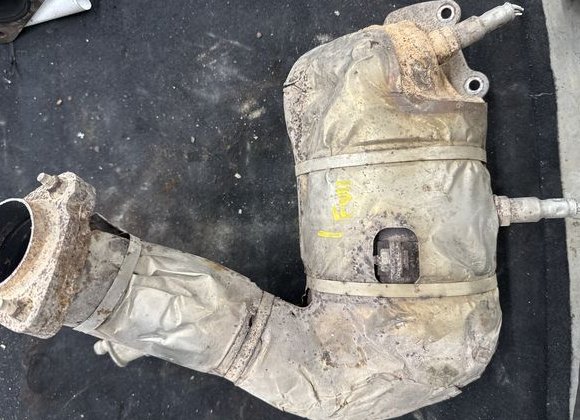
From Exhaust System to Precious Metal: How a Catalytic Converter Becomes Cash
Most people know catalytic converters are worth something. Few understand why — or how much value gets left on the table when you sell without knowing what's inside. The lifecycle of a cat, from the moment it leaves a vehicle to the point where palladium, platinum, and rhodium get recovered and traded on the global market, is more involved than most sellers realize. Understanding it changes how you sell.
If you're tracking catalytic converter prices today, this article will show you exactly why those prices move, what happens after your cat leaves your yard, and how to make sure you're capturing real market value — not someone else's margin.
Stage One: Removal and Initial Assessment
A catalytic converter's journey starts the moment a vehicle reaches end-of-life. At a dismantling yard, the converter gets cut from the exhaust system — sometimes within minutes of a vehicle arriving. That's when the first valuation decision happens, and it's the moment most sellers underestimate.
Not all cats are equal. The value of a converter depends on several factors that need to be assessed before pricing:
- Make, model, and year of the vehicle — a 2019 Toyota Prius cat is not worth the same as a 2008 Ford Ranger cat
- Converter type — OEM converters hold more precious metal than aftermarket units
- Physical condition — cracked substrates, missing biscuits, or tampered units reduce recovery yield
- Serial number or VIN traceability — verified units often attract more confident bids from buyers
In Edmonton, many yards see a high volume of trucks and SUVs — vehicles that often carry larger, higher-value converters. That's a meaningful advantage if you're documenting and selling correctly. Platforms like SMASH use VIN lookup and serial tracking at this stage to build verified inventory records, which matters significantly when buyers are evaluating what to bid.
Stage Two: Sorting, Documentation, and Building a Sellable Lot
Once a converter is removed and assessed, it enters the sorting stage. This is where operations differ dramatically between yards that maximize value and those that leave money behind. Throwing mixed units into a bin and calling one buyer is the old way. It still happens constantly — and it costs sellers real money.
Smart yards sort by type, origin, and condition. They photograph each unit, log serial numbers, and build documented lots that buyers can actually evaluate. Finding the best scrap converter prices in Canada starts here — because a buyer who can see exactly what they're bidding on will bid more aggressively than one who's pricing in uncertainty.
The documentation step also matters for compliance. As provincial regulations around catalytic converter sales have tightened across Alberta and beyond, having traceable records isn't just good business — it's increasingly expected. Yards that track provenance protect themselves from liability and signal to buyers that they're dealing with a legitimate, organized operation.
SMASH's inventory tool is built for this stage. Sellers upload photos, log unit details, and attach documentation before a listing even goes live. That transparency creates better auctions — which creates better prices.
Why Catalytic Converter Prices Today Move the Way They Do
Here's the part most sellers don't fully connect: catalytic converter prices today are directly tied to live precious metal markets. The three metals inside every cat — platinum, palladium, and rhodium — trade on global commodity exchanges. Their prices shift daily, sometimes dramatically.
Rhodium, in particular, has seen some of the most volatile pricing of any industrial commodity over the past several years. When rhodium spikes, certain converter types that were previously mid-tier suddenly become high-value units. When it drops, the opposite happens. Sellers who check current Canadian scrap converter prices regularly are better positioned to time their sales around market conditions.
The recovery percentages also factor in. Processors don't recover 100% of the precious metal content — there are losses at every stage of smelting and refining. A buyer's bid reflects their expected recovery rate, processing costs, and the current spot price of each metal. That math is invisible to most sellers. But the implication is clear: the more buyers competing for your lot, the more that math gets squeezed in your favor.
This is exactly why auction-format selling — what platforms like SMASH use — creates better price discovery than a single phone call ever can. One buyer controls the narrative. Multiple vetted buyers create a market.
Stage Three: The Catalytic Converter Auction — Where Real Price Discovery Happens
Once a lot is documented and listed, the auction stage is where sellers find out what their inventory is actually worth. This is the core of how SMASH operates — and it's a meaningful shift from how most Alberta yards have traditionally moved cats.
In a traditional sale, a seller calls one or two buyers, gets quotes, and picks the highest one. There's no competitive pressure. The buyer knows it. The seller often suspects they're leaving value behind but has no way to prove it. Experienced Edmonton scrap metal services have long operated in this environment — and the shift to competitive bidding changes that dynamic entirely.
With a catalytic converter auction, vetted buyers submit competitive bids on documented lots. They're bidding against each other, not setting a price in isolation. That competition is the mechanism that surfaces real market value. More buyers means better price discovery — that's not a slogan, it's how markets work.
For sellers in Edmonton, Calgary, Winnipeg, and across Western Canada, the buyer pool matters. A regional buyer might be the only option in a direct-call model. An auction platform with vetted buyers across North America creates real competition. You can compare scrap metal bids from Canadian buyers rather than taking whatever the first call offers.
Auto-invoicing and documentation carry through this stage as well. Once a sale closes, the paperwork — including any applicable tax handling — gets generated automatically. Less admin, fewer errors, faster settlement.
Stage Four: Processing and Precious Metal Recovery
After a buyer acquires a lot at auction, the converters move to processing. This typically involves one of a few methods:
- Decanning — removing the substrate from the steel shell, which allows for more accurate assay and reduces shipping weight
- Sampling and assay — the substrate is crushed, sampled, and tested to determine actual precious metal content
- Smelting and refining — the material gets processed through a smelter to separate and recover platinum group metals (PGMs)
The recovered metals — platinum, palladium, and rhodium — re-enter the global supply chain. They get used in new catalytic converters, electronics, jewelry, and industrial applications. Nothing is wasted. The steel shell gets recycled separately as ferrous scrap.
This is the end of the lifecycle from the seller's perspective — but understanding it matters. The spread between what a processor recovers and what they paid at auction is their margin. The better the documentation going in, the tighter that spread, and the more competitive buyers will be. Documented lots with clear provenance and accurate unit identification consistently attract more confident bids. That translates directly to catalytic converter scrap price outcomes for the seller.
How to Get the Best Catalytic Converter Price in Edmonton — and Beyond
Whether you're selling a single converter or moving regular loads, the process to maximize value follows the same logic:
- Document everything. Photos, serial numbers, VIN traceability where possible. Buyers bid on what they can see.
- Sort intelligently. Don't mix high-value OEM units with aftermarket or damaged converters in the same lot unless you understand the pricing impact.
- Know current market conditions. Check catalytic converter prices today before you sell. PGM prices move — timing matters.
- Use competitive selling. Whether you're looking for the best catalytic converter price in Edmonton, trying to sell catalytic converters in Calgary, or exploring catalytic converter scrap prices in Winnipeg, a single buyer quote leaves you guessing.
- Work with a platform that only wins when you win. SMASH charges no subscription fees. If your load doesn't sell well, neither do they. That alignment matters.
For yards in Alberta processing consistent converter volume, the difference between selling the old way and using an auction format can be significant — not because of any magic, but because competition reveals what the market actually pays. You can read Canadian scrap converter pricing guides to stay current on how PGM markets affect what buyers will pay month to month.
The lifecycle of a catalytic converter is a chain. Every link in that chain — removal, documentation, auction, processing, recovery — affects how much ends up in the seller's pocket. The weakest link for most sellers has always been the selling step. That's the one worth fixing first.
Ready to stop guessing what your converters are worth? Find the best scrap converter prices in Canada and get a free quote at best-scrap-converter-prices.ca — because knowing the real number is the first step to getting it.
Disclaimer: Catalytic converter prices fluctuate daily based on live platinum, palladium, and rhodium markets. Always check current rates before selling.
Frequently Asked Questions
Q: What determines catalytic converter prices today in Canada?
Catalytic converter prices are driven by the live spot prices of platinum, palladium, and rhodium on global commodity markets. The make, model, and condition of the converter also play a major role — OEM units from certain vehicles contain significantly more precious metal than others. Prices can shift substantially from week to week based on market conditions.
Q: How do I find the best catalytic converter price in Edmonton?
The most effective approach is to document your converters thoroughly — photos, serial numbers, unit type — and sell through a competitive bidding platform rather than calling a single buyer. Multiple vetted buyers competing for your lot creates genuine price discovery. Edmonton yards with organized, traceable inventory consistently get more aggressive bids than those selling unsorted or undocumented loads.
Q: What is a catalytic converter auction and how does it work?
A catalytic converter auction is a competitive selling format where multiple vetted buyers submit bids on a documented lot. Rather than accepting one buyer's price, the seller benefits from buyers competing against each other. SMASH operates on this model — sellers list their inventory with documentation, buyers bid, and the seller gets the best price the market will bear.
Q: Can I sell catalytic converters in Alberta without special documentation?
Regulations around catalytic converter sales in Alberta have evolved, and documentation requirements have become more common across the province. Reputable buyers and platforms increasingly expect proof of provenance — serial numbers, VINs, or removal records. Selling through a transparent platform like SMASH provides a built-in documentation trail that protects sellers and builds buyer confidence.
Q: Is the scrap converter market in Edmonton different from Calgary or Winnipeg?
The precious metal markets that drive converter prices are global, so the underlying value is consistent. What differs regionally is the buyer pool available to you and local supply dynamics. Edmonton's vehicle mix — heavy on trucks and SUVs — often means a higher proportion of large-shell, higher-value converters. Using a national auction platform means you're not limited to local buyers regardless of where you're located.
Stay current on scrap metal market trends — follow SMASH on LinkedIn for industry updates, PGM market insights, and Canadian converter pricing news.