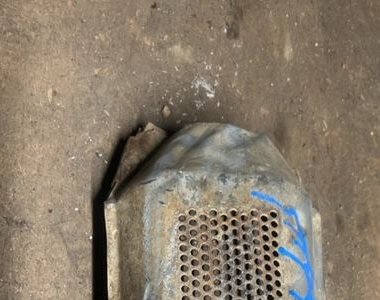
Precious metal prices swung by double digits in a single week this past October. If you had a load of cats sitting in your yard, that swing either made you money or cost you — depending on when you sold. That's the reality of catalytic converter prices today. They don't move on a schedule. They move with platinum, palladium, and rhodium markets that trade around the clock, and most converter sellers in Edmonton have no real-time visibility into any of it.
This guide breaks down exactly how global precious metal markets drive converter scrap values, what that means for sellers in Alberta, and how to stop guessing and start getting paid what your converters are actually worth.
Why Precious Metals Are the Only Number That Matters for Catalytic Converter Prices Today
A catalytic converter is a precious metal delivery system wrapped in a steel shell. The substrate inside — usually ceramic or metalite — holds concentrations of platinum (Pt), palladium (Pd), and rhodium (Rh). Those three metals do the actual emissions work. They're also what makes your converter worth real money as scrap.
When buyers quote you a price on a cat, they're not making up a number. They're running a calculation against live spot prices for Pt, Pd, and Rh, then backing out their processing costs, refining margins, and logistics. That means every quote is essentially a snapshot of that day's metal market. Wait three days, and you might get a meaningfully different number — better or worse.
Here's why each metal matters:
- Palladium (Pd): Used heavily in gasoline-engine converters. Palladium has shown dramatic price swings over the past several years, and it remains the most volatile of the three. It's often the biggest value driver in common passenger vehicle cats.
- Platinum (Pt): More common in diesel converters. Platinum markets are influenced by South African mining supply, industrial demand, and growing interest from the hydrogen fuel cell sector. It tends to be less volatile than palladium but still moves.
- Rhodium (Rh): The rarest and often the most expensive per troy ounce. Rhodium is found in smaller quantities but punches way above its weight in converter value. When rhodium spikes, high-grade cats can jump significantly in a short window.
If you're trying to figure out how much is my catalytic converter worth as scrap, the answer is: start with today's spot prices, not last month's quote. Find the best scrap converter prices in Canada before you sell — the difference between an informed seller and an uninformed one can be hundreds of dollars per unit on high-grade converters.
How Global Supply and Demand Shocks Hit Edmonton Converter Sellers
Edmonton isn't insulated from global commodity markets just because it's landlocked in Alberta. The same forces that move metal prices in London and New York affect what a buyer in Edmonton will pay for your cats this afternoon. Here's how those shocks travel:
Mine supply disruptions: Roughly 70-80% of the world's platinum group metals (PGMs) come from South Africa and Russia. Any political instability, labor action, or operational shutdown in those regions tightens supply almost immediately. Tighter supply pushes spot prices up — which raises converter scrap values in real time.
Automotive production cycles: Converters exist because of emissions regulations. As global vehicle production ramps up or slows down — especially in markets like China and Europe — demand for new PGMs shifts. When automakers buy less new metal, secondary supply (your scraped cats) becomes more attractive to refiners.
Currency exchange rates: PGMs are priced globally in USD. When the Canadian dollar weakens against the USD, your converters — which get refined and priced against USD spot — can actually yield more in CAD terms. The reverse is also true. Edmonton sellers working in CAD are always exposed to this exchange rate variable, even if their buyer quotes them in Canadian dollars.
Industrial demand shifts: Platinum, in particular, is seeing growing interest from hydrogen fuel cell manufacturers. That industrial demand competes with refinery demand for secondary PGMs. More competition for metal means higher prices. This isn't speculative — it's already influencing 2026 market dynamics.
The takeaway: catalytic converter prices today are a function of global forces, not just what your local buyer feels like offering. If you want the best catalytic converter price in Edmonton, you need to be selling into a process that reflects actual market conditions — not one buyer's margin appetite.
The Problem with Single-Buyer Quotes in a Volatile Market
Here's the old way. You call one buyer. They quote you a price. You take it or leave it, usually with no way to verify whether it's fair. In a stable market, that's just mildly bad. In a volatile precious metals market, it's expensive.
Single-buyer quotes have a structural problem: the buyer has every incentive to quote low when markets are uncertain and they're managing their own risk. You have no data to push back with. You don't know today's palladium spot. You don't know what five other buyers would have offered. You're negotiating blind.
This is exactly why competitive pricing matters most when markets are moving. When rhodium spikes or palladium catches a bid, you want multiple buyers competing for your load — not one buyer deciding what their margin looks like today. Read Canadian scrap converter pricing guides to understand how to position your inventory before you approach buyers.
Platforms like SMASH exist specifically to fix this. Rather than routing your converters through a single relationship, SMASH puts your inventory in front of vetted buyers who compete. That competition is how market price actually gets revealed — not by one buyer's gut feel. The Edmonton scrap metal services available through SMASH connect local sellers to a broader buyer network without requiring you to cold-call anyone.
How to Position Your Converter Inventory for the Best Catalytic Converter Price in Edmonton
Timing matters. Documentation matters. And knowing what you have matters most of all. Here's how serious converter sellers in Alberta approach this:
Know your grades before you sell. Not all cats are equal. A direct-fit OEM converter from a late-model half-ton truck carries more PGM content than an aftermarket replacement unit. Buyers pay significantly different rates for different grades. Knowing whether you have high-grade, mid-grade, or low-grade units — and separating them — is basic inventory discipline that pays off at sale time.
Use VIN lookups and serial tracking. SMASH's platform includes VIN lookup and serial tracking tools specifically to help document what you have. When buyers can see the vehicle origin and converter ID, they have more confidence in what they're bidding on. That confidence shows up in the price they offer.
Document with photos. Photo documentation reduces disputes and builds buyer trust. A well-documented load moves faster and attracts more serious bids. This isn't optional — it's how professional converter sellers operate.
Watch the metals before you list. You don't need to become a commodities trader. But checking platinum and palladium spot prices before you bring a load to market is the same due diligence you'd apply to any other commodity sale. When PGMs are trending up, holding briefly can make sense. When they're pulling back, moving inventory quickly is smarter. Sell your scrap metal on SMASH Recycling and let competitive bidding do the market discovery work for you.
Sell in volume where possible. Larger lots attract more buyer attention. Buyers are more motivated to compete for a meaningful volume than for a handful of loose cats. If you're accumulating inventory in Edmonton, consider batching your loads strategically.
What the Catalytic Converter Auction Format Actually Does for Your Price
The word "auction" sometimes makes sellers nervous — they picture distressed prices and fast gavels. That's not how a catalytic converter auction format works when it's structured correctly.
A well-run converter auction does the opposite of distress pricing. It creates competition among qualified buyers. Each buyer knows others are in the room (or on the platform). That awareness alone changes bidding behavior. Buyers who might otherwise low-ball a cold-call quote will push their number closer to true market value when they know they're competing.
SMASH uses this model — vetted buyers, competitive bidding, full price transparency. No subscription fees. The platform only wins when the seller wins. For Edmonton converter sellers navigating a volatile PGM market, that alignment matters. You're not fighting a buyer who profits from your lack of information. You're accessing a structure where your converters get priced against real demand.
More buyers means better price discovery. That's not a slogan — it's how commodity markets work. Check current Canadian scrap converter prices to understand today's market before you decide when and how to sell.
If you're in Alberta and you're serious about maximizing your converter scrap value, the combination of real-time market awareness and competitive buyer access is the edge. Everything else is just leaving money on the table.
Disclaimer: Catalytic converter prices fluctuate daily based on precious metal spot markets. All pricing references in this article are general in nature. Always check current rates before selling.
Frequently Asked Questions
Q: How often do catalytic converter prices change?
Catalytic converter prices change whenever underlying precious metal spot prices move — which can happen daily or even multiple times in a single session. Platinum, palladium, and rhodium all trade on global commodity markets. A single macro event, supply disruption, or currency shift can move prices meaningfully within hours. Always check current market conditions before selling.
Q: What is the best catalytic converter price I can get in Edmonton?
The best price comes from competition. Getting quotes from multiple vetted buyers — rather than accepting the first offer — is the fastest way to find true market value. Edmonton sellers working through platforms like SMASH gain access to competitive bidding rather than single-buyer guessing. Document your inventory, know your grades, and let buyers compete for your load.
Q: How do I know how much my catalytic converter is worth as scrap?
Your converter's scrap value depends on its PGM content (platinum, palladium, rhodium), which varies by vehicle make, model, year, and whether it's OEM or aftermarket. VIN lookups and serial tracking tools can help identify the specific converter and its approximate grade. From there, actual value is set by current spot prices for those metals on the day you sell.
Q: Are catalytic converter buyers in Alberta paying fair market prices?
Some are, some aren't. The only way to know is to have your load priced by multiple buyers simultaneously. Single-buyer quotes in a volatile market rarely reflect full market value — the buyer is managing their risk on your dime. Competitive auction formats level that playing field.
Q: Does it matter when I sell my catalytic converters?
Yes. PGM markets move, and timing your sale during a period of stronger spot prices can meaningfully improve your return — especially on high-grade converters with significant rhodium or palladium content. That said, trying to perfectly time commodity markets is risky. A better approach is to stay informed on current prices, document your inventory well, and sell through a competitive process to maximize value whenever you go to market.
The global precious metals market doesn't care about your timeline. But if you stay informed and sell competitively, you stop being at its mercy. If you're ready to find out what your converters are actually worth in today's market, start with real data and real competition — find the best scrap converter prices in Canada and get a free quote at best-scrap-converter-prices.ca.
Stay ahead of the market — follow SMASH on LinkedIn for ongoing scrap metal market insights and industry updates.