Why Proper Catalytic Converter Recycling Matters More Than the Rhodium Price Today
The rhodium price today gets all the attention. Traders watch it. Yards track it. Sellers refresh their screens waiting for it to move. But here's what most people overlook: the environmental stakes behind that price are just as significant as the dollar figure itself. Every catalytic converter that ends up in a landfill — or gets stripped and torched in a back lot — is a failure of the recycling system, not a win for it.
Proper catalytic converter recycling isn't just good optics. It's the mechanism that keeps precious metals like rhodium, palladium, and platinum circulating in the supply chain rather than burning off into the atmosphere or leaching into the ground. If you're selling converters in Montreal or anywhere across Quebec, understanding the environmental side of this market makes you a sharper seller — not just a greener one.
What's Actually Inside a Catalytic Converter — and Why It's Worth Recovering
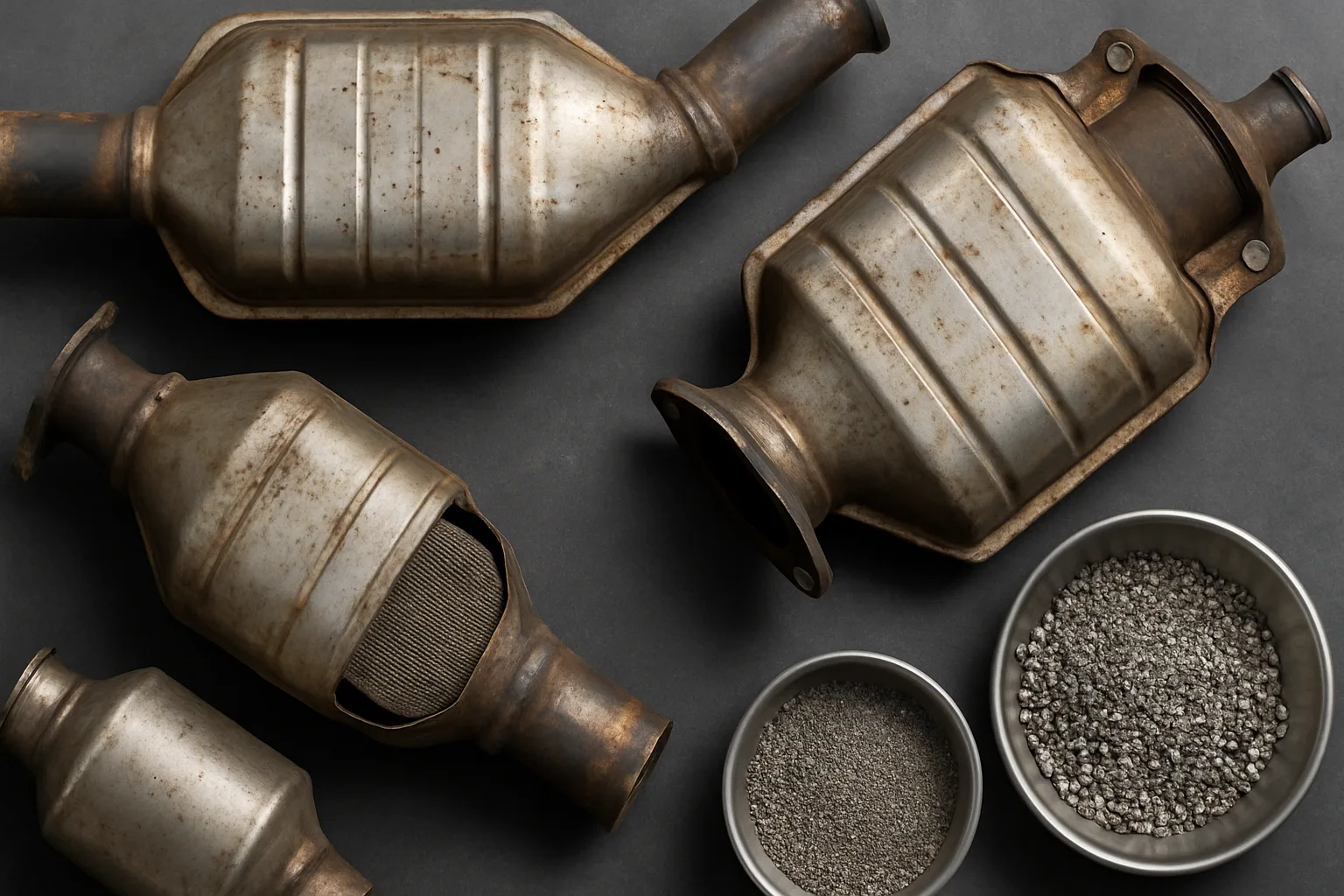
Every catalytic converter contains a ceramic or metallic substrate coated with platinum group metals (PGMs): platinum, palladium, and rhodium. These metals are what make the converter functional — they catalyze the chemical reactions that reduce harmful exhaust emissions before they exit the tailpipe. They're also extraordinarily rare and expensive to mine from the ground.
Rhodium, in particular, is one of the rarest elements on Earth. Mining it from primary ore is energy-intensive, geographically concentrated, and environmentally disruptive. Recovering rhodium from spent converters through secondary refining requires a fraction of the energy and produces a fraction of the emissions. That's the core environmental argument for proper recycling — it's not sentiment, it's thermodynamics.
- Rhodium: Found in small but highly valuable concentrations; primary mining is heavily concentrated in South Africa
- Palladium: Also sourced from converters at significant volumes; demand from EV battery tech and gasoline engines keeps pressure on supply
- Platinum: More abundant by comparison but still economically and environmentally costly to mine
When a converter is scrapped properly — documented, assayed, and processed through a legitimate refinery — none of that material is wasted. When it's not, those metals are gone. The environment pays the full cost of replacing them through mining.
The Environmental Risk of Improper Converter Disposal
Improper disposal takes a few forms, and none of them are benign. The most damaging is open burning — using heat to strip away the substrate and recover metals crudely. This releases particulate matter, heavy metals, and toxic compounds into the air. In urban areas like Montreal, where air quality regulations are enforced and population density is high, this kind of activity is illegal and genuinely harmful.
Even less dramatic failures matter. A converter that ends up in a general waste stream — tossed in a dumpster because a yard didn't want to deal with it — contributes to leachate contamination in landfills. The ceramic substrate isn't particularly dangerous on its own, but the trace metals and chemical residues aren't something you want migrating into groundwater over a 30-year landfill lifespan.
Quebec's environmental regulations are clear on hazardous waste classification and end-of-life vehicle component handling. The province has frameworks in place that responsible recyclers are expected to follow. Sellers who route their converters through verified, accountable buyers are part of that compliance chain — not just passive participants.
OEM Catalytic Converter Value and Why Documentation Drives It
One of the more underappreciated dynamics in this market is the relationship between documentation and OEM catalytic converter value. A verified, photographed, VIN-linked converter with a clear chain of custody is worth more to a serious buyer than an anonymous unit in a pile. That's not just a compliance story — it's an economic one.
Buyers who process converters at scale need to assay accurately to price accurately. Documented converters — where the unit type, vehicle origin, and condition are clearly established — allow buyers to bid with more confidence. That confidence translates into stronger bids. More buyers competing on documented inventory means better price discovery for the seller.
Platforms like SMASH Recycling — where verified buyers bid on your metal build this documentation into the selling process. Photo requirements, serial tracking, and VIN lookup aren't bureaucratic hurdles — they're the infrastructure that makes competitive pricing possible. When you find the best scrap converter prices in Canada, documentation is usually part of why those prices are achievable.
For yards handling OEM catalytic converter inventory at volume, this matters even more. OEM units from newer vehicles often carry higher PGM loadings than aftermarket replacements. Getting that value recognized requires buyers who can see what they're bidding on — and a platform that creates the conditions for competition.
How to Sell Catalytic Converters Responsibly in Quebec
If you're looking to sell catalytic converters in Quebec, the responsible path and the profitable path are the same one. Here's what that actually looks like in practice:
- Document everything before it leaves your hands. Photos of the converter face, the body, any visible serial numbers, and the substrate condition. This protects you and gives buyers what they need to price accurately.
- Know what you have. OEM versus aftermarket matters. Large-body diesel units carry different PGM profiles than standard passenger car converters. Use a price list or platform lookup to orient yourself before you sell.
- Use vetted buyers. In Montreal and across Quebec, there are legitimate processors and there are operations that cut corners. Routing through a platform that screens buyers keeps your material in the legitimate supply chain.
- Understand the regulatory context. Quebec's environmental rules around end-of-life vehicles and hazardous materials aren't suggestions. Selling through a documented, accountable channel keeps you on the right side of those rules.
- Track the PGM market. The rhodium price today, palladium spot, and platinum trends all affect what your converters are worth. Checking current rates before you sell — not after — is basic market hygiene.
SMASH gives sellers the structure to do all of this without needing to become a commodities trader. The platform handles buyer vetting, documentation prompts, and the auction format that creates genuine price competition. For Montreal yards and individual sellers across Quebec, that's a practical solution, not a theoretical one.
You can also read Canadian scrap converter pricing guides to understand how PGM fluctuations affect your bottom line before you list anything.
The Market Signal Behind the Rhodium Price Today
When people check the rhodium price today, they're usually looking for a number. What they're actually reading is a signal about global supply, refinery throughput, automotive production trends, and secondary market recovery rates. In 2026, that signal is shaped by a few converging pressures.
The transition toward electrification has reduced demand growth for PGMs in new gasoline vehicle production over the longer term — but the existing fleet on the road is still enormous, and those vehicles still need converters for the remainder of their service lives. Hybrid powertrains, which retained internal combustion engines, have actually sustained PGM demand longer than some early projections suggested. The secondary market — scrap converters feeding refineries — remains a critical supply source for industrial and automotive applications.
For sellers in Montreal, this means the market for scrap converter prices in Canada is real and active. The demand is there. The question is whether you're reaching enough buyers to let the market speak clearly, or whether you're taking a single number from a single buyer and accepting it as the market rate.
Competition is what reveals price. An auction format with vetted buyers creates that competition. That's the mechanical reason why platforms like SMASH exist — not as a marketing exercise, but as a structural improvement over one phone call and one offer.
If you're in the Montreal area and want to see what your inventory is actually worth, Montreal scrap metal services through best-scrap-converter-prices.ca connect you to buyers who compete rather than quote.
Recycling Converters the Right Way: A Long-Term Argument
There's a version of this industry that works well for everyone — sellers get competitive prices, buyers get documented material they can process efficiently, refineries get reliable input streams, and the environment benefits from genuine secondary recovery instead of primary mining. That version requires accountability at every step.
Sellers play a role. Choosing where you send your converters is a choice about what kind of market you're supporting. In Quebec, where environmental oversight is taken seriously and the regulatory framework for scrap metal and end-of-life vehicles has teeth, that choice has real consequences — for your business and for the broader system.
Proper recycling isn't charity. It's the foundation of a market that pays fair prices because it can account for what it's handling. When you check current Canadian scrap converter prices and route your material through legitimate, competitive channels, you're not just maximizing your return — you're participating in a supply chain that actually functions.
The environmental argument and the economic argument point the same direction. Find buyers who compete. Document your inventory. Know what the PGM markets are doing. And use platforms built for this industry, not adapted from something else.
When you're ready to get a real number on your converters — not a guess, not a lowball — find the best Canadian scrap converter prices and get a free quote at best-scrap-converter-prices.ca. The market is there. You just need the right structure to access it.
Frequently Asked Questions
Q: How does the rhodium price today affect what I get paid for scrap catalytic converters in Montreal?
Rhodium spot price is one of three PGM inputs — alongside palladium and platinum — that determine your converter's scrap value. Because rhodium is the rarest of the three and often carries the highest per-gram value, even moderate shifts in the rhodium price today can meaningfully change what a buyer will offer. Checking current PGM rates before you sell gives you a baseline for evaluating any offer you receive.
Q: Is it legal to sell scrap catalytic converters in Quebec?
Yes, selling scrap catalytic converters is legal in Quebec, but it's subject to regulations around documentation, buyer identification, and proper material handling. Quebec has specific rules governing scrap metal transactions and end-of-life vehicle components. Selling through a vetted platform with documented buyer networks keeps you compliant and protects you from liability associated with unregulated transactions.
Q: What's the difference between OEM and aftermarket catalytic converter scrap value?
OEM (original equipment manufacturer) converters typically carry higher platinum group metal loadings than aftermarket replacements, which are manufactured to lower cost tolerances. This means OEM units often command higher scrap prices when sold to buyers who assay accurately. Knowing whether your converter is OEM or aftermarket — and documenting it properly — helps ensure you're paid for what you actually have.
Q: Why should I use an auction platform instead of calling one buyer directly?
A single buyer gives you a single offer. An auction format with multiple vetted buyers creates competition, which is what drives price discovery. You don't know if a single quote reflects the market or reflects one buyer's margin preference. Platforms like SMASH are built specifically to solve this problem for scrap converter sellers across Canada, including in Montreal and across Quebec.
Q: How often do scrap catalytic converter prices change in Canada?
Converter prices can shift daily because they're tied directly to live PGM commodity markets — rhodium, palladium, and platinum all trade continuously. Exchange rates between CAD and USD also affect Canadian pricing since PGMs are globally priced in USD. Checking current rates frequently, especially before committing to a sale on a large load, is standard practice for anyone selling converters seriously.
Follow SMASH on LinkedIn for scrap metal market updates, PGM price trends, and industry insights delivered directly to your feed.