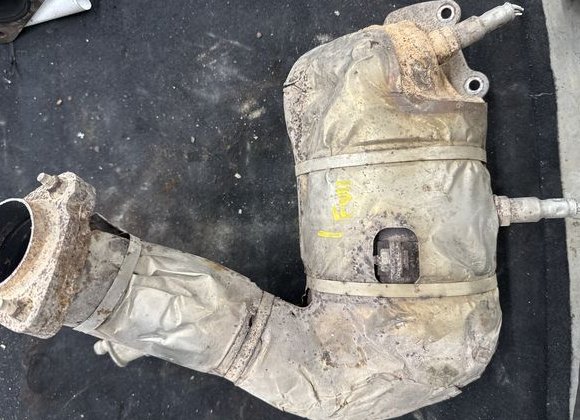
OEM vs. Aftermarket Catalytic Converters: Why the Scrap Value Gap Is Massive
Hand a recycler two catalytic converters off vehicles the same year, make, and model — and they might quote you prices that are worlds apart. That's not a mistake. That's chemistry. The precious metal content inside an OEM unit versus an aftermarket replacement can differ so dramatically that one converter is worth recycling and the other is barely worth the trip. If you're focused on catalytic converter recycling in St. John's, understanding this gap is the difference between leaving money on the table and getting paid what your metal is actually worth.
This isn't abstract theory. It plays out every day at recycling yards across Newfoundland and Labrador, and across all of North America. Sellers show up with a load of cats, get a price, and walk away confused about why some units commanded a fraction of what they expected. The answer almost always traces back to one question: OEM or aftermarket?
What Makes OEM Catalytic Converters More Valuable for Scrap
OEM stands for Original Equipment Manufacturer. These are the converters installed at the factory — built to meet the exact emissions specifications required by law for that specific vehicle. Automakers engineer them to last the life of the vehicle (or close to it), and that means loading them with higher concentrations of platinum, palladium, and rhodium — the precious metals that do the actual work of converting exhaust pollutants.
The washcoat inside an OEM converter — the ceramic substrate coating that holds the precious metals — is formulated precisely for that engine's combustion characteristics. More metal, better distribution, tighter tolerances. When a recycler processes an OEM converter, the assay results reflect that precision. You typically see higher platinum group metal (PGM) yields per unit, which translates directly into a higher scrap catalytic converter price.
- Higher PGM loading: OEM units are built to meet strict emissions standards, requiring more precious metal per unit of substrate.
- Consistent substrate quality: Factory specs mean predictable assay results for buyers and processors.
- Longer service life design: Built for 150,000+ km, which means more robust internal construction.
- Better brand traceability: OEM converters often have serial numbers that allow precise identification through VIN lookup systems.
That last point matters more than most sellers realize. When a buyer can identify exactly what they're purchasing — confirmed by serial number and VIN — they bid with confidence. Confidence drives competition. Competition drives price. That's the logic behind platforms like SMASH, where competitive bids for your scrap in Canada are generated by vetted buyers who know exactly what they're getting.
Why Aftermarket Converters Sell for Dramatically Less
Aftermarket catalytic converters exist to solve one problem cheaply: get a vehicle through an emissions test without spending OEM money on a replacement. They work for that purpose. But they're not engineered for longevity or precious metal density — they're engineered for price point. And that engineering decision shows up immediately when a recycler runs assays.
The PGM loading in many aftermarket units is a fraction of what you'd find in an OEM equivalent. Some budget aftermarket converters use less than half the platinum, palladium, or rhodium of the original. For a seller trying to sell catalytic converters in Newfoundland and Labrador, this means a converter that looks identical from the outside might return a quote that's 50–80% lower than expected — not because the buyer is low-balling, but because the metal simply isn't there.
- Lower PGM density: Aftermarket manufacturers minimize precious metal content to hit retail price targets.
- Inconsistent substrate quality: Variable manufacturing standards mean assay results are harder to predict.
- Shorter service life: These units degrade faster, which also accelerates washcoat breakdown and PGM loss.
- Harder to identify: Many aftermarket units lack the serial numbers needed for precise valuation via lookup tools.
- Generic part numbers: One aftermarket SKU often covers multiple vehicle applications, making precise valuation difficult.
This identification problem is a real pain point. If a buyer can't confirm exactly what they're buying, they price for risk — meaning they default to a lower bid. Photo documentation helps. Serial numbers help more. And for sellers moving volume in St. John's or across the island, getting the identification right on every unit is the fastest way to close the gap between what you're offered and what your load is actually worth.
The Precious Metal Market Connection — and Why It Amplifies the Gap
Here's what most casual sellers don't fully appreciate: the OEM vs. aftermarket value gap isn't fixed. It expands and contracts with the precious metals market, and right now in October 2026, rhodium and palladium volatility continues to make converter valuation a moving target. When PGM prices spike, OEM units benefit disproportionately because their higher metal content means more upside per unit. When prices fall, that same higher content provides more floor value.
Aftermarket converters, with their lower PGM loading, have a smaller range of value movement. This sounds like it reduces downside risk — but in practice, it mostly means the ceiling is lower and the floor doesn't hold as well. An OEM converter from a premium European vehicle might trade at multiples of a generic aftermarket replacement, even if both units are the same physical size and came off similar-aged vehicles.
This is exactly why tools like a how much is my catalytic converter worth calculator free — or better yet, a real-time assay-backed pricing system — matter so much. Guessing based on make and model alone ignores the OEM vs. aftermarket variable entirely. If you want accurate data, you need to know what's actually inside the unit, not just what car it came off. To find the best scrap converter prices in Canada, you need a pricing process that accounts for this complexity — not a flat rate based on vehicle year.
How St. John's Sellers Can Stop Getting Underpaid on Aftermarket Units
The practical challenge for sellers doing catalytic converter recycling in St. John's is that the local market has historically been thin. Fewer buyers means less competition, and less competition means the OEM/aftermarket distinction gets blurred into a simplified pricing structure that tends to undervalue OEM units and doesn't meaningfully discount aftermarket ones — you just get a middling rate across the board.
The fix is straightforward but requires changing your approach. First, sort your load before you sell. Separate confirmed OEM units — identified by original equipment serial numbers and VIN-traceable part numbers — from aftermarket replacements. Don't mix them into a single quote request. Buyers who can value each unit type separately will consistently beat buyers who average everything out.
Second, document everything. Photo both ends of every unit. Capture the serial number or any identifiable markings. Note the vehicle it came from. This level of documentation is the foundation for competitive bidding — it gives buyers the confidence to come in at higher numbers rather than padding in risk margin.
Third, go beyond local. The ability to sell catalytic converters online means geography stops being a ceiling on your pricing. A buyer in Ontario or Alberta competing for your St. John's load drives prices up just as effectively as a local buyer. Platforms like SMASH connect you to vetted buyers across Canada who are actively competing for documented converter inventory — regardless of where you're located in Newfoundland and Labrador.
You can also read Canadian scrap converter pricing guides that break down how different converter types are valued, what documentation increases your quote, and how to time your sales around market conditions.
Making the OEM/Aftermarket Distinction Work in Your Favour
The sellers who consistently get the best returns on converter loads aren't the ones with the most metal — they're the ones with the best information and the best process. Knowing that your load contains three confirmed OEM units from late-model trucks and six aftermarket replacements from older passenger cars lets you set realistic expectations and negotiate from a position of knowledge rather than guessing.
It also shapes your selling strategy. OEM units from high-value applications — certain truck platforms, luxury vehicles, and diesel equipment — often warrant separate listing and individual buyer attention. Aftermarket units might be better bundled and moved on volume. These aren't the same product, and treating them as such is where sellers consistently leave money on the table.
When you're ready to check current Canadian scrap converter prices and get a competitive quote on your inventory, come in sorted, documented, and informed. That's the profile that attracts serious bids — in St. John's, across Newfoundland and Labrador, and anywhere in Canada.
Disclaimer: Catalytic converter prices fluctuate daily based on platinum, palladium, and rhodium market values. Always check current rates before finalizing a sale. The values referenced in this article are general in nature and not a guarantee of specific pricing.
Frequently Asked Questions
Q: How much less is an aftermarket catalytic converter worth compared to OEM for scrap?
There's no universal answer because it depends on the vehicle application and current PGM market prices. In general terms, aftermarket converters can return significantly less — sometimes 50–80% below an OEM equivalent from the same vehicle — because of lower precious metal loading. The gap is widest on high-value applications like late-model trucks and luxury vehicles where OEM units carry substantial PGM content.
Q: How do I know if my catalytic converter is OEM or aftermarket?
OEM converters typically have a serial number or part number stamped or welded onto the unit that can be cross-referenced against the vehicle's VIN. Aftermarket units often have generic part numbers and may lack detailed identification markings. If you bought the converter as a replacement from an auto parts retailer, it's almost certainly aftermarket. If it came off a vehicle as the original factory unit, it's likely OEM.
Q: Can I sell catalytic converters online from St. John's, Newfoundland and Labrador?
Yes — and doing so typically gives you access to a much broader pool of vetted buyers than local-only selling. Online platforms designed for converter recycling allow buyers across Canada to compete for your inventory, which can improve price discovery significantly compared to a single local quote. Proper documentation (photos, serial numbers, vehicle info) is essential for getting strong online bids.
Q: Is there a free calculator to find out how much my catalytic converter is worth?
There are online lookup tools that provide estimated ranges based on serial number or make/model data — and these can be useful starting points. However, actual scrap catalytic converter prices are tied to live PGM markets and the specific condition and metal content of your unit. A real-time quote from a vetted buyer will always be more accurate than a static calculator estimate.
Q: Why do scrap yards in St. John's sometimes offer lower prices than online buyers?
Local scrap yards in St. John's operate with limited buyer competition — one yard, one price, take it or leave it. Online platforms create an auction environment where multiple vetted buyers compete for your load, which can reveal the true market value rather than a single buyer's preferred margin. The more documented your inventory, the stronger the competitive dynamic tends to be.
If you're sitting on OEM units you know are worth more than your last local quote, it's worth finding out what the broader market will actually pay. Start with best-scrap-converter-prices.ca to get a free quote grounded in current Canadian market data — not guesswork.
Stay current on scrap metal market movements and converter pricing trends by following SMASH on LinkedIn — practical industry updates without the noise.