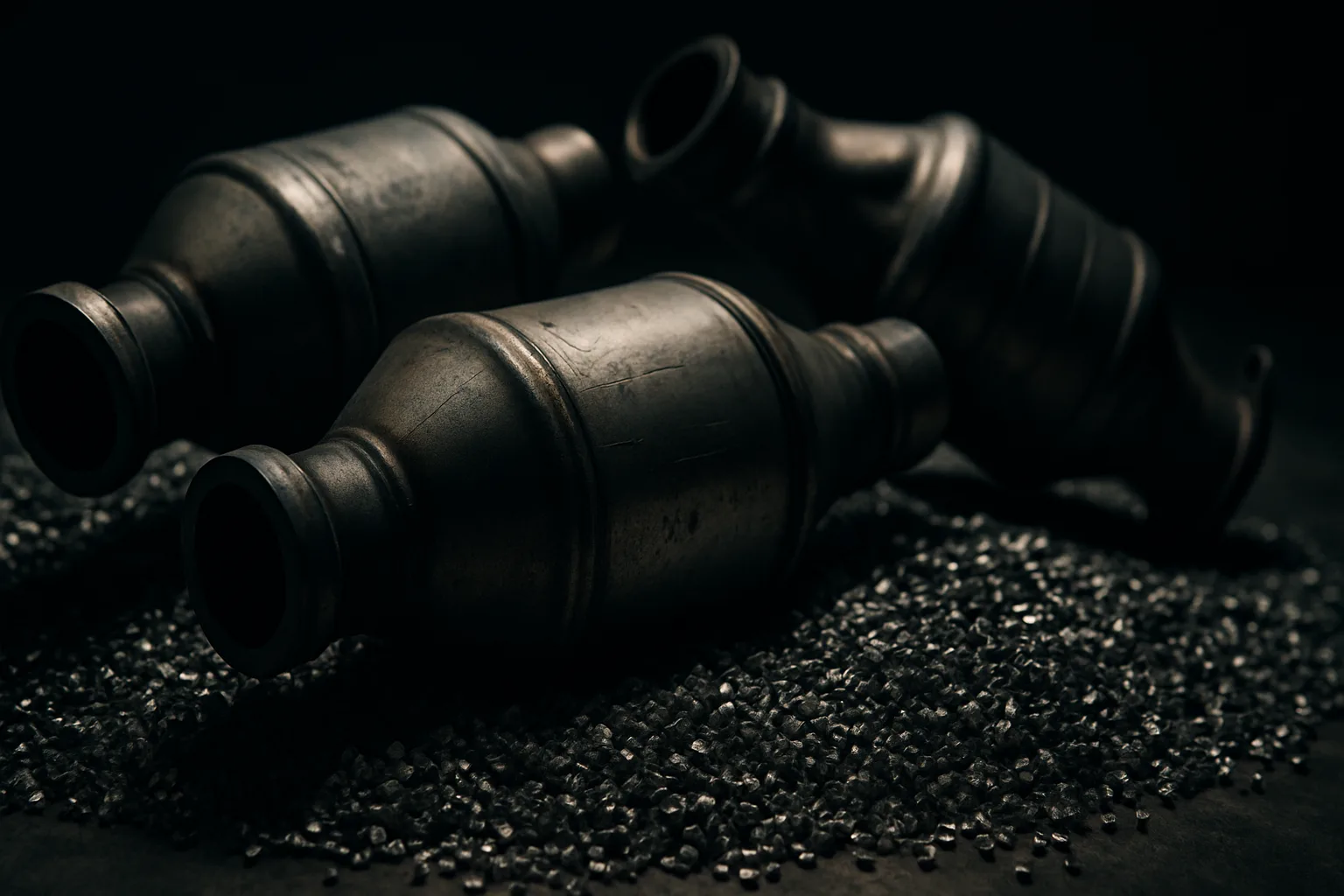
Why the Serial Number on Your Catalytic Converter Is Worth More Than You Think
Most sellers toss their catalytic converters in a bin and wait for a number. That's leaving money on the table. The serial number stamped or etched on your converter is essentially a price tag — if you know how to read it. It tells buyers exactly what precious metals are inside, how much, and what it's worth on the current market. If you're looking for a catalytic converter buyer in Oshawa who will actually pay you based on that data, you need to understand what you're selling before you walk in the door.
This guide breaks down how to find, read, and use converter serial numbers to your advantage. Whether you're scrapping a single cat or moving a load of cores, this knowledge puts you in a stronger position at the counter — and on any platform where buyers compete for your material.
Where to Find the Serial Number on a Catalytic Converter
The serial number isn't always obvious, and it's not always in the same place. Location depends on whether you're dealing with an OEM (original equipment manufacturer) converter or an aftermarket unit. Knowing the difference matters because OEM converters almost always carry more scrap value — they contain higher concentrations of platinum, palladium, and rhodium.
Here's where to look depending on converter type:
- OEM converters: The serial number is typically stamped directly into the body of the converter housing, pressed into the metal shell, or printed on a foil label attached to the substrate housing. Look on the flat face, the side near the inlet pipe, or the underside of the body.
- Aftermarket converters (A/F or direct-fit): These usually have a sticker or laser-etched number on the body. The number often starts with letters like "AF," "EPA," or a brand code (e.g., "MagnaFlow," "Walker," "Eastern").
- Pre-converter or manifold-mount cats: These are smaller units that sit close to the engine. Numbers are often stamped into a small flat panel on the body.
If the number is corroded or worn off, that's a problem. Buyers — especially professional ones — will either low-ball you or decline the converter entirely. Clean the area with a wire brush before you try to photograph or transcribe the number. A readable serial means a faster, fairer quote.
How to Read and Decode a Catalytic Converter Serial Number
Once you have the number, you need to know what it means. Converter serials aren't standardized across manufacturers, but experienced buyers and platforms that specialize in catalytic converter recycling use large proprietary databases to cross-reference serials against known precious metal content.
Here's how the decoding process generally works:
- Identify the manufacturer prefix. The first few characters of most OEM serials indicate the vehicle manufacturer or tier-one supplier. For example, Toyota, Honda, Ford, and GM all use distinct numbering conventions that experienced recyclers recognize immediately.
- Cross-reference with a converter database. Reputable buyers use databases that map serial numbers to assay data — actual precious metal concentrations measured in grams per unit (GPU). Platinum, palladium, and rhodium levels vary significantly by model year and vehicle type.
- Factor in the physical condition. Even if the serial checks out, a cracked substrate, missing honeycomb, or water-damaged core reduces yield — and every serious buyer adjusts their offer accordingly.
- Confirm it's not a foil or hollow. Foil cats (often aftermarket units filled with thin metallic substrate rather than genuine ceramic honeycomb) are worth a fraction of OEM units. A good buyer will test or weigh before confirming value.
Platforms like Canada's B2B scrap recycling marketplace are built around exactly this kind of data transparency. When buyers can verify what they're bidding on, competition improves — and sellers stop getting lowballed on material they don't fully understand.
OEM vs. Aftermarket: Why the Difference Hits Your Wallet Hard
This is the single most important distinction in converter scrapping, and it's one that trips up sellers across Ontario and across the country. An OEM converter from a late-model pickup truck or SUV can carry several hundred dollars in precious metal value. An aftermarket unit from the same vehicle might be worth a fraction of that — sometimes under $30 CAD at current PGM (platinum group metal) prices.
Why the gap? It comes down to loading rates. OEM catalytic converters are engineered to last the life of the vehicle and must meet strict emissions standards. Manufacturers load them with higher concentrations of platinum, palladium, and rhodium to ensure durability and performance. Aftermarket units are built to price — they pass emissions tests but use less precious metal to do it.
When you're looking to sell a catalytic converter in Canada and you want a fair price, the conversation with your buyer has to start with: is this OEM or aftermarket? The serial number is your proof. Don't let a buyer quote you an aftermarket rate on an OEM unit because the housing looks similar. That's where documented identification protects you.
For sellers in Oshawa and the surrounding Durham Region, this is especially relevant. The area has strong auto industry ties, and a significant volume of OEM cores cycle through the local scrap market. Knowing the difference means knowing whether you're holding $45 material or $400 material.
How Serial Numbers Affect Catalytic Converter Scrap Prices Across Canada
Precious metal markets move daily. Palladium, rhodium, and platinum prices fluctuate based on mining output, industrial demand, and global currency markets. Your converter's scrap value on a Tuesday might be meaningfully different from what it was the Friday before.
This is why scrap converter prices in Canada aren't a fixed number — they're a calculation. A responsible buyer takes:
- The serial number → cross-references to known PGM content (in grams)
- Current spot prices for platinum, palladium, and rhodium
- A processing/refining margin
- Physical condition of the unit
...and arrives at an offer. The serial number is step one. Without it, buyers are estimating — and when buyers estimate, sellers lose. This is exactly why platforms that document converters before sale consistently generate better price discovery. More information leads to more confident bids.
If you want to find the best scrap converter prices in Canada, you need buyers who are working from the same data you are. That's the difference between a transparent transaction and a gut-feel quote from someone who profits from your uncertainty.
Note: All converter prices referenced in this article are illustrative. Actual scrap converter prices fluctuate daily based on live PGM spot markets. Always check current Canadian scrap converter prices before completing any transaction.
How SMASH Helps Sellers Get Competitive Prices on Documented Converters
Here's the problem with the traditional converter sale: one yard, one offer, no leverage. You don't know if the number they quoted is fair. You don't know if three other buyers would have paid more. You just take it or leave it.
SMASH changes that dynamic. When you document your converters properly — serial numbers, photos, condition notes — and bring them to a competitive auction environment, buyers compete. More buyers means better price discovery. Documented inventory gives buyers more confidence, which means stronger, faster bids.
For sellers across Ontario looking for catalytic converter recycling options beyond the single-yard model, SMASH provides vetted buyers, transparent auction pricing, and no subscription fees. You only pay when you sell. That alignment matters — when SMASH wins, it's because you won first.
If you're moving volume — multiple loads of cores, a mix of OEM and aftermarket units — proper serial documentation before listing on a platform like SMASH is the difference between getting the market price and getting someone's best guess. Take 20 minutes to photograph and record your serials. It pays.
Sellers in the Durham Region can also explore Oshawa scrap metal services for local support and pickup options. And if you want to read Canadian scrap converter pricing guides that break down how PGM markets affect your payout, there's a growing library of resources built specifically for Canadian sellers.
Step-by-Step: Documenting Your Converters Before You Sell
Whether you're scrapping one converter or a pallet of cores, this process takes less time than you think and protects you from under-valuation. Here's how to do it right:
- Clean the converter body. Wire brush away rust, dirt, and carbon buildup around the serial area. Readable numbers photograph better and reduce friction with buyers.
- Photograph the serial from multiple angles. One clear, well-lit shot of the serial number. One of the full converter body. One of each end (inlet and outlet).
- Record the vehicle information if available. Year, make, model, and engine size help buyers cross-reference when serials are worn. A VIN lookup can sometimes fill in gaps.
- Note the condition honestly. Is the substrate intact? Any rattling (indicating a broken honeycomb)? Any visible cracks in the housing? Disclose it — buyers factor condition in anyway, and transparency builds trust.
- Separate OEM from aftermarket. Keep them in different lots. Mixing them together just invites averaged pricing that shortchanges your OEM material.
- Get multiple quotes before committing. The serial number documentation you've done now gives every buyer the same starting point. Variation in offers tells you who's actually competitive.
This is basic practice for any serious recycler. If you're doing this regularly in Ontario — running a yard, processing end-of-life vehicles, or accumulating cores through auto repair — building this documentation habit is what separates professional sellers from one-time sellers at the counter.
Frequently Asked Questions
Q: How do I find a reliable catalytic converter buyer in Oshawa?
Look for buyers who quote based on documented serial numbers and current PGM spot prices — not just a flat rate per unit. A reliable buyer will ask to see your converter, reference a database, and explain how they arrived at their number. Platforms like SMASH connect sellers with vetted buyers across Canada, including Ontario, and use competitive auctions rather than take-it-or-leave-it pricing.
Q: Does a missing or worn serial number affect what I get paid?
Yes, significantly. Without a readable serial, buyers can't confirm precious metal content and will default to a conservative estimate — often well below actual value. If your serial is worn, try cleaning the area thoroughly before photographing. If it's completely gone, vehicle information (year, make, model, VIN) can sometimes substitute for identification purposes.
Q: What's the difference between OEM and aftermarket catalytic converter scrap prices in Canada?
OEM converters typically contain significantly higher concentrations of platinum, palladium, and rhodium than aftermarket units, which translates directly into higher scrap value. The gap can be substantial depending on the vehicle. Always confirm whether your converter is OEM before accepting a quote — and verify through the serial number, not just the buyer's word.
Q: Are catalytic converter scrap prices in Oshawa the same as in other Canadian cities?
Precious metal content and PGM spot prices are the same across Canada — rhodium is rhodium whether you're in Oshawa or Edmonton. What varies is the local buyer network, processing capacity, and how competitive your local market is. Selling through a platform that brings multiple buyers to your listing — regardless of geography — helps ensure you're getting national market pricing, not just a local yard's margin.
Q: How often do catalytic converter scrap prices change in Canada?
PGM markets trade daily, and converter prices follow those movements. Palladium and rhodium in particular can shift meaningfully week over week based on mining supply disruptions, automotive sector demand, and currency fluctuations. Always check current rates close to the time of your sale — not based on a quote from two weeks ago.
If you're ready to stop guessing and start selling based on real data, find the best scrap converter prices in Canada and get a free quote at best-scrap-converter-prices.ca. Knowing your serial numbers is step one. Getting competitive bids is step two.
Stay current on PGM markets and scrap metal industry news by following SMASH on LinkedIn — practical updates for Canadian recyclers, without the noise.
```