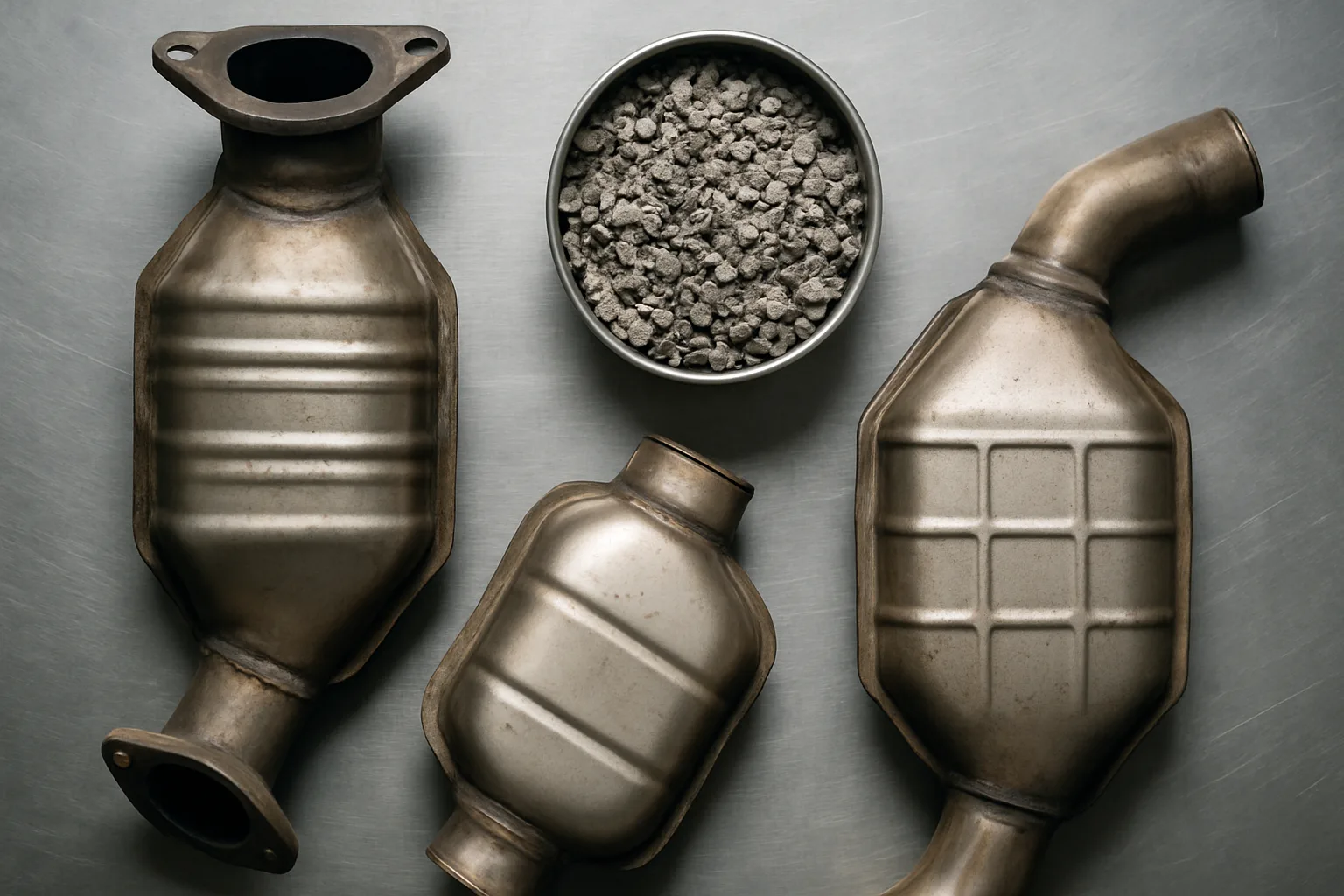
Why the Platinum Price Today Determines What Your Scrap Converter Is Actually Worth
Most converter sellers in Prince George quote a price they heard from someone else, or worse — they accept the first number a buyer throws out. Meanwhile, the platinum price today may have shifted significantly since that number was calculated. The gap between what you accept and what your converter is actually worth can run into hundreds of dollars per unit. That gap comes from one place: a disconnect between global precious metal markets and what local buyers are willing to share.
This guide breaks down exactly how international platinum, palladium, and rhodium markets set the floor — and the ceiling — on scrap converter prices across Canada, including right here in British Columbia.
The Three Metals Inside Every Converter — and Why They Move Daily
Every catalytic converter contains a washcoat loaded with at least one of three platinum group metals (PGMs): platinum, palladium, and rhodium. These aren't commodity prices that drift slowly over months. They can swing by double-digit percentages in a single week based on mining output, industrial demand, currency fluctuations, and geopolitical events.
Here's why each metal matters to your payout:
- Platinum: Historically the dominant PGM in diesel converters. The platinum price today is your baseline for understanding the value of European and heavy-duty diesel units.
- Palladium: The primary PGM in gasoline converters. Palladium has seen dramatic price cycles in recent years and remains sensitive to electric vehicle adoption rates and Russian supply chain dynamics.
- Rhodium: The rarest of the three. Rhodium is found in small quantities across most converters but commands a price per troy ounce that regularly dwarfs platinum and palladium — making it disproportionately important to final payout calculations.
A buyer who quotes you a flat rate per unit isn't telling you which metals are in your specific converter or what those metals are trading for right now. That opacity is where your money disappears.
How Global Markets Flow Down to Scrap Converter Prices in Prince George
Precious metal prices are set on international exchanges — the London Platinum and Palladium Market (LPPM), the COMEX in New York, and the broader commodities markets. A mining disruption in South Africa, which produces roughly 70% of the world's platinum, can move the platinum price today within hours. That movement flows directly into what recyclers and smelters are willing to pay for scrap converters.
Here's how the chain works:
- Global exchange sets the spot price for platinum, palladium, and rhodium in USD per troy ounce.
- Large North American refineries adjust their scrap converter assay returns based on current spot prices.
- Mid-tier converter buyers update their bid sheets — often daily, sometimes weekly depending on the operation.
- Local buyers in markets like Prince George apply their own margin on top of that before making you an offer.
By the time a local price reaches you, it has passed through at least two or three layers of margin. That's not inherently wrong — buyers take on risk and logistics costs. But if you're not tracking where the spot price sits, you have no way to evaluate whether the offer you received is fair or not. To find the best scrap converter prices in Canada, you need to understand what's driving the number before you can judge it.
What Price Volatility Actually Means for Converter Sellers in British Columbia
Volatile markets cut both ways. A seller in Prince George who moves a load of converters during a rhodium spike can do significantly better than someone who sells the same load three weeks later during a correction. The inverse is also true. Timing isn't everything — you can't always wait for a perfect market — but being aware of where prices sit relative to recent history puts you in a better negotiating position.
A few things worth knowing about volatility in 2026:
- Palladium markets continue to show sensitivity to EV production ramp-ups in Asia and North America, with demand uncertainty affecting price floors.
- Platinum has seen renewed industrial interest outside of auto catalysts, which has added support to the platinum price today even as internal combustion engine volumes shift.
- Rhodium remains thinly traded and capable of extreme moves — a small supply disruption can create outsized price swings.
- The CAD/USD exchange rate affects Canadian converter payouts directly, since PGM prices are denominated in USD. A weaker Canadian dollar can partially offset lower USD spot prices.
Sellers across British Columbia dealing in volume — auto wreckers, recycling yards, fleet operators — feel these fluctuations acutely. A difference of even a few percentage points across dozens of units adds up fast. That's why competitive bidding matters more than ever when markets are moving.
Why a Single Buyer Quote Leaves Money on the Table
Here's the old way: one phone call, one quote, take it or leave it. The buyer already knows the platinum price today. You might not. That information asymmetry is the entire basis of the margin they capture.
The better approach is competition. When multiple vetted buyers see the same load — the same photos, the same serial numbers, the same documented inventory — they bid against each other. That competitive pressure is the most reliable mechanism for price discovery in any commodity market. It's how public exchanges work. It's how auctions for any valuable asset work. Scrap converters shouldn't be any different.
Platforms like SMASH bring this auction dynamic to scrap converter sales across Canada. Instead of calling one buyer and accepting a number you can't verify, you put your load in front of multiple qualified buyers and let the market set the price. Compare scrap metal bids from Canadian buyers and you quickly see that competition changes the conversation entirely.
For sellers in Prince George, this matters because your local market has limited buyer options by geography. The auction format removes that geographic ceiling. Your load competes nationally, not just locally. If you're looking for Prince George scrap metal services that connect you to a broader buyer network, the difference can be substantial on high-value loads.
Documentation, Assay Data, and Getting the Price Your Converters Deserve
One thing that separates a competitive bid from a lowball offer is buyer confidence. A buyer looking at a properly documented load — photos of each unit, serial numbers matched to known assay data, accurate grade classifications — has more confidence in their bid. More confidence means tighter spreads and higher offers. Vague loads described over the phone attract cautious, discounted bids.
Good documentation practices include:
- Photographing each converter unit clearly, showing the serial number or OEM markings
- Using serial number databases to identify converter type and PGM content estimates
- Separating units by grade (foreign, domestic, small, large, foil, diesel) before listing
- Noting any damaged, crushed, or tampered units separately — these affect assay returns
- Keeping a packing list that matches photos to serial lookups
SMASH's platform is built around this principle. Inventory tools, photo documentation workflows, and serial tracking give buyers the data they need to bid confidently — and give sellers the documentation to back up their asking price. To read Canadian scrap converter pricing guides on how to maximize your documentation quality, the resource library covers each step in detail.
The bottom line is simple: a well-documented load sells better. Not because it changed what's in the converter, but because it changed what buyers know about what's in the converter. Transparency drives better price discovery every time.
How to Track the Platinum Price Today and Use It as Your Benchmark
You don't need a Bloomberg terminal. Tracking the platinum price today is straightforward using publicly available resources. What matters is building the habit before you're in a selling conversation — not after you've already agreed to a number.
Useful benchmarking habits:
- Check platinum, palladium, and rhodium spot prices daily on a reliable commodities site (Kitco, Reuters Metals, or the LPPM are commonly used references).
- Note the CAD/USD exchange rate alongside the spot price — this affects your Canadian dollar payout.
- Track where prices have been over the past 30 days, not just today's number. Context matters.
- When a buyer quotes you, ask them what PGM prices they're basing the offer on. A legitimate buyer can answer that question directly.
If a buyer can't — or won't — explain the pricing basis, that's a signal worth paying attention to. Transparent pricing conversations are a sign of a professional operation. Opacity is a sign of margin capture.
When you're ready to move your load at a price that reflects what the market actually supports, check current Canadian scrap converter prices and get a free quote from best-scrap-converter-prices.ca. The data is there. Competition is accessible. You don't have to guess anymore.
Frequently Asked Questions
Q: How does the platinum price today affect what I get paid for my scrap converters?
Platinum is one of three platinum group metals recovered from catalytic converters. Buyers calculate offers based on current spot prices for platinum, palladium, and rhodium — all of which fluctuate daily. When the platinum price today is higher, offers on platinum-bearing converters (particularly diesel units) typically reflect that. Checking spot prices before you sell gives you a baseline to evaluate any offer you receive.
Q: Where can I find a reliable catalytic converter buyer in Prince George?
Local scrap yards and auto recyclers in Prince George are the most accessible option, but they represent a limited buyer pool. Platforms like SMASH connect Prince George sellers with vetted buyers across Canada through a competitive auction format, which can improve price discovery beyond what a single local buyer offers. Documentation quality significantly affects bid results regardless of which buyer channel you use.
Q: Why do catalytic converter prices change so frequently in Canada?
Scrap converter prices in Canada are directly tied to global PGM markets, which trade in real time. Mining supply disruptions, industrial demand shifts, and currency movements between CAD and USD all affect the daily price. Unlike steel or aluminum, which tend to move more gradually, rhodium and palladium in particular can shift significantly in a short window.
Q: What's the difference between a catalytic converter auction and selling to a single buyer?
A single buyer sets their own price based on their own margin targets — you have no way to know if it's competitive without another reference point. A catalytic converter auction puts your documented load in front of multiple vetted buyers who bid against each other. Competition between buyers is the most reliable mechanism for getting a price that reflects actual market value rather than one buyer's preferred margin.
Q: Does it matter where I am in British Columbia when selling scrap converters?
Geography affects your access to local buyers, but it doesn't have to limit your sale price. Sellers in more remote parts of British Columbia — including areas around Prince George — have historically had fewer local buyer options, which can suppress offers. Online auction platforms remove that geographic ceiling by bringing national buyers to your load regardless of where you're located.
Precious metal markets don't wait for you to get informed — they move whether you're watching or not. The sellers who consistently get strong returns on their converters aren't lucky. They track the data, document their loads properly, and use competition to their advantage. If you're selling converters in Prince George or anywhere across Canada, now is a good time to stop guessing and start benchmarking. Find the best Canadian scrap converter prices and get a free quote at best-scrap-converter-prices.ca.
Disclaimer: Scrap converter prices fluctuate daily based on global precious metal markets and exchange rates. The information in this article reflects general market dynamics as of August 2026. Always check current rates before making selling decisions.
Stay ahead of scrap metal market movements — follow SMASH on LinkedIn for industry updates, pricing insights, and converter market news across North America.