Platinum, Palladium, and Rhodium: The Three Numbers Behind Every Converter Price
Most converter sellers focus on the wrong thing. They search "catalytic converter worth at scrap yard" and expect a simple answer. There isn't one — because your converter's value isn't a fixed number. It's a formula built from three precious metal markets that move every single day. Understanding that formula is the difference between accepting whatever a buyer quotes you and knowing exactly what your load is worth.
Right now in August 2026, the rhodium price today is one of the most volatile inputs in that formula. Rhodium has swung dramatically over the past several years — hitting historic highs, then correcting sharply — and those swings ripple directly into what a recycler in Kamloops gets paid for a single OEM catalytic converter. If you don't track the metals, you can't track your money.
This article breaks down exactly how converter prices are determined, what each metal contributes, and how platforms like SMASH give sellers in British Columbia access to competitive bids grounded in real market data — not guesswork.
What's Actually Inside a Catalytic Converter
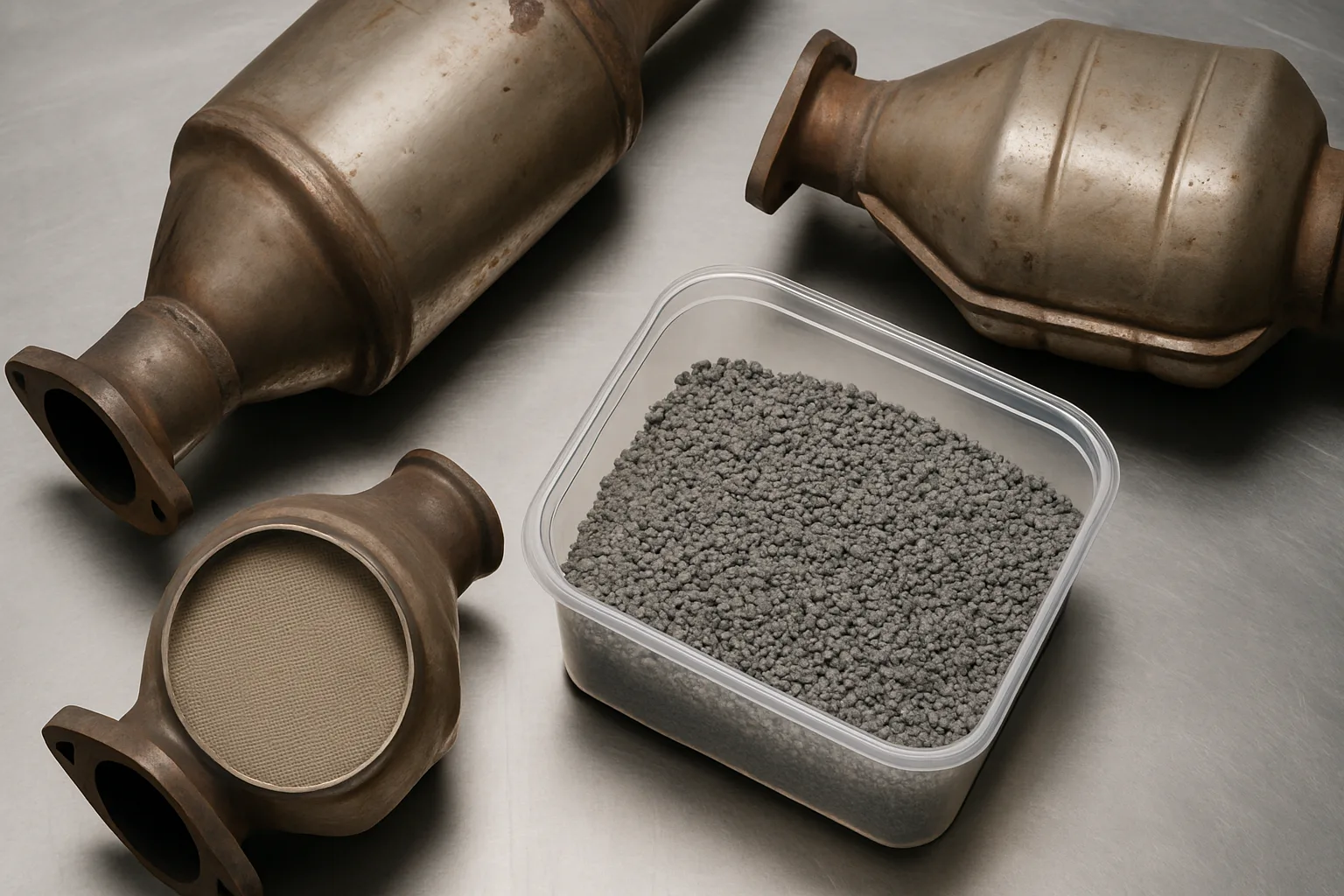
A catalytic converter looks like a metal can. What's inside is a ceramic or metalite substrate coated with a precise mixture of platinum group metals (PGMs): platinum, palladium, and rhodium. These three elements catalyze harmful exhaust gases into less toxic compounds. They're also extraordinarily rare, which is why a single converter can carry meaningful scrap value.
The PGM loading varies significantly by converter type, vehicle make, and whether it's OEM or aftermarket. Here's a rough breakdown of what each metal does in the converter and why it matters at the scrap level:
- Platinum: Effective at converting hydrocarbons and carbon monoxide. Common in diesel converters. Prices tend to be more stable than palladium or rhodium but still move with broader commodity markets.
- Palladium: Dominates gasoline engine converters. Demand surged with stricter emissions standards worldwide. Palladium loading in modern OEM converters is often the heaviest of the three by weight.
- Rhodium: The rarest and most price-volatile of the three. Exceptionally effective at reducing nitrogen oxides (NOx). Even trace amounts of rhodium carry significant value — when the rhodium price today is elevated, it can account for a disproportionate share of total converter value.
Aftermarket converters — the cheap replacements installed to pass emissions cheaply — contain far less PGM loading than OEM units. That's why OEM catalytic converter value is consistently higher. A buyer who doesn't distinguish between OEM and aftermarket is either uninformed or hoping you're uninformed.
How the Rhodium Price Today Drives Converter Value More Than You Think
Rhodium is the wildcard. No other commodity in converter recycling creates the kind of price swings that rhodium does. Because global rhodium supply is extremely limited — primarily sourced as a byproduct of platinum and palladium mining in South Africa — even modest shifts in demand or supply disruptions can move the market dramatically.
In practical terms: when the rhodium price today climbs, converters that carry meaningful rhodium content — typically newer OEM units from passenger vehicles — jump in value quickly. When rhodium corrects downward, those same converters lose value almost overnight. This isn't a slow drift. It can happen in days.
For sellers in Kamloops and across British Columbia, this creates a real problem. If you're calling one buyer and getting one quote, you have no way of knowing whether that quote reflects today's rhodium market or last week's. You're trusting someone whose financial interest runs opposite to yours.
That's why tracking the live rhodium price today — and connecting with multiple vetted buyers — matters. The metal markets are public information. Your converter price should reflect them.
OEM Catalytic Converter Value vs. Aftermarket: Why the Gap Is Larger Than Most People Realize
Here's a comparison that changes how most sellers think about their inventory:
Converter Type PGM Loading Relative Scrap Value OEM (Original Equipment Manufacturer) High — meets original emissions specs Significantly higher OEM High-Grade (e.g., large trucks, SUVs) Very high — larger substrate, more PGM Highest tier Aftermarket / Direct-fit replacement Low — minimum legal PGM loading Substantially lower Foil / Metalite substrate OEM Variable — depends on application Mid to high tierThe gap between OEM and aftermarket isn't cosmetic — it can be the difference between a few dollars and several hundred dollars per unit depending on the vehicle. A large diesel truck OEM converter from a Ford F-350 or comparable work truck carries substantially more platinum than a compact car replacement unit. Knowing what you have before you sell is not optional if you want to find the best scrap converter prices in Canada.
Accurate identification — using serial numbers, VIN lookups, and visual documentation — is how professional sellers protect themselves. It's also how SMASH structures its platform. Every unit gets documented before it goes to buyers. That documentation creates confidence, and confidence creates competition.
How to Sell Catalytic Converters Online and Actually Get Market Value
The old process for selling converters in British Columbia looked like this: call your regular buyer, get a quote, take it or leave it. No comparison. No visibility into whether that number reflected the live platinum, palladium, or rhodium price today. Just trust and hope.
The better process — the one that's become standard for higher-volume sellers — uses competitive bidding. When you sell catalytic converters online through a vetted auction platform, multiple buyers see your documented inventory at the same time. They bid against each other. The market, not a single buyer's margin target, determines your price.
SMASH makes this process straightforward for yards and collectors across Canada. Here's how it works in practice:
- Document your inventory. Photo documentation, serial numbers, and VIN lookups through the SMASH inventory tool give buyers the detail they need to bid confidently.
- List your load. Your converters go to SMASH's network of vetted buyers — not just one local contact.
- Buyers compete. More buyers means better price discovery. Competition can help reveal the real market for your material.
- Auto-invoicing handles the paperwork. No chasing down BOLs or packing lists manually.
For sellers running Kamloops scrap metal services, this means access to buyers well beyond the local market — without the overhead of managing those relationships individually. You focus on the converters. SMASH focuses on the competition.
Want to get competitive bids for your scrap in Canada? SMASH connects sellers directly with vetted buyers across North America.
5 Factors That Determine What Your Converter Is Worth Right Now
If you want to stop guessing and start understanding your converter prices, here's what actually drives the number you get quoted:
-
Live PGM Spot Prices
Platinum, palladium, and rhodium trade on commodity markets daily. The rhodium price today is publicly available. If your buyer isn't referencing current spot prices, ask why. -
Converter Identification (OEM vs. Aftermarket)
OEM catalytic converter value is tied directly to original PGM loading specs. Buyers who can verify what they're getting bid more confidently and more accurately. -
Serial Number and VIN Lookup
Converters with verified serial numbers sell for more. Buyers know exactly what substrate and PGM content they're processing. Guesswork gets discounted. -
Physical Condition
A converter that's been run hollow, torched, or damaged has reduced or zero PGM content. Photo documentation protects both sides of the transaction. -
Number of Buyers Competing
This is the most underrated factor. One buyer, one price. Ten buyers, ten bids. More buyers means better price discovery — that's not marketing language, it's basic economics.
Sellers who understand these five factors — and who work with platforms built around them — consistently get better outcomes than those who default to whoever answers the phone first. If you want to check current Canadian scrap converter prices and understand what your load is really worth, start with the data, not the deal.
What British Columbia Sellers Need to Know About the Market Right Now
British Columbia has a strong base of automotive recyclers, scrap yards, and converter collectors — particularly along the interior corridor from Kamloops through to the Lower Mainland. The market here is active, but it's also subject to the same global PGM fluctuations as anywhere else on the continent.
In 2026, tightening emissions regulations continue to push OEM converter PGM loading higher in new vehicles, which means the converters coming off older fleet vehicles — the ones most commonly processed in yards across Kamloops and the surrounding region — carry established and well-documented PGM profiles. That's good news for sellers who document their inventory properly.
What hasn't changed is the risk of leaving money on the table by selling to a single local buyer without checking the broader market first. SMASH was built specifically to close that gap — connecting sellers in markets like Kamloops with vetted buyers across North America so that geography doesn't become a discount.
For more context on how converter values are calculated and what documentation you need to maximize your return, read Canadian scrap converter pricing guides — practical breakdowns written for sellers who want to understand the market, not just take a quote.
Whether you're processing a handful of units or managing regular converter loads, the fundamentals don't change: know your metals, document your inventory, and let competition work in your favor. That's how you stop guessing and start getting paid what your converters are actually worth. Get a free quote at best-scrap-converter-prices.ca and see what a transparent, data-driven process looks like in practice.
Frequently Asked Questions
Q: How does the rhodium price today affect what I get paid for my catalytic converter?
Rhodium is typically the most price-volatile of the three platinum group metals in a converter. Even small amounts of rhodium in your converter's substrate can significantly shift the total PGM value, especially when rhodium spot prices are elevated. Buyers who price converters accurately account for live rhodium pricing — which is why getting multiple bids matters. A single quote may not reflect today's market.
Q: What's the difference between OEM catalytic converter value and aftermarket converter value?
OEM converters are manufactured to meet original vehicle emissions specifications, which requires higher platinum group metal loading. Aftermarket replacements use minimum PGM content to reduce cost — which means significantly lower scrap value. The gap between an OEM unit and an aftermarket unit of similar appearance can be substantial, sometimes several hundred dollars per converter depending on the vehicle and current metal prices.
Q: Can I sell catalytic converters online if I'm based in Kamloops or elsewhere in British Columbia?
Yes. Platforms like SMASH allow sellers across British Columbia — including Kamloops — to list documented converter inventory and receive competitive bids from vetted buyers across North America. You're not limited to local buyers, which means local market conditions don't cap your price. Documented inventory with serial numbers and photos typically attracts stronger bids.
Q: How do I know if my converter is OEM or aftermarket before I sell?
Serial numbers stamped on the converter shell are the most reliable identifier. A VIN lookup can also confirm what converter type was original to a specific vehicle. SMASH's inventory tool includes serial tracking and VIN lookup functionality specifically to help sellers document and identify their converters accurately before listing them.
Q: Is there catalytic converter recycling near me in Kamloops?
Local scrap yards in and around Kamloops do purchase converters, but local pricing is often based on a single buyer's margin targets rather than live PGM markets. Using an online platform alongside — or instead of — a local yard gives you a direct comparison. Documented inventory listed through SMASH reaches buyers across the continent, which typically results in more competitive pricing than a single local quote.
Disclaimer: Catalytic converter prices fluctuate daily based on live platinum, palladium, and rhodium spot markets. All prices mentioned in this article are general context only. Always check current rates before selling.
Follow SMASH on LinkedIn for ongoing scrap metal market updates and industry insights: linkedin.com/company/scrap-metal-auction-sales-hub
```