Most people have no idea their catalytic converter is worth serious money — until someone else removes it for them overnight. If you're planning to recycle yours the right way, knowing how to safely remove a catalytic converter is the difference between a clean payday and a costly mistake.
Whether you're a yard operator in Sydney, a DIY mechanic in rural Nova Scotia, or just someone sitting on an end-of-life vehicle, this guide walks you through the removal process step by step. We'll also cover how to find the best scrap converter prices in Canada once the unit is off the vehicle.
Why Proper Removal Matters for Catalytic Converter Recycling in Sydney
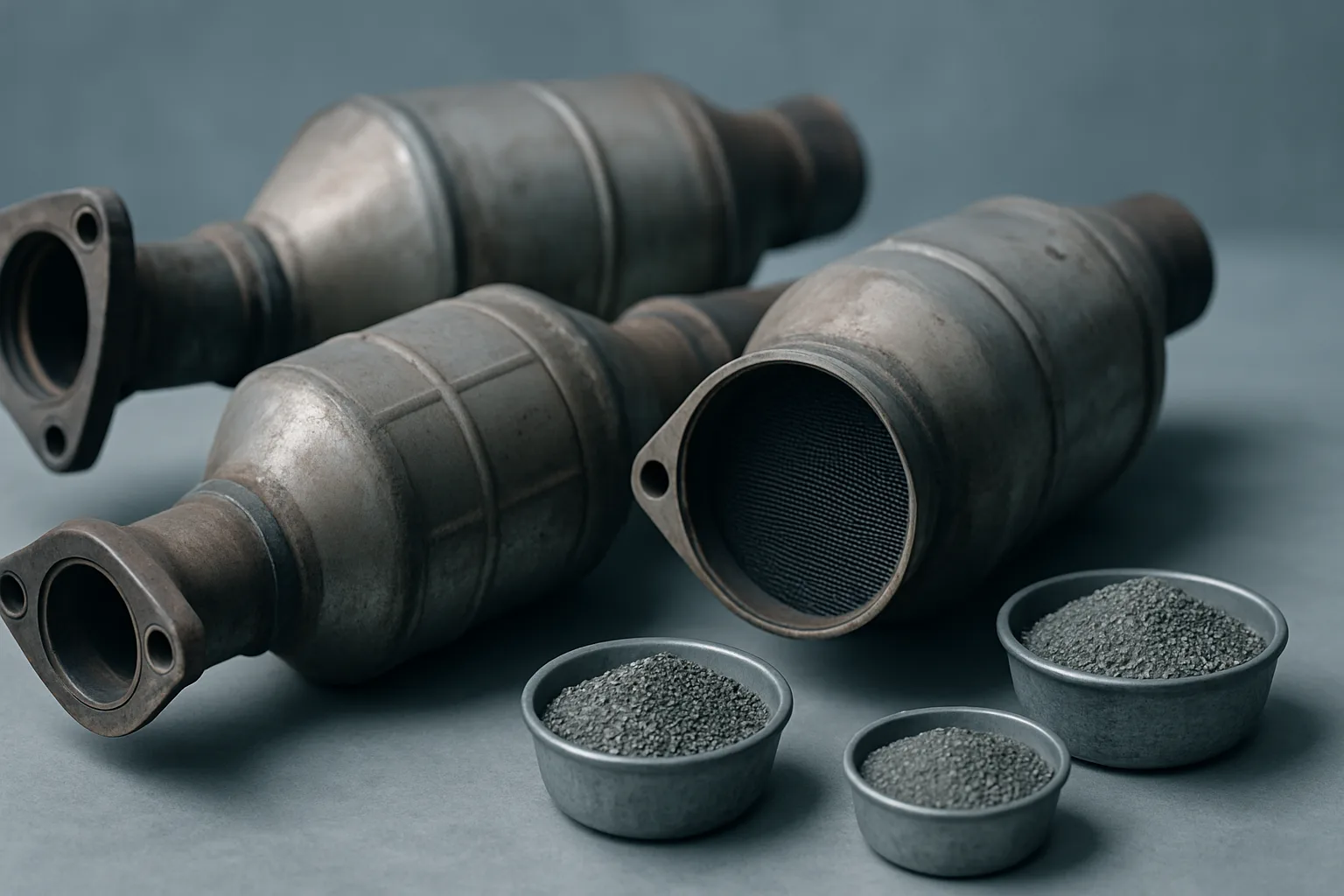
Catalytic converters contain platinum group metals (PGMs) — platinum, palladium, and rhodium. These are the same metals that drive converter scrap value, and they're fragile. A converter that's been torched carelessly, dropped hard, or cracked during removal can lose value before it ever reaches a buyer.
In Sydney and across Nova Scotia, recyclers and buyers price converters based on their serial number, condition, and the precious metal content that can be extracted. A damaged substrate — the honeycomb ceramic core inside the shell — means lower recovery yields. Lower yields mean lower offers. The extra 20 minutes you spend removing it cleanly can be worth real money.
There's also a legal dimension. In Nova Scotia, as across Canada, you need to prove legitimate ownership of any converter you sell. Keep your vehicle title, bill of sale, or registration handy. Platforms that take compliance seriously — like SMASH — require documentation. That protects you as much as it protects buyers.
Tools and Safety Gear You Need Before You Start
Don't start without the right setup. A catalytic converter sits in the exhaust system, exposed to extreme heat cycles and years of road grime. Bolts corrode. Flanges seize. Rushing this job without proper tools leads to stripped hardware, broken pipes, or worse — working under an improperly supported vehicle.
Tools you'll need:
- Floor jack and jack stands (never use a single jack as your only support)
- Breaker bar or impact wrench
- Penetrating oil (apply 24-48 hours before removal if possible)
- Pipe cutter or reciprocating saw (for welded units)
- Socket set — metric and SAE, since you won't always know which you need
- Wire brush for clearing rust from bolt heads
- Eye protection and gloves — non-negotiable
Safety fundamentals:
- Let the vehicle cool completely — at least two hours after last running it. Exhaust systems hold heat far longer than most people expect.
- Work on a flat, solid surface. Gravel shifts. Dirt compresses under stands.
- Chock the wheels before you go under.
- Never rely on a hydraulic jack alone. Stands take the load.
Step-by-Step: How to Remove a Catalytic Converter for Recycling
Once your vehicle is safely elevated and cooled, the job itself is straightforward — just methodical. Here's the process that minimizes damage to the unit and keeps the substrate intact.
- Locate the converter. It sits in the exhaust line between the engine and the muffler, closest to the engine. On most passenger vehicles, it's accessible from underneath. Some trucks and SUVs have them mounted higher and closer to the manifold.
- Identify the connection type. Converters connect to the exhaust system either with bolted flanges or by welds. Bolted units are easier — spray penetrating oil on every bolt and let it soak. Welded units require cutting.
- Break the bolts loose. Use a breaker bar for stubborn fasteners. If a bolt head is rounded or seized past the point of recovery, cut it with a reciprocating saw — cut the bolt, not the flange itself.
- Support the pipe as you work. Once bolts are removed, the exhaust section can shift or drop unexpectedly. Have a second person hold it, or use a jack to support the pipe while you finish disconnecting.
- Cut welded connections cleanly. If your converter is welded in, make straight cuts on both sides with a pipe cutter or reciprocating saw. Leave yourself a couple of inches of pipe on each end — buyers and recyclers prefer it, and it prevents accidental substrate damage near the weld point.
- Handle the converter carefully. Don't shake it, drop it, or bang it against other metal. The substrate is ceramic and cracks under impact. A cracked substrate means a visibly rattling converter — and recyclers will price it lower.
- Document what you have. Before anything else, photograph the converter from multiple angles and locate the serial number stamped on the shell. This number identifies the converter type, which is what buyers and pricing databases use to determine value. If you're looking to check current Canadian scrap converter prices, that serial number is your starting point.
What to Do with Your Converter After Removal — Sell Catalytic Converters Online
You've got a clean unit in hand. Now what? The old approach was to call your local scrap yard, accept whatever they offered, and move on. That's still an option — but it's not the only one, and it's rarely the best one.
The scrap converter market is driven by live PGM spot prices. Rhodium, palladium, and platinum fluctuate daily based on global supply and industrial demand. A quote you got last Tuesday is not the quote you'll get today. If you're selling a single converter or a pallet of cores, understanding this market matters.
Selling catalytic converters online through a competitive platform gives you access to multiple vetted buyers at once. Instead of one number from one buyer, you get market exposure — which is how price discovery actually works. Platforms like SMASH connect sellers with qualified buyers across North America, so a converter pulled off a vehicle in Sydney, Nova Scotia, gets evaluated against real market demand, not just whatever a single local buyer is willing to offer that day.
If you have multiple units — from a fleet, a parts yard, or accumulated inventory — sell your scrap metal on SMASH Recycling and let the auction format work for you. Document each converter with photos and serial numbers. The more information you provide upfront, the more confidence buyers have, and confidence drives competitive bids.
You can also read Canadian scrap converter pricing guides to understand how PGM markets affect what your specific converter type is worth before you list it anywhere.
Understanding Converter Scrap Value in Canada: What Affects Your Price
Not all catalytic converters are equal. A converter off a late-model luxury SUV will carry a very different PGM loading than one from a compact economy car. Several factors determine what your unit is actually worth on the Canadian scrap converter market.
Key price variables:
- Converter type and serial number — this identifies the OEM spec and approximate PGM content
- Substrate condition — intact honeycomb structure vs. cracked or blown-out substrate
- Live PGM spot prices — platinum, palladium, and rhodium all trade independently and move daily
- Shell integrity — buyers want the full unit; cut shells or removed substrates are priced differently
- Aftermarket vs. OEM — OEM (original equipment manufacturer) converters carry higher PGM loads than most aftermarket replacements
Regions like Ontario, Alberta, and Nova Scotia all feed into the same national market for converter scrap. Whether you're dealing with catalytic converter scrap price Ontario dynamics or selling out of Cape Breton, the underlying PGM pricing is the same — what changes is who you're selling to and whether they're competing for your business.
Disclaimer: Converter scrap prices fluctuate daily based on live precious metal markets. All pricing information in this guide is for educational purposes only. Always verify current rates before making a selling decision.
Common Mistakes That Cost You Money When Recycling Catalytic Converters
After all the work of a clean removal, sellers leave money on the table in predictable ways. Avoid these.
Selling without knowing what you have. A serial number lookup takes five minutes. Skipping it means you're negotiating blind. Buyers aren't going to tell you your converter is worth more than they offered.
Accepting the first offer. One buyer, one offer, no comparison. That's the old way. The scrap market runs on competition. If only one buyer sees your converter, only one buyer sets the price.
Damaged substrate. Already covered — but worth repeating. A cracked or rattling substrate means reduced PGM recovery. Buyers price for that risk. Clean handling from removal to sale preserves value.
No documentation. In Canada, regulatory pressure on converter sales has increased significantly. Buyers operating legitimately — including those on SMASH — require proof of ownership and basic documentation. If you can't provide it, expect lower offers or outright refusals from reputable buyers.
Rushing the sale. PGM markets move. If rhodium spikes this week, waiting a few days and monitoring the market could shift your price meaningfully. That said, timing the market perfectly is impossible — get a competitive offer through a platform with multiple buyers and let the market tell you what it's worth now.
Frequently Asked Questions
Q: Is it legal to remove and sell my own catalytic converter in Nova Scotia?
Yes — as long as you own the vehicle and can prove it. Nova Scotia follows national regulations requiring sellers to provide proof of ownership when selling catalytic converters. Keep your vehicle title or registration. Selling converters you don't have legitimate ownership documentation for is illegal and increasingly enforced.
Q: How do I find out what my catalytic converter is worth before selling?
Start with the serial number stamped on the shell of the converter. This identifies the unit type and its approximate PGM content. Use that number on a converter pricing database or submit it to a platform that provides quotes based on live precious metal markets. Remember that prices change daily — always get a current quote before committing to a sale.
Q: Can I sell catalytic converters online from Sydney, Nova Scotia?
Absolutely. Online converter sales have made geography far less limiting. Platforms that connect sellers across Canada with vetted buyers mean a yard or seller in Sydney gets access to the same competitive market as someone in a major metro. Document your units thoroughly — photos, serial numbers, condition notes — and let buyers compete for your inventory.
Q: What's the difference between selling to a local scrap yard vs. selling catalytic converters online?
A local scrap yard gives you one offer from one buyer. Selling online through a competitive platform gives multiple vetted buyers access to your inventory at the same time. More competition generally means better price discovery. The tradeoff is some administrative work upfront — documentation, photos, serial number tracking — which platforms like SMASH make straightforward.
Q: Does a cracked substrate significantly reduce my converter's scrap value?
Yes, meaningfully. The precious metals in a catalytic converter are embedded in the ceramic substrate. A cracked, rattling, or blown-out substrate means less recoverable PGM material and higher processing risk for the refiner. Buyers price that discount in. Handle converters carefully from the moment they're off the vehicle to protect the substrate — and your payout.
If you've got a converter off the vehicle and you're ready to find out what it's actually worth on today's market, start by doing your homework. Serial number, condition assessment, current PGM prices — then get it in front of more than one buyer. Find the best scrap converter prices in Canada at best-scrap-converter-prices.ca and get a free quote before you commit to anything.
Stay current on market moves and industry news — follow SMASH on LinkedIn for scrap metal market insights and updates that actually matter to sellers and buyers across North America.
```