Why Your Converter's Serial Number Is Worth More Than You Think
Most sellers walk into a scrap yard with a catalytic converter and accept whatever number gets thrown at them. That's leaving real money on the table. The serial number stamped or etched on your converter is the single most important piece of data in the pricing conversation — and if you can't read it, you can't negotiate it.
For sellers in Fort McMurray, Alberta, where heavy equipment runs hard and converter volumes are high, understanding what that string of characters actually means can be the difference between a fair price and a low-ball offer. This guide breaks down how to find, read, and use serial numbers to get what your converter is actually worth.
What a Catalytic Converter Serial Number Actually Tells You
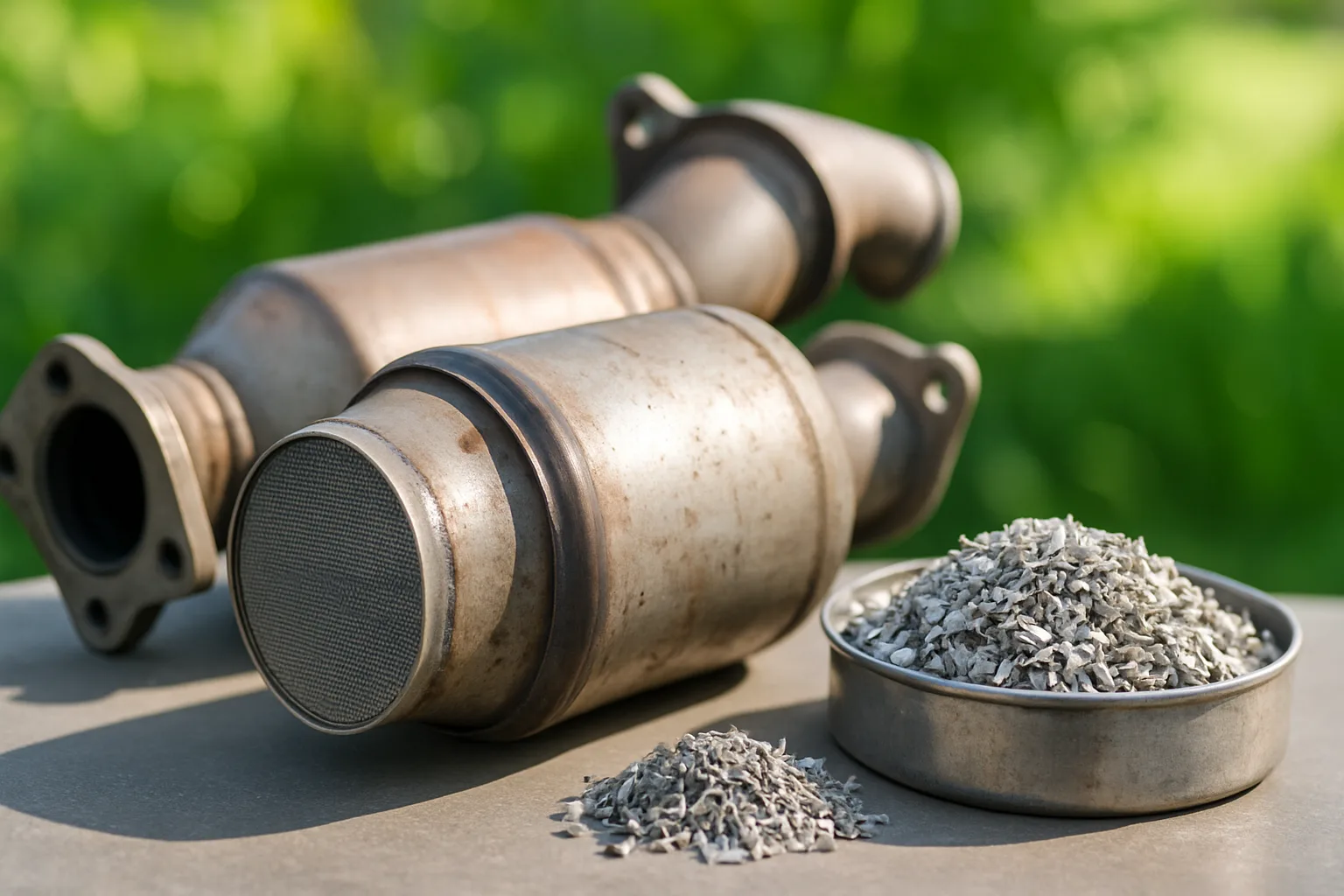
A catalytic converter serial number — sometimes called a part number or OEM code — identifies the specific unit. It tells buyers the make, model, engine type, and production year the converter was built for. That information maps directly to the precious metal content inside: platinum, palladium, and rhodium. Those three platinum group metals are what drive converter scrap value.
Different vehicles require different loading levels of these metals. A converter from a heavy-duty diesel pickup used in Fort McMurray's oil sands operations will have a very different precious metal profile than a unit pulled from a compact sedan. The serial number is the shortcut to knowing which is which — without cutting it open.
Here's what serial number data typically encodes:
- OEM part number: Links to a specific vehicle application and factory specs
- Manufacturer code: Identifies the converter maker (not the vehicle brand)
- Substrate type: Ceramic vs. metallic foil — affects precious metal recovery
- Vintage/production era: Older units often carry different metal ratios than newer ones
- Flow direction markers: Inlet/outlet orientation, relevant for certain buyer databases
Most professional buyers cross-reference serial numbers against published databases that correlate the code with known assay results. That's how prices get set in a legitimate transaction. If a buyer won't tell you what database they're using, that's worth noting.
Where to Find the Serial Number on a Catalytic Converter
Location varies by manufacturer and vehicle type, but there are a few common spots. Knowing where to look saves you from submitting a photo that shows the wrong end of the unit — which delays quotes and frustrates buyers.
Common locations:
- Stamped directly on the shell: Most domestic converters have the part number pressed or stamped into the metal casing. Look along the seam or on the top/bottom face of the body.
- Heat shield sticker or label: Some manufacturers apply a label under the heat shield. These degrade quickly from road heat, so check early.
- End cone or inlet pipe: Particularly common on aftermarket units and some import vehicle converters. Check near the weld seam where the pipe meets the body.
- OEM bracket or brace: On certain GM and Ford applications, the code is stamped on a bracket attached to the converter, not the body itself.
- Laser-etched or acid-etched: Less common but used on higher-value units — look for faint characters that may need angled light to read clearly.
For sellers processing multiple units — a common situation for shops and dismantlers operating in Alberta's industrial corridor — consistent photo documentation of serial number location pays off fast. It speeds up every quote and builds a clean paper trail.
How to Read and Decode What You're Looking At
Serial numbers don't follow a single universal format. That's the honest answer. OEM converters from different manufacturers use entirely different coding conventions. But there are patterns worth knowing.
Domestic OEM converters (GM, Ford, Chrysler/Stellantis): Typically use alphanumeric part numbers that match the vehicle parts catalog. A GM unit might show something like a 7-10 character code that corresponds directly to a GM service part number. Ford units often have a suffix indicating application year range.
Import OEM converters (Toyota, Honda, BMW, Mercedes): These tend to use internal OEM numbering that requires a manufacturer-specific database to decode. A Toyota converter number won't mean much without a lookup tool — but to a professional buyer, it tells them exactly what's inside.
Aftermarket converters: Units from manufacturers like Davico, Walker, or Eastern use their own part numbering tied to their catalogs. These can be looked up in aftermarket databases, but their precious metal content is generally lower than OEM units. If you're selling aftermarket, know that going in — and don't expect OEM prices.
The practical step: photograph both sides of the converter body in good lighting, capture any visible stamps or stickers, and submit those images when requesting a quote. Platforms like SMASH facilitate exactly this kind of documented, photo-supported listing — which gives buyers enough information to bid competitively rather than low-balling due to uncertainty. To find the best scrap converter prices in Canada, documentation is your starting point.
Serial Numbers, Price Discovery, and Scrap Metal Prices Today
Here's where it connects to money. Converter pricing is driven by three variables: the current spot prices of platinum, palladium, and rhodium; the assay data for that specific converter type; and the competitive landscape of who's buying.
Scrap metal prices today — including platinum group metals — fluctuate daily based on global commodities markets. A converter that quoted at one value last week may quote differently this week. That's not a buyer playing games; it's the market moving. The serial number gives you the stable part of the equation: the metal content doesn't change. What changes is what that metal is worth on any given day.
This is why getting multiple bids matters. Two buyers using the same serial number data but offering different prices signals a margin spread — and that spread is money a single-buyer transaction leaves on the table. For sellers in Fort McMurray, where loads can be substantial and converter volumes high, that margin adds up fast. Using a platform like SMASH to get competitive bids for your scrap in Canada creates real price discovery instead of a take-it-or-leave-it scenario.
If you want to check current Canadian scrap converter prices before you negotiate, you're already ahead of most sellers. Knowledge of the current platinum group metals market — even directionally — tells you whether this is a strong selling window or a moment to hold if your operation allows it.
What Buyers Look for Beyond the Serial Number
Getting the serial number right is step one. But professional buyers evaluate a few additional factors when pricing a converter load, especially for larger volumes common in Fort McMurray's industrial and heavy equipment sector.
Condition of the substrate: A converter that has been overheated, water-damaged, or physically crushed has degraded substrate. That affects recovery yields. Photos showing intact brickwork versus a cracked or melted substrate will produce different bids — accurately.
Full vs. de-canned: Some sellers strip the shell and submit only the ceramic or metallic substrate (the "cat"). Others sell full units. Buyers prefer documented full units for traceability, but de-canned material does get purchased. Know what you're selling and represent it accurately.
Proof of origin documentation: This matters more every year. In Alberta and across Canada, documentation showing where converters came from is increasingly part of responsible recycling transactions. BOLs, packing lists, and photo records of serial numbers serve this purpose. Catalytic converter recycling in Fort McMurray is subject to the same scrutiny as anywhere else — and legitimate buyers expect documentation.
For guidance on how pricing, documentation, and market data connect, read Canadian scrap converter pricing guides that walk through the full process.
Turning Serial Number Knowledge Into Better Transactions
The sellers who get the best prices aren't necessarily the ones with the highest volumes. They're the ones who show up prepared. They know the serial numbers on their load. They have photos. They understand roughly what metals are inside and what those metals are worth today. And they don't accept a single bid as the market rate.
SMASH was built for exactly this scenario. The platform connects vetted buyers with documented converter loads — no subscription fees, no guessing, no single buyer setting the price on their own terms. Competition reveals the market. Documentation gives buyers confidence to bid higher. Those two things together change the outcome of a transaction.
If you're selling converters out of Fort McMurray or anywhere across Alberta, the process starts with reading your serial numbers correctly and ends with competitive bids from buyers who actually know what they're looking at. That's not a complicated ask — but it does require doing it right from the start.
Ready to stop guessing and start getting real bids? Find the best Canadian scrap converter prices and get a free quote at best-scrap-converter-prices.ca — and let the market tell you what your converters are actually worth.
Disclaimer: Catalytic converter prices fluctuate daily based on platinum, palladium, and rhodium spot prices. Always verify current rates before completing a transaction.
Frequently Asked Questions
Q: How do I find the serial number on my catalytic converter in Fort McMurray?
Look for stamped or etched characters on the outer shell of the converter body, near the end cones, or on any attached brackets or heat shields. Take photos in good lighting from multiple angles. If the number is worn or partially obscured, note that in your listing — buyers can often work with partial serials when combined with vehicle information.
Q: Does the serial number affect how much I get paid for my converter?
Directly, yes. The serial number maps to the precious metal content — platinum, palladium, and rhodium — inside the unit. Buyers use that data to calculate value based on current spot prices. A correctly identified converter gets priced accurately; an unidentified one often gets bid conservatively to offset buyer risk.
Q: Where can I find a catalytic converter buyer in Fort McMurray who uses serial number data?
Professional buyers and platforms that take converter recycling seriously will always reference serial number databases when quoting. Avoid any buyer who offers a flat rate per unit without asking about the serial number — that's a sign they're not pricing to the metal. Platforms like SMASH connect you with vetted buyers who price based on actual converter data.
Q: What's the difference between OEM and aftermarket converter scrap value in Canada?
OEM converters typically carry higher precious metal loadings than aftermarket replacement units, which means higher scrap value per unit. The serial number tells a buyer which type they're dealing with. If you're selling a mix, keeping OEM and aftermarket units separated and labeled makes the quoting process faster and often more favorable to you.
Q: Do scrap metal prices today affect what I'll get for my catalytic converter?
Yes. Converter prices move with platinum group metals markets — platinum, palladium, and rhodium trade daily on global commodity exchanges. A converter quoted this week may produce a different number next week. If you're holding a significant volume of converters in Alberta, tracking precious metal price trends gives you useful context for timing your sale.
Follow SMASH on LinkedIn for scrap metal market updates, converter pricing insights, and industry news across North America.