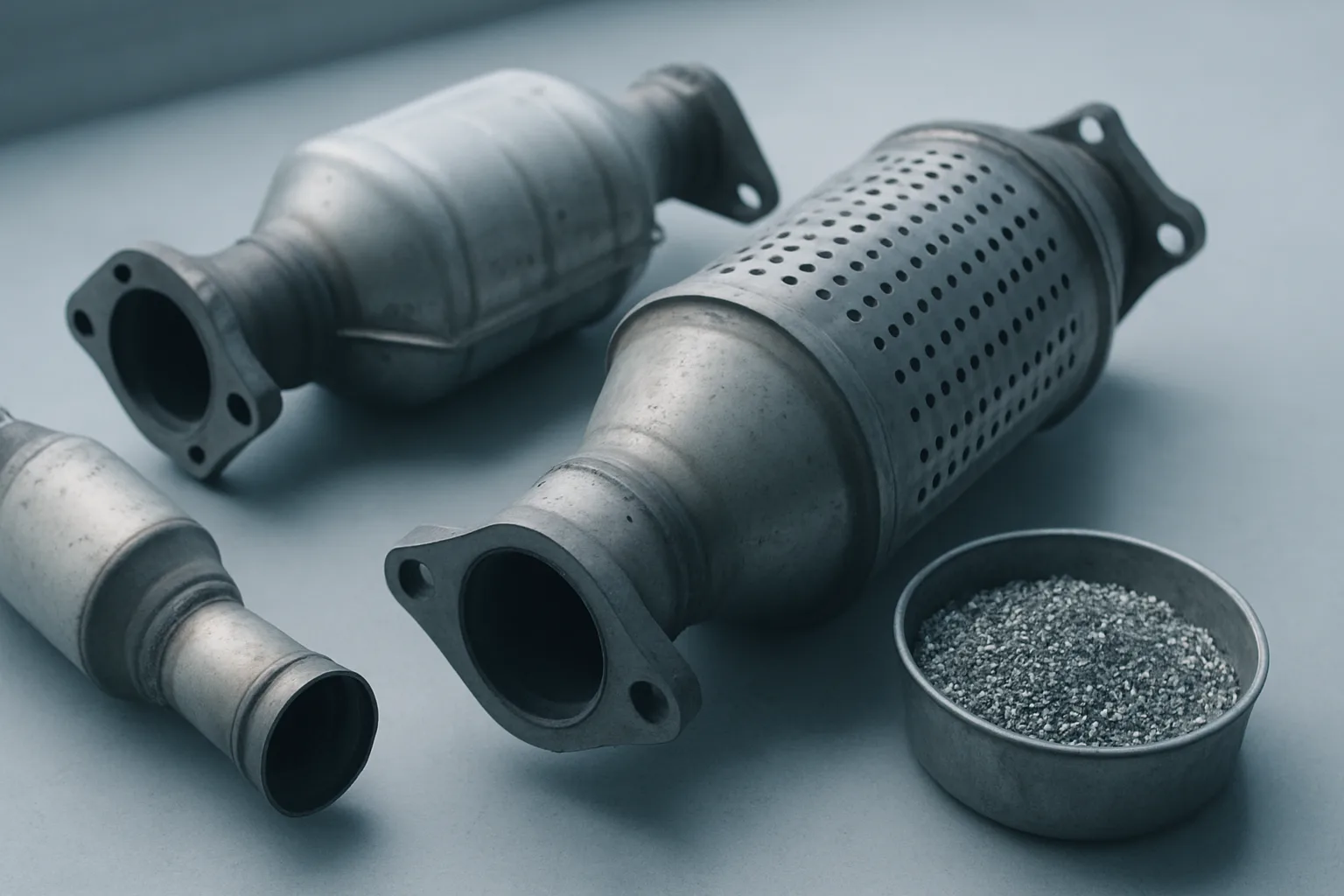
Why Your Catalytic Converter's Scrap Value Changes Every Single Day
Most converter sellers in St. Catharines get one quote, assume it's the market rate, and take it. That's a mistake. Catalytic converter scrap value isn't a fixed number — it moves daily, sometimes dramatically, based on precious metal markets that trade around the clock. If you don't understand what drives the price, you're leaving money on the table every time you sell.
This guide breaks down exactly how converter pricing works in 2026, what's pushing markets right now, and how sellers across Ontario are getting better returns by using transparent, competitive platforms instead of relying on a single buyer's word.
What Actually Determines Catalytic Converter Scrap Value
The metals inside a catalytic converter — platinum, palladium, and rhodium — are the entire story. There's no flat rate. Every converter is assessed based on the type and concentration of these platinum group metals (PGMs) it contains, multiplied by live spot prices on the day it's processed.
Here's what that means in practice:
- Platinum: Found in diesel converters and many older units. Prices fluctuate with industrial demand, particularly from the European auto sector.
- Palladium: Dominant in gasoline engine converters. The palladium price today is the single biggest variable for most common converter types sold in Canada.
- Rhodium: Present in smaller quantities but historically the highest-value PGM per troy ounce. Extreme price swings are common — rhodium has moved thousands of dollars in a single month.
The ratio of these metals varies by converter type, vehicle make, model year, and even geographic market differences in how manufacturers sourced their substrates. A Honda catalytic converter will have a completely different PGM fingerprint than a Ford truck converter from the same year. That's why buyers use assay data, XRF scanning, and established grade databases — and why a blind quote over the phone is almost never in your favour.
How Daily Market Fluctuations Hit Your Payout — Reading a Catalytic Converter Scrap Price Chart
If you've ever looked at a catalytic converter scrap price chart, you'll notice the volatility is real. Prices don't drift — they jump. A single U.S. Federal Reserve announcement, a supply disruption in South Africa (where most of the world's PGMs are mined), or a shift in EV adoption projections can swing palladium by 5-10% in a week.
In 2026, the PGM market continues to be shaped by:
- Ongoing tension between legacy ICE vehicle demand and EV transition timelines — slower EV adoption in North America has kept catalytic converter recycling volumes elevated
- South African mining output, which remains sensitive to energy constraints and labour conditions
- Global autocatalyst recycling rates, which directly affect how much secondary supply enters the market
- Currency fluctuations — because PGMs trade in USD globally, the CAD/USD exchange rate affects every Canadian seller's net return
The takeaway: timing matters, and so does who you're selling to. A buyer quoting you on a Monday based on Friday's spot price is already using stale data. A transparent platform showing live-market-referenced pricing is a different conversation entirely. You can check current Canadian scrap converter prices to see how today's PGM market translates into actual converter values before you commit to any sale.
Selling Catalytic Converters in St. Catharines — What Local Sellers Need to Know
St. Catharines sits in the heart of the Golden Horseshoe, surrounded by auto-heavy industry, dismantlers, and recyclers from Hamilton to Niagara Falls. That's actually a competitive market — which is good news if you know how to use it. It also means there are plenty of buyers operating on thin margins who will underquote you if you don't walk in with data.
Local yards and dealers in and around St. Catharines vary significantly in how they grade and price converters. Some use real-time assay references. Others are still working off fixed grade sheets that haven't been updated in weeks. That gap in methodology creates a gap in your payout. Sellers who compare offers — rather than accepting the first number — consistently do better.
For sellers looking to go beyond walk-in quotes, St. Catharines scrap metal services through a vetted platform give you access to buyers who are actively bidding, not just waiting for you to accept whatever they offer. That competitive dynamic is exactly what most local sellers are missing. You can also read Canadian scrap converter pricing guides to understand how your specific converter types are trending before you even make a call.
A few practical points for Ontario sellers in 2026:
- Photograph your converters before selling — both end caps and the serial/part number stamp. Documentation increases buyer confidence and can support higher bids.
- Know your converter type. Foreign catalysts (smaller, typically from Japanese and Korean imports) and domestic cats (larger, North American vehicles) are priced differently.
- Don't strip the converter from the vehicle until you have a quote in hand. Some buyers discount heavily for handling or missing components.
- GST/HST applies to converter sales — make sure any platform you use handles this correctly so your paperwork is clean.
Why Sell Catalytic Converters Online Instead of Going Local-Only
Walking into a local yard with a load of cats gives you one number from one buyer. That buyer knows their competition better than you do. They also know that most sellers won't drive across town for a second quote. The power dynamic is built into the transaction — in their favour.
When you sell catalytic converters online through an auction-style platform, that dynamic flips. Multiple vetted buyers see the same inventory, at the same time, referenced against the same live market data. The result isn't a guaranteed windfall — but it's competitive price discovery, which is as close to a true market price as most sellers will ever get.
SMASH is built around exactly this model. No subscription fees. No locked-in relationships with a single buyer. You list your converters with proper documentation — photos, serial numbers, weights, vehicle info via VIN lookup where applicable — and vetted buyers compete for the load. SMASH only wins when the seller wins. That alignment matters.
Platforms like SMASH also handle the paperwork side: auto-invoicing, GST/HST tracking, and transaction records that keep you compliant and organized. For yards and dismantlers in St. Catharines selling converters regularly, that administrative clarity adds up fast. You can access the SMASH Recycling auction platform directly to see how the process works and get set up without a subscription commitment.
How to Get the Most Accurate Catalytic Converter Scrap Value for Your Load
Accuracy starts with information. The more detail you provide about your converters, the more accurate — and competitive — your quotes will be. Vague descriptions produce conservative offers. Buyers bid higher when they can see exactly what they're getting.
Here's how to document your converters properly before reaching out to buyers:
- Photograph both end caps — the inlet and outlet openings, plus the body of the converter.
- Record the part number or serial number stamped on the unit. This is the single most important identifier for accurate grading.
- Weigh each converter separately where possible. Bulk weight is useful but per-unit data is better.
- Note the vehicle make, model, and year the converter came from. A VIN lookup can fill in gaps and verify application data.
- Separate foreign and domestic cats — don't mix them in a single lot if you can help it.
When you bring this level of documentation to a sale — whether you're walking into a yard in Ontario or listing on a platform — buyers take it seriously. Documented inventory gives buyers more confidence. More confidence means stronger bids. It's not complicated, but most sellers skip these steps entirely.
If you want to find the best scrap converter prices in Canada, the combination of solid documentation and competitive buyer access is the most reliable path to a strong return. There's no secret formula — just better information and more buyers at the table.
The converter market in 2026 rewards sellers who treat this as a business transaction, not a convenience errand. Whether you're clearing one car from a dismantling job in St. Catharines or moving a full pallet of mixed cats, the process is the same: document, compare, compete.
Ready to stop guessing? Get a free quote and find the best Canadian scrap converter prices at best-scrap-converter-prices.ca.
Disclaimer: Catalytic converter scrap prices fluctuate daily based on live precious metal spot prices. All values referenced in this article are for general informational purposes only. Always check current rates before committing to a sale.
Frequently Asked Questions
Q: What is catalytic converter scrap value based on in Canada?
Catalytic converter scrap value in Canada is based on the platinum group metals (PGMs) — platinum, palladium, and rhodium — contained in the converter's substrate. These metals trade on global commodity markets and their spot prices change daily. The CAD/USD exchange rate also affects your net return as a Canadian seller, since PGMs are priced in USD internationally.
Q: How does the palladium price today affect my converter payout?
Palladium is the dominant PGM in most gasoline engine converters, which are the most common type sold in Canada. When the palladium price rises, converter payouts for gasoline engine cats typically rise with it. When palladium drops — which it can do quickly — payouts follow. Checking live palladium spot prices before you sell gives you a realistic baseline for what your load should be worth.
Q: Where can I sell catalytic converters in St. Catharines, Ontario?
You can sell catalytic converters locally to scrap yards and auto recyclers in and around St. Catharines, or use an online platform like SMASH to reach vetted buyers across Ontario and beyond. Online platforms typically generate competitive offers through an auction format, which can produce better price discovery than a single local quote. For current pricing and service options, visit best-scrap-converter-prices.ca.
Q: Is it better to sell catalytic converters online or locally?
Both options have merit, but selling online through a vetted auction platform typically exposes your inventory to more buyers simultaneously, which creates competition. Local yards offer speed and simplicity, but usually provide a single take-it-or-leave-it offer. For larger volumes or high-value converter types, the price difference between one buyer and multiple competing buyers can be significant.
Q: How often do catalytic converter scrap prices change in Canada?
Converter scrap prices effectively change every business day because they're tied to live precious metal spot prices. Significant market events — mining disruptions, central bank policy changes, major shifts in auto manufacturing demand — can move prices sharply within a single week. Checking a catalytic converter scrap price chart before you sell helps you understand whether you're selling into a strong or weak market.
---Follow SMASH on LinkedIn for industry updates, scrap metal market insights, and converter pricing trends across North America.