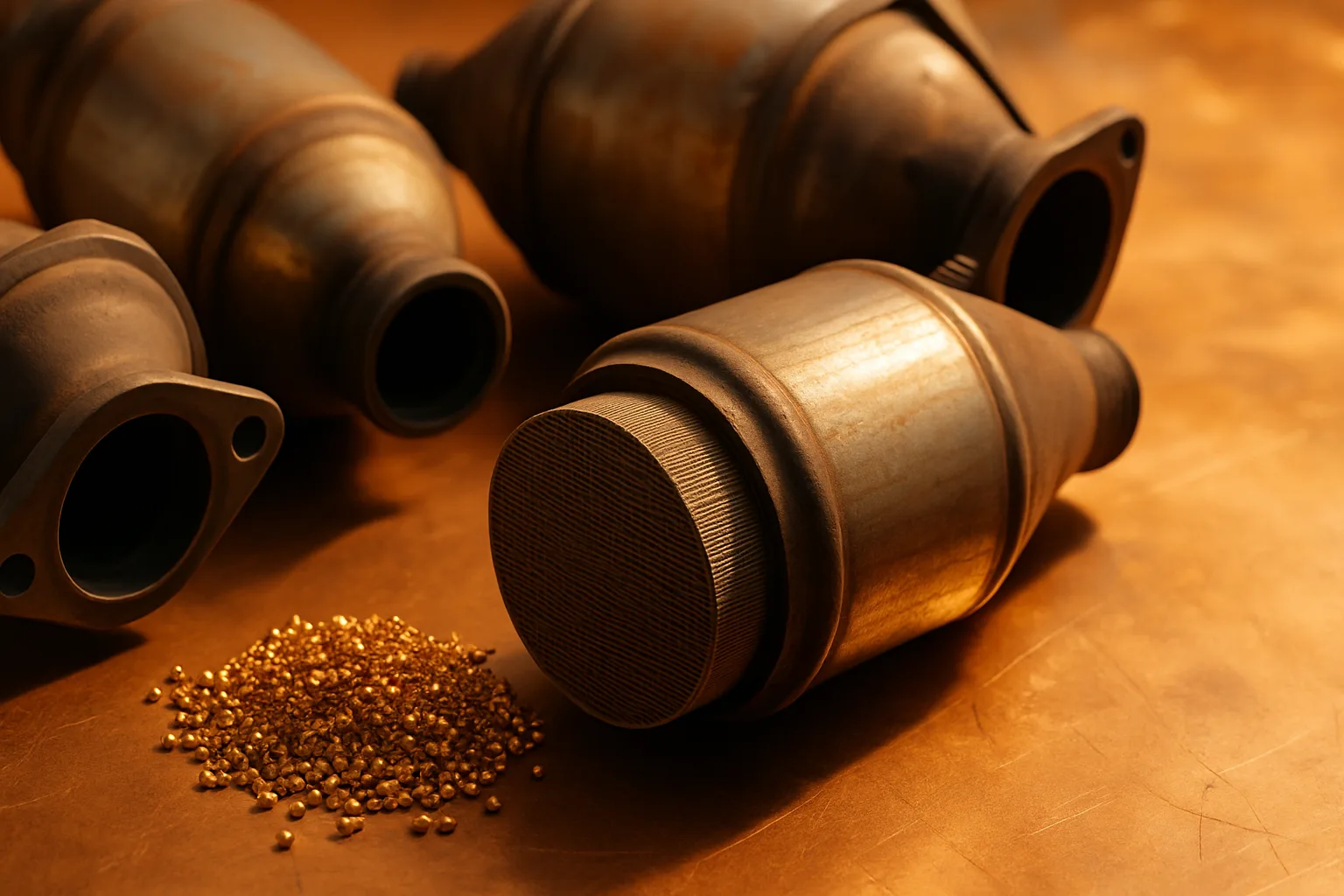
Catalytic converter theft cost North American vehicle owners and insurers billions of dollars in recent years — and the recycling yards trying to run a clean, legitimate business are paying for it too. If you're a converter seller in Prince George or anywhere across British Columbia, this problem hits closer to home than you might think. It distorts pricing, creates compliance headaches, and makes buyers cautious about every unit that crosses their counter.
This article breaks down exactly how theft affects the legitimate catalytic converter recycling market, what it means for honest sellers trying to get a fair price, and how platforms like SMASH are helping bring transparency back to a market that badly needs it.
Why Catalytic Converter Theft Keeps Driving Up Compliance Costs for Recyclers
Theft surged when platinum group metal (PGM) prices climbed sharply in the early 2020s. Palladium, rhodium, and platinum — the metals inside every cat — became worth more per ounce than gold at certain points. Thieves noticed. So did regulators.
In response, provinces across Canada and states across the U.S. introduced stricter documentation requirements for converter transactions. In British Columbia, that means recyclers face more scrutiny on every purchase. Buyers now need to verify ownership, record vehicle identification numbers, and in many cases require photo documentation before they'll touch a unit. The compliance burden is real — and it costs money that ultimately affects what sellers get paid.
The result: a catalytic converter buyer in Prince George today operates under a very different rulebook than five years ago. More paperwork. More risk. Tighter margins. And a baseline of suspicion that makes every transaction slower and more complicated — even for 100% legitimate sellers.
How Stolen Converters Distort Scrap Metal Prices Today
Here's something most sellers don't realize: theft doesn't just affect the criminals and their victims. It warps pricing signals across the entire market.
When stolen converters flood a local market, buyers who don't screen properly end up paying inflated prices — because they're buying volume without vetting. That creates a temporary artificial price spike. Legitimate recyclers who do screen properly can't match those prices and lose business. Over time, the market corrects, often violently, leaving honest sellers wondering why the price they were quoted last month looks nothing like today's number.
This is one reason why checking scrap metal prices today through a reliable, transparent source matters more than ever. Spot prices for palladium, rhodium, and platinum fluctuate daily on commodity markets, but the local price a buyer offers can drift far from those benchmarks when theft distorts regional supply. Knowing the difference between market value and what a single buyer quotes you is the first step to not leaving money on the table.
- Rhodium — the highest-value PGM in most catalytic converters, extremely volatile
- Palladium — dominant in gasoline engine cats, sensitive to automotive market shifts
- Platinum — common in diesel converters, generally more stable than palladium or rhodium
Theft injects noise into all three of these price signals at the local level. Buyers in markets with high theft rates hedge their bids more aggressively. That conservatism spreads. Legitimate sellers end up subsidizing a problem they had nothing to do with.
The Serial Number Problem — and Why It Actually Protects Legitimate Sellers
One of the most significant shifts in converter buying over the past few years is the emphasis on how much is my catalytic converter worth by serial number. Serial number lookup has become a standard tool for every serious buyer — not just to verify value, but to confirm the unit's provenance.
For sellers who have nothing to hide, this is actually good news. A converter with a traceable serial number, matched to a vehicle and documented with photos, gets processed faster and with more buyer confidence. That confidence can translate into better offers, because the buyer isn't pricing in the risk of buying something they can't resell downstream.
Platforms like smashrecycling.ca have built serial number tracking and photo documentation directly into the selling process. When a seller uploads a converter with a clear serial number and supporting photos, vetted buyers on the platform can bid with confidence. That's how you find the best scrap converter prices in Canada — not by hoping one buyer is having a generous day, but by giving multiple verified buyers the information they need to compete for your load.
Without documentation, you're asking a buyer to take on more risk. More risk means lower bids. It's that simple.
What Legitimate Sellers in Prince George Need to Know Right Now
If you're selling converters — whether it's a single unit off a trade-in or a pallet of cores — here's the practical reality of doing business in this environment:
- Expect documentation requests. Any reputable catalytic converter buyer in Prince George will ask for proof of ownership or vehicle paperwork. This isn't harassment — it's compliance. Show up prepared.
- Photos matter. A clear image of the converter body and serial number (if visible) speeds up the transaction and protects both sides.
- Don't assume one quote is the market. A single buyer has one margin target. Competition reveals what the market actually pays. If you're searching for catalytic converter buyers near me open now, you're already thinking locally — but local doesn't have to mean limited.
- Serial number lookup is your friend. Knowing the approximate assay value of your specific converter before you sell puts you in a stronger negotiating position.
- British Columbia regulations are stricter than they used to be. Scrap dealers are required to maintain purchase records. Make sure whoever you're selling to is compliant — because if they're not, it creates problems for you too.
Prince George sellers have access to buyers across the province and beyond when they use a platform that doesn't limit their reach to whoever happens to be closest. Prince George scrap metal services have evolved — local doesn't have to mean you're stuck with one price from one buyer.
How SMASH Brings Transparency Back to Catalytic Converter Recycling
The old model for catalytic converter recycling in Prince George — or anywhere — was straightforward and broken: you call a buyer, they quote you a number, you take it or leave it. You had no way to know if that number was fair, inflated, or a lowball offer designed to test your patience.
SMASH changes that dynamic by putting your inventory in front of multiple vetted buyers simultaneously. The auction format creates real competition. More buyers bidding on the same load means better price discovery — not a guarantee of a higher price, but a market-driven result instead of a guess.
The platform supports serial number tracking, photo documentation, and auto-invoicing, which means the compliance documentation that theft enforcement requires is built into the workflow — not bolted on as an afterthought. Sellers who read Canadian scrap converter pricing guides know that documentation isn't just a regulatory requirement — it's a value signal to buyers.
There are no subscription fees. SMASH only wins when the seller wins. That's a model built for the market, not against it.
Comparison: Old Way vs. SMASH Way for Converter Sellers
Here's how the two approaches stack up for a converter seller dealing with today's theft-driven compliance environment:
- Old way: One buyer, one quote, no context for whether that price reflects PGM spot markets. Hope you called the right person.
- SMASH way: Multiple vetted buyers, auction-format competition, real-time price discovery tied to market data.
- Old way: Compliance documentation is informal — or nonexistent — which creates downstream liability.
- SMASH way: Serial tracking, VIN lookup, photo documentation, and auto-invoicing built into every transaction.
- Old way: If your local buyer lowballs you, your only option is to call someone else and start over.
- SMASH way: Your load is visible to a network of buyers, so you're not stuck with whoever answers the phone first.
- Old way: Theft in your region depresses local prices because buyers are cautious — and you have no visibility into why.
- SMASH way: Documented, vetted transactions reduce risk for buyers, which means they can price more aggressively on clean loads.
The scrap market isn't broken beyond repair. But it needs tools that match the reality of how it actually operates in 2026 — with stricter regulations, smarter buyers, and sellers who deserve better than a single quote from a single phone call.
If you want to check current Canadian scrap converter prices and understand what your converters are actually worth before you sell, the data and the platform exist. Use them.
Frequently Asked Questions
Q: Does catalytic converter theft affect the price I get when I sell legitimately?
Yes, indirectly. Theft increases compliance costs for buyers, creates pricing volatility, and makes buyers more conservative in markets with high theft rates. Sellers with proper documentation and traceable units are better positioned to get competitive offers because they reduce the buyer's risk.
Q: How do I find a reliable catalytic converter buyer in Prince George?
Look for buyers who ask for documentation — that's a sign they're operating legitimately. Better yet, use a platform like SMASH that connects you with multiple vetted buyers simultaneously, so you're not dependent on whoever is geographically closest to you in Prince George.
Q: How much is my catalytic converter worth by serial number?
Value depends on the specific unit — different vehicles contain different amounts of platinum, palladium, and rhodium. Serial number lookup tools can give you an approximate assay value based on the converter's known precious metal content. Prices fluctuate daily with commodity markets, so always check current rates before you sell.
Q: Are catalytic converter buyers near me required to ask for proof of ownership in British Columbia?
Yes. British Columbia scrap dealers are required to maintain purchase records and may request proof of ownership or vehicle documentation. This is a regulatory requirement, not optional. Selling to a buyer who skips this step puts you at potential risk and likely means they're not operating in full compliance.
Q: Can I sell my catalytic converter online instead of finding a local buyer?
Absolutely. Platforms like SMASH allow you to list your converters with documentation and connect with vetted buyers across North America. This expands your buyer pool well beyond whoever happens to be closest, which generally means better competition and more transparent pricing on your load.
Theft has made the converter market more complicated — but it's also created real advantages for sellers who come prepared. Document your units. Know their serial numbers. Don't settle for a single quote. The best price isn't always down the street; it's wherever the most informed buyers are competing for what you're selling. Start by heading to best-scrap-converter-prices.ca for a free quote and real market data on your converters.
Disclaimer: Catalytic converter prices fluctuate daily based on platinum group metal spot markets. Always check current rates before selling.
Follow SMASH on LinkedIn for industry updates, scrap metal market insights, and converter pricing trends: linkedin.com/company/scrap-metal-auction-sales-hub.