Foil vs. Bead Catalytic Converters: What's the Difference and What Are They Worth?
Most people selling scrap converters don't know what's inside theirs — and that gap costs them money. The palladium price today is only one piece of the puzzle. The style of converter you're holding — foil or bead — determines how much of that palladium (and platinum and rhodium) you can actually recover. Knowing the difference before you sell puts you in a better position to negotiate.
This guide breaks down both converter types, explains what drives their scrap value, and shows you how to find the best scrap converter prices in Canada instead of leaving money on the table with a single-buyer phone call.
What Is a Foil-Style Catalytic Converter?
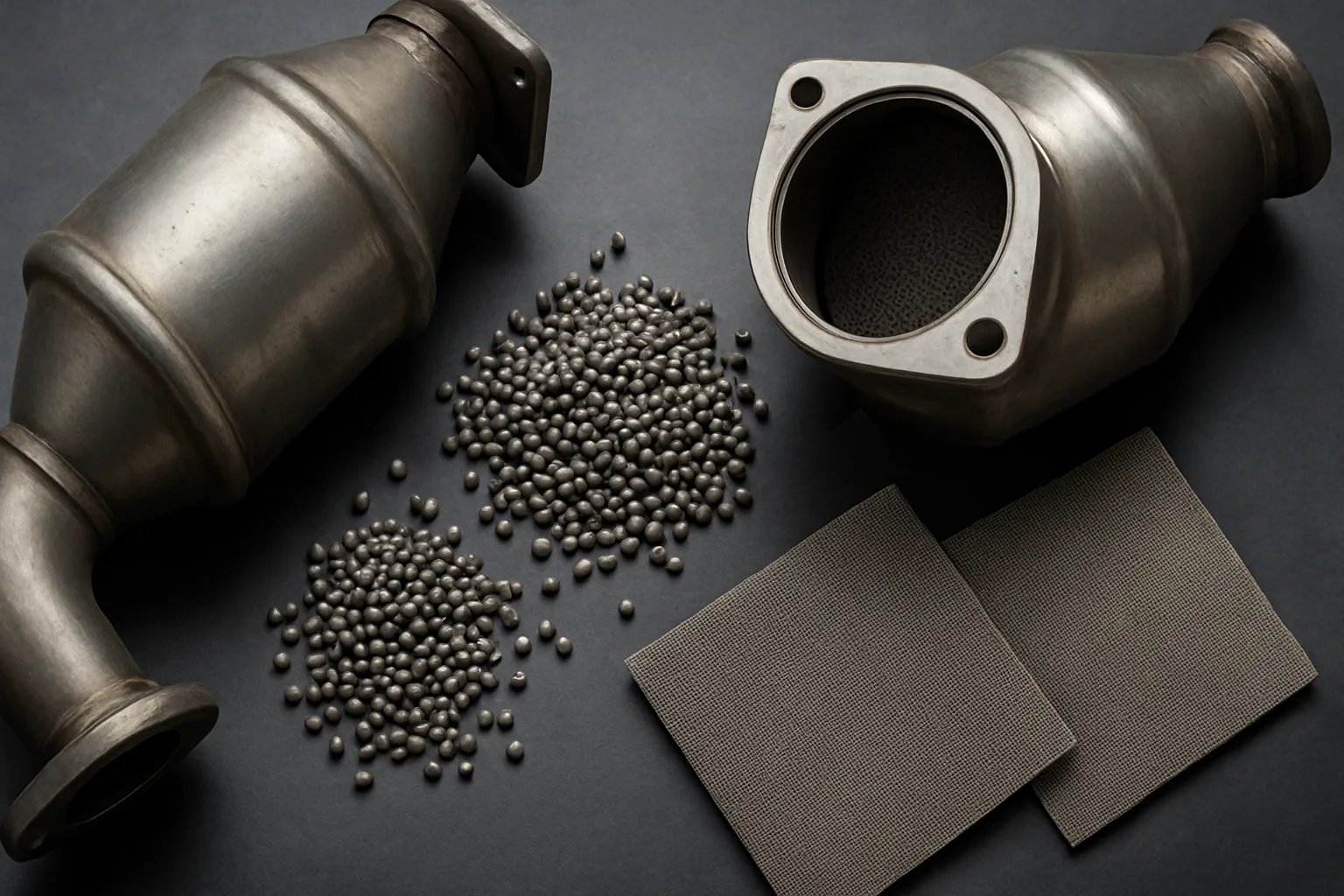
Foil-style converters — sometimes called metallic substrate converters — use a thin corrugated metal substrate inside the housing. That substrate is typically made from stainless steel foil, wound into a honeycomb pattern and coated with a precious metal washcoat. The foil gives the substrate a massive surface area for catalytic reactions while keeping the unit lightweight.
You'll find foil-style converters most commonly on:
- European vehicles (BMW, Mercedes, Audi, Volkswagen)
- High-performance and turbocharged engines
- Motorcycles and small-displacement vehicles
- Some diesel applications
The foil substrate is thinner and more fragile than ceramic. It's also more sensitive to heat damage and physical shock. If a foil converter has been rattled hard or overheated, the internal substrate can collapse — and a collapsed substrate dramatically reduces recoverable precious metals. Condition matters more with foil units than almost any other converter type.
From a scrap catalytic converter prices Brandon perspective, foil converters tend to trade at a range that reflects both their PGM (platinum group metal) loading and their condition. A clean, intact foil unit from a European luxury vehicle can carry meaningful value. A crushed or heat-damaged one is worth significantly less — sometimes a fraction of the intact price.
What Is a Bead-Style Catalytic Converter?
Bead-style converters use small ceramic or alumina beads as the substrate instead of a solid honeycomb structure. The beads are coated with the PGM washcoat and packed inside the converter housing. When exhaust gases flow through, they contact the bead surface and the catalytic reaction happens across thousands of tiny contact points.
Bead-style converters were more common in older North American vehicles — particularly General Motors products from the 1970s through the 1980s. You'll occasionally find them on:
- Classic GM trucks and cars (pre-1990 models in particular)
- Older Chrysler applications
- Some industrial and off-road equipment
- Certain aftermarket replacement converters
Bead converters have a distinct sound when you shake them — the beads rattle inside the housing. That rattle is a quick field identification trick. They're also generally heavier than foil converters of similar size because of the bead mass inside.
Processing bead converters requires different smelter techniques than ceramic or foil units. Not every buyer handles them equally. That's exactly why using a B2B scrap metal marketplace like SMASH gives you an edge — multiple vetted buyers means you reach buyers who specialize in bead processing, not just whoever picks up the phone locally.
How PGM Content Drives Scrap Value — and Why the Palladium Price Today Matters
Platinum, palladium, and rhodium are the three metals that give catalytic converters their scrap value. The mix varies by converter type, vehicle application, and manufacturer. Foil and bead converters each carry different PGM profiles — and that profile interacts with live spot prices to determine what your converter is actually worth on any given day.
Palladium is particularly important right now. The palladium price today fluctuates with global supply and demand pressures, auto manufacturing trends, and the ongoing shift in drivetrain technology. Gasoline-engine converters tend to be palladium-heavy. Diesel converters lean more toward platinum. Rhodium, though used in smaller quantities, has historically commanded extreme spot prices and can dominate the value of certain high-grade converter types.
Here's a simplified breakdown of how converter style affects PGM recovery:
- Foil converters: Higher surface area per gram of substrate can mean efficient PGM coating — but condition sensitivity means damaged units recover less
- Bead converters: Beads are relatively straightforward to process, but PGM loading on older bead units can be lower than modern ceramic honeycomb converters
- Both types: Actual recovery depends on smelter assay results, not visual inspection
This is why a real-time approach to pricing matters. Checking a static list from six months ago means you're pricing against yesterday's market. To check current Canadian scrap converter prices, you need access to up-to-date data tied to live PGM spot prices — not a printed price sheet that's already out of date.
Identifying Your Converter: Serial Numbers, Pictures, and Price Lists
You don't have to guess what you have. Serial numbers are stamped or embossed on most OEM converters, and that number is your fastest route to an accurate price. A catalytic converter price list with pictures — the kind used by professional buyers — cross-references serial numbers against known converter grades, vehicle applications, and PGM content data.
If you're in Brandon or anywhere across Manitoba trying to figure out what a specific converter is worth, here's the practical process:
- Locate the serial number — check the converter housing, the end caps, or the pipe connections. Some converters have the serial on a sticker; others are stamped directly into the metal.
- Photograph the converter — shoot the serial number clearly, both end pipes, and the overall housing. Good photos help buyers grade accurately.
- Use a serial number lookup tool — platforms like SMASH support serial tracking so buyers can price with confidence instead of guessing.
- Compare multiple bids — a single quote tells you what one buyer thinks. Multiple bids tell you what the market thinks.
Knowing how much is my catalytic converter worth by serial number isn't just curiosity — it's the baseline for a real negotiation. Sellers who walk in with documentation get better prices than sellers who shrug and say "just tell me what it's worth."
For yards in Brandon and across Manitoba, photo documentation and serial tracking also reduce disputes. When the converter is photographed before it ships, everyone agrees on condition upfront. No surprises after the fact.
Foil vs. Bead: A Side-by-Side Comparison for Scrap Sellers
Here's a direct comparison to help you quickly categorize what you're working with and set realistic expectations before you sell.
- Substrate material: Foil = corrugated metal (stainless); Bead = ceramic or alumina pellets
- Common vehicle origin: Foil = European/performance vehicles; Bead = older North American vehicles
- Identification method: Foil = visual inspection, lighter weight; Bead = shake test (rattle), heavier feel
- Condition sensitivity: Foil = high (damage significantly reduces value); Bead = moderate
- Buyer specialization needed: Foil = some; Bead = yes, not all processors handle beads equally
- PGM recovery: Both depend on assay — never assume based on appearance alone
The takeaway: neither style is universally "better" from a scrap value standpoint. It depends on PGM loading, condition, and which buyers are actively bidding on that converter type when you're ready to sell. That last point is where a competitive auction platform changes the math entirely.
SMASH connects sellers with vetted buyers across North America who specialize in different converter types. Whether you're moving foil units off European imports or bead converters out of a classic-car dismantler, the auction format creates competition — and competition can help reveal the true market price instead of whatever a single buyer decides to offer. Read Canadian scrap converter pricing guides to understand how to approach each type before you sell.
Getting the Best Converter Price in Canada: The Process That Works
Selling converters the old way — one call, one offer, take it or leave it — is a guaranteed way to underperform the market. It doesn't matter whether you're sitting on foil units, bead converters, or a mixed load of ceramics. A single-buyer approach means you have no price discovery and no leverage.
Here's what a smarter process looks like for sellers in Brandon, Manitoba and across the country:
- Inventory your converters by type — separate foils, beads, and ceramics
- Photograph and document serial numbers for each unit
- Check the palladium price today before you submit — understand whether the market is moving up or down
- Submit your inventory through a platform that reaches multiple vetted buyers simultaneously
- Let competitive bids do the work — more buyers means better price discovery
- Close the deal with documented invoicing and a clear paper trail
SMASH supports this entire process. Inventory tools, serial tracking, photo documentation, vetted buyer network, auto-invoicing — it's built for the way professional scrap operations actually work. No subscription fees. We only win when you do.
If you're ready to stop guessing and start selling on real market data, compare scrap metal bids from Canadian buyers and see what competition actually looks like for your converter inventory.
Whether you're running a recycling yard in Brandon, processing loads across Manitoba, or dismantling vehicles anywhere in Canada, the path to better converter prices starts with better information and more buyers. Get a free quote and find the best scrap converter prices in Canada at best-scrap-converter-prices.ca.
Disclaimer: Catalytic converter prices fluctuate daily based on platinum, palladium, and rhodium spot prices. Always check current rates before selling. The values referenced in this article are for general guidance only and do not constitute a firm offer or price guarantee.
Frequently Asked Questions
Q: How do I know if my catalytic converter is foil or bead style?
Shake the converter gently. If you hear a rattle of loose material inside, it's likely a bead-style unit. Foil converters are silent when shaken and tend to be lighter. Visual inspection of the converter's end openings can also reveal the internal structure — foil units show a metallic honeycomb, while bead units may show small pellets if the end is open.
Q: Does the palladium price today affect what I get for a foil converter?
Yes, directly. Foil converters — particularly those from gasoline-engine European vehicles — often carry significant palladium in their PGM washcoat. When the palladium price today is elevated, those units are worth more. When palladium dips, that value adjusts accordingly. Always check live spot prices before finalizing a sale.
Q: Where can I find scrap catalytic converter prices in Brandon, Manitoba?
Local scrap yards in Brandon may offer pricing, but a single local quote rarely reflects the full market. Platforms like SMASH connect sellers with vetted buyers across Canada, creating competitive bidding that's tied to real PGM spot data. You can also check current rates at best-scrap-converter-prices.ca for Canadian market context.
Q: How much is my catalytic converter worth by serial number?
The serial number on your converter maps to a known vehicle application and PGM content grade. Professional buyers use serial number databases to price converters accurately rather than estimating by weight or appearance. Submitting your serial numbers through a platform with serial tracking — like SMASH — gives buyers the data they need to bid confidently, which typically results in stronger offers.
Q: Are bead-style converters worth less than foil or ceramic converters?
Not necessarily — it depends on the specific PGM loading of the unit and the current spot prices for platinum, palladium, and rhodium. Older bead converters from North American vehicles can have lower PGM content than modern ceramics, but this varies by application. The key is getting your converters assayed and bid on by buyers who specialize in bead processing, not just general converter buyers.
---Follow SMASH on LinkedIn for live scrap metal market insights, converter pricing updates, and industry news: SMASH on LinkedIn.