Weekly Market Recap: Which Catalytic Converters Are Worth the Most Right Now?
Most sellers treat every catalytic converter the same. Pull it off, drop it at the yard, take whatever they're offered. That's a costly mistake — because the spread between a low-value cat and a high-value one can be hundreds of dollars per unit. If you're doing catalytic converter recycling in Brampton or anywhere across Ontario, knowing which vehicles carry the most valuable converters changes the math on every load you bring in.
This week's roundup breaks down the makes and models that consistently command top converter scrap value in Canada — and explains why the precious metal content inside is what really drives the price.
Why Vehicle Make and Model Determine Your Converter's Scrap Price
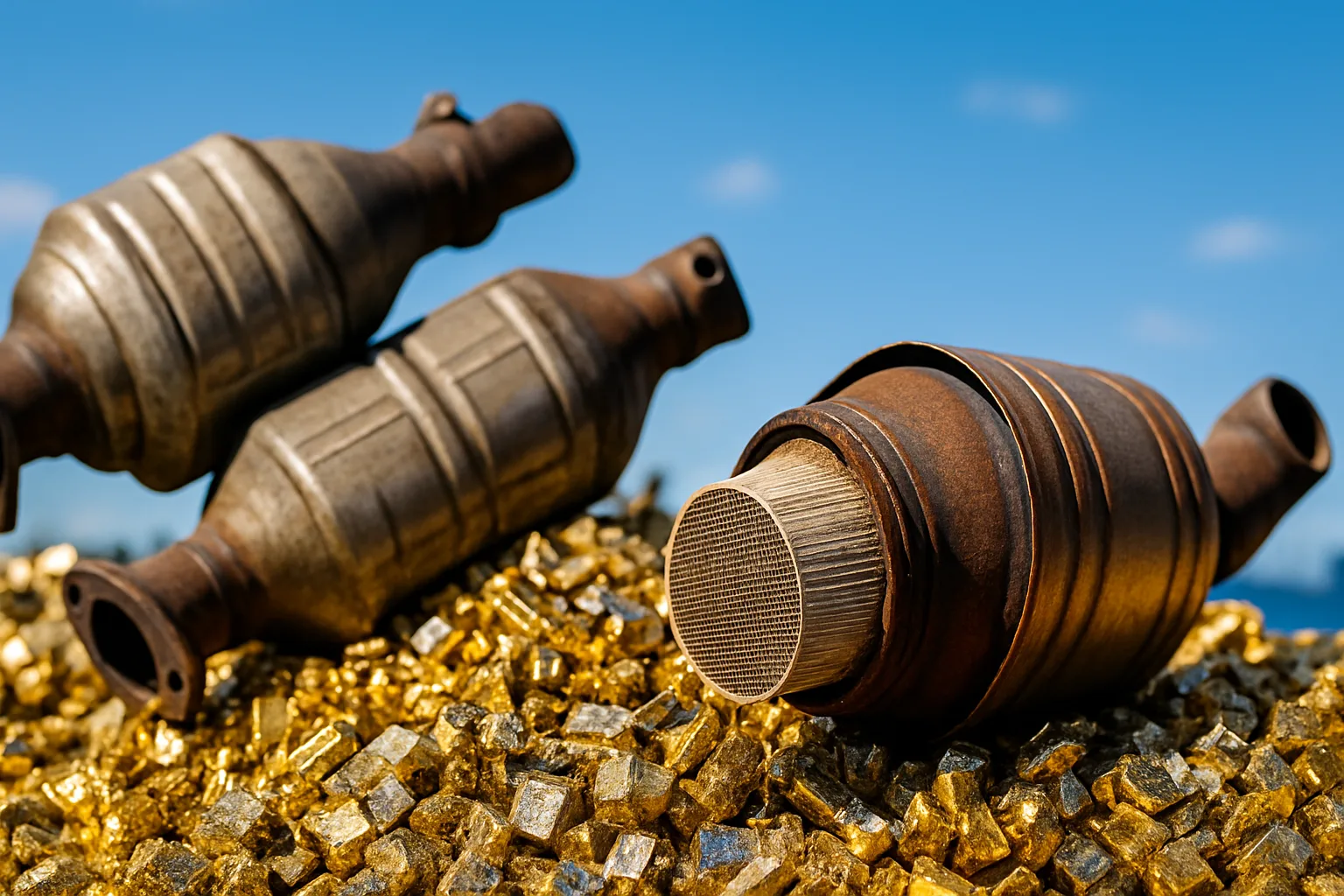
A catalytic converter isn't just a chunk of metal. It's a ceramic substrate coated with a precise blend of platinum group metals — platinum (Pt), palladium (Pd), and rhodium (Rh). The loading levels of those three metals vary dramatically by manufacturer and engine type. A converter off a 2004 Honda Accord and a converter off a 2008 Ford F-250 diesel are completely different animals in terms of scrap value.
Refiners pay based on what they can actually recover from the substrate. That means two things matter most when you find the best scrap converter prices in Canada: the actual gram weight of the PGM loading, and the current spot prices of platinum, palladium, and rhodium on the open market. Both variables move. That's why a quick catalytic converter scrap price lookup before you sell — not after — is worth doing every single time.
The Most Valuable Catalytic Converters by Make and Model
These are the vehicles and converter families that recyclers, buyers, and refiners consistently flag as high-value units. No invented prices here — actual recovered amounts vary by sample, condition, and current PGM spot rates. Use this as a guide, not a price sheet.
Toyota and Lexus
Toyota converters — especially from the Prius, Land Cruiser, and Tundra — are well-known in the recycling trade for high rhodium and palladium content. The Prius has two converters per vehicle, and both are relatively small but densely loaded. Lexus models (LX, GX series) tend to carry larger-format units with premium PGM levels. These are among the most consistently sought-after converters in the market.
- Toyota Prius — two converters per vehicle, high PGM loading relative to size
- Toyota Land Cruiser — large substrate, high-volume unit
- Toyota Tundra / Sequoia (V8) — strong palladium content
- Lexus LX 470 / GX 470 — premium-tier converters, consistently high bids from buyers
Ford and GM Trucks
North American trucks and SUVs run large-displacement engines that require substantial catalytic capacity. Ford F-Series, Excursion, and Econoline vans often carry converters that are physically large — meaning more substrate material and, depending on the model year, solid PGM loading. GM's full-size trucks (Silverado, Suburban, Tahoe) follow a similar pattern, particularly pre-2010 models.
- Ford F-250 / F-350 (gasoline V8/V10) — high-volume converters
- Ford Excursion (V10) — one of the most-discussed high-value domestic converters
- Chevy Silverado / GMC Sierra (V8) — reliable mid-to-high value
- Cadillac Escalade / Chevrolet Suburban — dual converters, strong scrap value
Honda and Acura
Honda converters have a strong following in the recycling market for good reason. The Accord and Odyssey platforms run units with respectable palladium loading, and older Acura MDX and TL models are particularly well-regarded. If you're doing catalytic converter recycling and regularly see Honda product come through, don't underestimate those units — they punch above their weight in recovered PGM value.
- Honda Accord (V6, 2003–2012) — consistently solid value
- Honda Odyssey — minivans generate more scrap volume than most sellers expect
- Acura MDX / TL — higher-end units, premium loading
Ferrari, Lamborghini, and Exotic Vehicles
This category is worth mentioning even if the volumes are low. Exotic and high-performance vehicles run converters with extremely high PGM loading to meet stringent emissions targets at high engine temps. A single converter from a Ferrari 458 or Lamborghini Gallardo can be worth multiples of a standard domestic truck unit. Rare? Yes. But if you come across one, treat it accordingly and get a proper assay quote — don't guess.
What Makes This Week's Market Conditions Worth Watching
As of this week, PGM markets have continued to reflect the volatility that's defined 2026. Rhodium in particular has been sensitive to supply signals out of South Africa, which still produces the majority of the world's rhodium. Palladium remains relevant despite the ongoing EV transition — hybrid vehicle sales in Canada are still strong, and hybrids still carry catalytic converters. That matters for anyone doing catalytic converter recycling in Brampton or sourcing product across Ontario.
One pattern that keeps showing up: sellers who lock in prices without checking current PGM spot rates end up leaving money on the table. A converter that was worth $180 last month may be worth $240 this month — or less. The only way to know is to check current Canadian scrap converter prices against live market data before you commit to a sale.
Platforms like SMASH Recycling — where verified buyers bid on your metal create price transparency that a single buyer on the phone simply can't replicate. Competition reveals the market. That's not a slogan — it's how auctions work.
How to Sell Catalytic Converters Online and Get a Real Price
If you're looking to sell catalytic converters online — whether you're a yard in Brampton moving volume or an independent seller with a handful of units — the process matters as much as the price. Here's what separates a good sale from a mediocre one:
- Identify your converter accurately. Serial numbers, OEM codes, and VIN-linked lookups help verify exactly what you have. Don't guess. A misidentified converter gets mispriced.
- Document condition. Photo documentation of substrate condition — intact honeycomb vs. rattled out — affects buyer confidence and bid levels. A broken-down substrate recovers less PGM, period.
- Check live PGM spot prices. Platinum, palladium, and rhodium prices fluctuate daily. Before you sell, know what the metals inside are worth.
- Use a competitive process. One buyer, one price is guessing. Multiple vetted buyers competing for your product is price discovery. Use platforms that create that competition when you sell scrap metal online.
- Understand your volume tier. High-volume sellers (10+ units per week) often qualify for different pricing structures. Know which category you're in.
SMASH brings vetted buyers into a competitive auction format — no subscription, no guesswork, and auto-invoicing built in. If you're moving converters regularly out of Brampton or anywhere across Ontario, that kind of structured sale process is worth understanding. You can also read Canadian scrap converter pricing guides to sharpen your understanding of the market before your next sale.
From Brampton to Vancouver: Regional Pricing Differences Matter
One thing sellers don't always factor in: geography affects your net price. This isn't about the converter itself — a Toyota Land Cruiser cat has the same PGM loading whether it's in Brampton or Vancouver. But shipping costs, buyer networks, and regional demand all affect what you actually clear after the deal closes.
For catalytic converter recycling in Vancouver or the Lower Mainland, proximity to Pacific port access can affect logistics for international refining flows. In Ontario, the concentration of industrial buyers and processing capacity in the GTA — including Brampton — means strong local buyer competition when you're working with the right platform. The point: don't assume your local yard is giving you the best available price just because they're nearby. The market for converters is national, and so should be your approach to selling. Whether you're searching for catalytic converter recycling in Vancouver or trying to sell catalytic converters in Ontario, the principle is the same — competitive bids beat single-buyer quotes every time.
Disclaimer: Catalytic converter scrap prices fluctuate daily based on platinum, palladium, and rhodium spot markets. The vehicle makes and models referenced represent general market trends and do not constitute guaranteed pricing. Always check current rates before selling.
Frequently Asked Questions
Q: Which catalytic converters are worth the most for scrap in Canada?
Toyota (Prius, Land Cruiser, Tundra), Lexus (LX, GX), Ford Excursion (V10), and Acura (MDX, TL) consistently rank among the highest-value converters in the Canadian scrap market. Exotic vehicles like Ferrari and Lamborghini carry extremely high PGM loading per unit. Actual value depends on current platinum, palladium, and rhodium spot prices.
Q: Where can I do catalytic converter recycling in Brampton?
Brampton and the surrounding GTA have several scrap yards and metal recyclers that accept catalytic converters. For the best price discovery, use an online platform like SMASH that brings multiple vetted buyers into a competitive bidding process — rather than relying on a single local offer.
Q: How do I look up the scrap price of my catalytic converter?
Use a catalytic converter scrap price lookup tool that cross-references your converter's serial number or OEM code against current PGM spot prices. Platforms like best-scrap-converter-prices.ca are built specifically to help Canadian sellers identify converter value before committing to a sale.
Q: Can I sell catalytic converters online from anywhere in Ontario?
Yes. Online platforms let you list, document, and sell catalytic converters without being limited to local buyers. Whether you're in Brampton, Hamilton, Windsor, or anywhere else in Ontario, a competitive online auction format gives you access to vetted buyers across the country — which typically produces better pricing than a local single-buyer offer.
Q: Does the condition of the catalytic converter affect its scrap value?
Absolutely. A converter with an intact, undamaged ceramic substrate recovers more precious metal during refining. Converters that have been rattled out, contaminated, or physically damaged are worth less because the recoverable PGM content is lower. Always document condition with photos when listing converters for sale.
Ready to stop guessing what your converters are worth? Find the best scrap converter prices in Canada — get a free quote at best-scrap-converter-prices.ca and see what competitive bidding actually does for your bottom line.
Stay sharp on PGM markets and scrap metal pricing — follow SMASH on LinkedIn for weekly industry updates and market insights worth bookmarking.
```