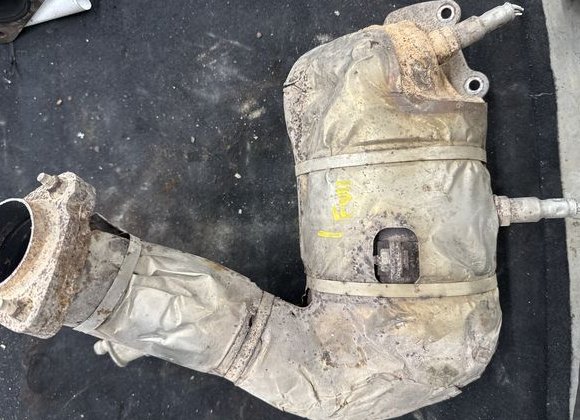
Why Two Identical-Looking Converters Can Have Wildly Different Scrap Values
Here's something that surprises a lot of sellers: two catalytic converters pulled from the same vehicle model can appraise at completely different prices. Not slightly different — we're talking a gap of hundreds of dollars. The reason comes down to grading, and most sellers in Moncton and across New Brunswick have no idea the system even exists.
Understanding catalytic converter grading isn't just academic. It's the difference between leaving money on the table and actually getting paid what your converter is worth. Platforms like SMASH are built around this kind of transparency — where documented, graded inventory attracts competitive buyers and drives better price discovery. Let's break down exactly how the grading system works and why it matters for your bottom line.
What Catalytic Converter Grading Actually Means
Every catalytic converter contains a ceramic or metalite substrate coated with platinum group metals (PGMs) — primarily platinum, palladium, and rhodium. The grading system exists because the PGM content varies dramatically depending on the converter's origin, age, vehicle application, and physical condition. A grade is essentially a shorthand for how much recoverable precious metal a processor expects to find inside.
Processors and buyers categorize converters into tiers based on several factors:
- Substrate type: Ceramic substrates are the most common. Metalite (foil-type) converters often come from European vehicles and can carry different PGM loadings.
- Vehicle application: A converter from a late-model pickup truck typically carries a heavier PGM load than one from a compact car. Diesel converters (DPFs) are graded separately from standard catalytic converters.
- Serial number and OEM code: Many buyers use serial number databases to identify the exact unit and its known PGM yield range. This is why serial tracking matters at the point of sale.
- Physical condition: A converter with a cracked, rattling, or melted substrate loses recoverable PGM content. That gets reflected in the grade — and the price.
- Aftermarket vs. OEM: Aftermarket converters (sometimes called "biscuits") carry far less precious metal than original equipment units. They're graded lower — sometimes dramatically so.
Most buyers group converters into broad tiers: premium, high-grade, standard, low-grade, and foil or foreign. The spread between a premium and a low-grade converter can be substantial, even if they look nearly identical on the outside.
How Rhodium Price Today Drives the Grading Premium
Of the three primary PGMs found in catalytic converters, rhodium is the most volatile and typically the most valuable by weight. The rhodium price today has a disproportionate impact on premium-tier converters because those units tend to carry the highest rhodium concentrations. When rhodium spikes, premium-grade converters spike with it. When it pulls back, the spread between tiers compresses.
This is why checking current market conditions before you sell matters — a lot. A converter that grades as "high" rather than "standard" could represent a meaningfully different return depending on where rhodium is trading that week. Sellers who don't understand grading often accept a price without knowing which tier their converter actually falls into, or whether the buyer's tier definition matches industry norms.
Palladium and platinum pricing also shift the value of different grades, but rhodium's volatility tends to create the biggest swings at the top of the market. If you're sitting on a load of converters in Moncton, understanding where precious metals are trading before you call a single buyer is foundational — not optional. You can check current Canadian scrap converter prices to get a real-time read on market conditions before you negotiate.
The Case for Documented, Graded Inventory in Scrap Metal Recycling Canada
Here's where the old way of selling converters breaks down. A yard owner makes a call, gets one price, takes it or walks. No documentation. No grade verification. No way to know if the buyer's internal grading system is consistent with what anyone else would pay. In scrap metal recycling Canada-wide, this is still how a significant volume of converters changes hands — and it costs sellers real money.
When you document your inventory properly before going to market, a few things happen:
- Buyers compete on the same information. If every buyer is looking at the same photos, the same serial numbers, and the same condition notes, the pricing reflects actual market value — not one buyer's best lowball offer.
- Grading disputes drop. Buyers who try to re-grade converters after the fact lose that leverage when the seller has documentation up front.
- Premium units get premium prices. A high-grade converter buried in an undocumented pile gets priced as average. Separated, photographed, and serialized? It gets priced as what it actually is.
SMASH is built around exactly this model. The platform's inventory tool, photo documentation, and serial tracking features aren't just administrative niceness — they're the mechanism that lets competition work properly. More buyers seeing better information means better price discovery. That's not a theory. That's how markets function when they're given the right inputs.
If you're running a recycling operation in Moncton or anywhere else in New Brunswick, getting serious about inventory documentation before your next auction is the single highest-leverage change you can make to your converter sales process. You can also read Canadian scrap converter pricing guides to sharpen your understanding of how grading connects to final payouts.
Understanding the Aftermarket Problem and What It Costs You
One of the most common grading mistakes sellers make — especially those newer to converter recycling — is mixing aftermarket and OEM units in the same lot. Aftermarket converters (the replacement units installed by shops after the original fails emissions) contain a fraction of the PGM loading of OEM units. Some contain almost none. Buyers know this. Sellers often don't.
When an aftermarket converter gets mixed into a premium lot, one of two things happens. The buyer either re-grades the whole lot downward to account for the unknown mix, or they pull the aftermarket units and reprice the remaining OEM inventory at a lower tier to compensate for sorting time and risk. Either way, the seller loses.
The fix is simple but requires discipline at the point of removal:
- Separate aftermarket units at intake — not at point of sale.
- Use the OEM stamp, the converter shape, and a serial lookup to identify aftermarkets before they hit the pile.
- Price aftermarket units as their own category. They still have value — just not OEM value.
- Document the separation with photos so buyers can verify the lot composition remotely.
This level of separation is exactly what SMASH's inventory system is designed to support. Sellers who submit well-documented, properly separated loads consistently attract more buyer interest — and that buyer competition is what actually moves prices upward. To find the best price for your scrap in Canada, documentation isn't optional. It's the foundation.
How Grading Tiers Translate to Real Dollars: A Practical Framework
We won't invent specific prices here — precious metal markets move daily, and any number we print today could be wrong by Monday. What we can do is give you a practical framework for understanding the tier spreads that exist in the market right now.
Think of converter grades in relative terms:
- Premium/large domestic: These are the top-tier units — typically from full-size North American trucks and SUVs with high OEM PGM loads. They command the highest prices and are the most sensitive to rhodium moves.
- High-grade: Strong-loading OEM converters from mid-range vehicles. Solid value, slightly less rhodium-sensitive than premium.
- Standard: The middle of the market. Consistent demand, predictable pricing, lower upside but also lower volatility.
- Low-grade / small foreign: Converters with lower PGM content. Still worth selling — just priced accordingly. Mixing these into a high-grade lot hurts everyone.
- Aftermarket / biscuits: Lowest tier. Price them separately, sell them separately.
- DPF / diesel: Diesel particulate filters operate under their own pricing structure. Don't mix them with standard cats.
For sellers in Moncton looking to find the best scrap converter prices in Canada, the practical takeaway is this: know your grades before you go to market. One conversation with a knowledgeable buyer about tier identification can pay for itself many times over on a single load.
And if you want that conversation to happen with multiple buyers competing for your inventory — rather than one buyer setting the terms — that's exactly the problem the SMASH scrap metal auction platform is designed to solve.
New Brunswick yards have the same access to national buyer networks as any operation in the country. The question is whether you're using a platform that puts that competition to work for you, or whether you're still making one phone call and hoping for the best.
If you're ready to get serious about what your converters are actually worth, start with your grades, document your inventory, and let the market — not one buyer — set the price. For current market data and pricing benchmarks, the team at best-scrap-converter-prices.ca can help you get oriented before your next sale.
You can also connect with Moncton scrap metal services for local support and pricing guidance specific to your region.
Frequently Asked Questions
Q: How do I find out what grade my catalytic converter is before selling in Moncton?
Start with the serial number stamped on the converter shell — most processors use serial databases that tie specific units to known PGM yield ranges. If the serial is worn off, vehicle make, model, year, and engine size can help narrow the grade. Platforms like SMASH support serial tracking as part of the listing process, which helps buyers price accurately and competitively.
Q: Why does the rhodium price today affect what I get paid for my converter?
Rhodium is one of three precious metals recovered from catalytic converters, and it's typically the most volatile in price. Premium-grade converters carry higher rhodium concentrations, so when rhodium prices rise, those units gain value faster than lower-tier converters. Checking current rhodium pricing before you sell helps you time the market and negotiate from an informed position.
Q: How is the best catalytic converter price in Moncton determined?
Converter prices are driven by the live spot prices of platinum, palladium, and rhodium, combined with the converter's grade and PGM loading. Local factors like buyer competition and proximity to processing facilities also play a role. Using an auction-based platform like SMASH creates competition among multiple vetted buyers, which helps reveal the true market price rather than accepting a single buyer's offer.
Q: What's the difference between a catalytic converter and a diesel particulate filter (DPF) in terms of scrap value?
Both contain precious metals, but DPFs are priced under a separate structure from standard catalytic converters. DPFs typically contain different PGM ratios and require different processing, so buyers price them independently. Mixing DPFs into a standard converter lot can complicate grading and reduce your overall payout — keep them separated and sell them as their own category.
Q: Is it worth selling a cracked or damaged catalytic converter in Canada?
Yes — damaged converters still contain recoverable precious metals and have real scrap value. However, a cracked, melted, or rattling substrate has lost some of its original PGM content, so it will grade lower than an intact unit. Be upfront about the condition, document it with photos, and price it accordingly. Transparency with buyers leads to cleaner transactions and avoids post-sale disputes.
Ready to stop guessing what your converters are worth? Understanding your grades is step one — getting them in front of competing buyers is step two. Find the best Canadian scrap converter prices and get a free quote at best-scrap-converter-prices.ca. The market sets the price. Make sure the market is working for you.
Follow SMASH on LinkedIn for ongoing industry updates, precious metal market insights, and practical scrap selling strategies across Canada.
```