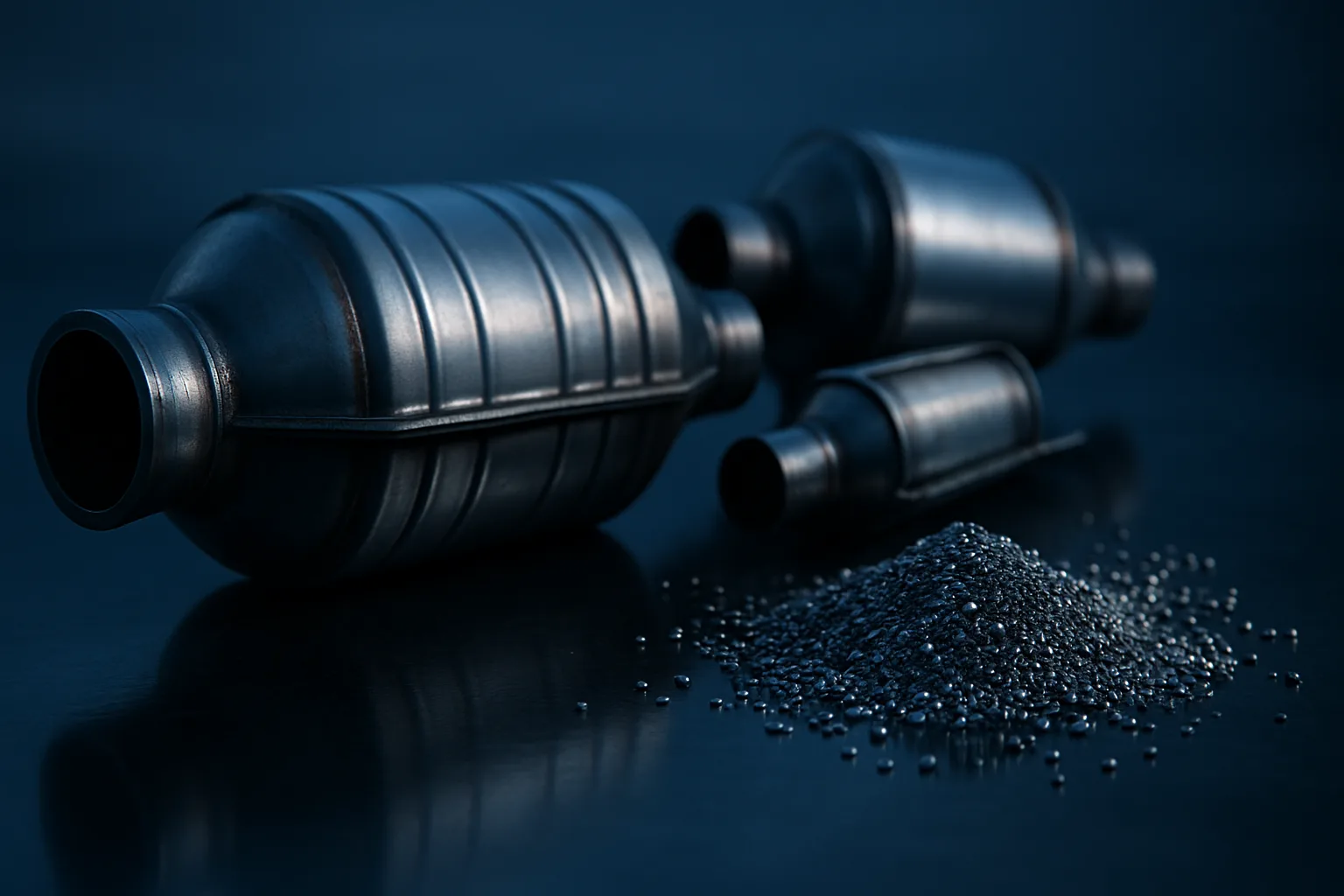
Why Catalytic Converter Prices Today Vary So Dramatically — OEM vs. Aftermarket
Pull two catalytic converters off the same vehicle platform and they can be worth completely different amounts. One fetches $200. The other gets you $18. Same pipe diameter. Same general shape. Completely different scrap value. If you've never understood why, you're not alone — and the difference is costing yards and sellers real money every single day.
The short answer: OEM converters are loaded with platinum group metals (PGMs). Aftermarket units are not. But the full picture is more nuanced than that, and understanding it helps you quote smarter, sort better, and stop leaving value on the table when you're checking catalytic converter prices today in Canada.
What Makes an OEM Catalytic Converter Worth More?
OEM stands for Original Equipment Manufacturer. These converters ship directly from the automaker — installed at the factory or as a genuine replacement part. Automakers engineer these converters to meet strict emissions standards, and that means loading the substrate (the honeycomb ceramic or metallic core) with high concentrations of platinum, palladium, and rhodium.
Those three metals — collectively called PGMs — are the real value driver in any catalytic converter. PGM spot prices fluctuate constantly, but even at conservative market levels, the spread between a heavily loaded OEM unit and a thin aftermarket replacement is enormous. An OEM converter from a late-model half-ton truck might carry enough palladium alone to be worth multiples of what an aftermarket unit returns.
Here's what drives OEM loading levels higher:
- Regulatory compliance: OEM units must pass emissions testing in every market they're sold — more PGMs means better catalytic efficiency and longer service life.
- Engineering specs: Automakers specify exact PGM loadings based on engine characteristics, fuel type, and regional emissions regulations.
- Substrate quality: OEM substrates are typically higher-cell-count ceramics or metallic foil, which hold PGMs more effectively.
- Durability requirements: Factory warranties demand converters that last. That means no cutting corners on precious metal content.
The result: an OEM converter from a Toyota Prius, a Ford F-250, or a Dodge Ram can be dramatically more valuable than its aftermarket replacement. Knowing which one you're holding changes everything about how you price and sell it.
Why Aftermarket Converters Scrap for So Little
Aftermarket converters are built to a price point, not a performance spec. When a shop installs an aftermarket replacement, the goal is to pass the emissions test at the lowest possible parts cost. That means leaner PGM loadings — sometimes significantly leaner.
Some aftermarket units contain small but recoverable amounts of PGMs. Others have substrates so thin on precious metal content that processing them barely covers the cost of the chemistry to refine them. Processors will still buy them, but the per-unit return is a fraction of what an OEM piece commands.
There's also the issue of substrate condition. Aftermarket converters are often installed on older, higher-mileage vehicles. By the time they're being scrapped, the substrate may be cracked, melted, or contaminated — further reducing recoverable PGM yield. A clean, intact substrate always returns more than a damaged one, regardless of whether the unit is OEM or aftermarket.
Common signs you're looking at an aftermarket converter:
- Universal fit or "direct-fit" labeling on the shell
- Welded seams where the original pipe connections were cut and spliced
- Brand stamps from aftermarket suppliers (MagnaFlow, Walker, Eastern, etc.)
- Lighter overall weight compared to the OEM equivalent
- Visible weld marks where the unit was adapted to fit
How to Identify OEM vs. Aftermarket Before You Sell in Moncton
The easiest check is the serial number. OEM converters have manufacturer-stamped codes that identify the vehicle platform, engine, and sometimes the production date. If you can read that stamp, you can cross-reference it against a converter database to confirm the OEM status and get a more accurate scrap value. This is exactly the kind of documentation that helps buyers bid with confidence.
Weight is another quick indicator. OEM converters tend to be heavier because they use denser substrates with higher cell counts. An aftermarket unit on the same pipe diameter will often feel lighter in hand. It's not a perfect test, but it's a fast first filter when you're sorting a load.
For sellers in Moncton and across New Brunswick, the documentation step matters more than you might think. Buyers paying for loads sight-unseen — especially through auction formats — rely on photos, serial numbers, and condition notes to make confident bids. A well-documented OEM unit with a readable serial attracts stronger offers than an unmarked unit that buyers have to guess on. Platforms like SMASH make this documentation process straightforward, with built-in photo capture, serial tracking, and VIN lookup tools that let you present your inventory clearly.
If you're sorting a mixed load of cats — some OEM, some aftermarket — separate them before you sell. Mixing them together usually means you get priced on the average, which pulls OEM value down to meet aftermarket value. Sort and document each unit separately. The extra time is worth it.
The Real-World Price Gap: What Scrap Metal Auction Data Shows
Without inventing numbers, the pattern is consistent across the market: OEM converters command significantly higher per-unit values than aftermarket equivalents from the same vehicle platform. The spread can be anywhere from modest to extreme, depending on the specific unit, current PGM spot prices, and substrate condition.
PGM prices — particularly palladium and rhodium — have historically been volatile. Rhodium in particular has swung wildly over multi-year windows, and those swings hit OEM converter values harder than aftermarket because OEM units carry more of the metal. When rhodium is elevated, the value gap between OEM and aftermarket widens further. When it pulls back, the gap narrows — but OEM units almost always retain more value in absolute terms.
This is exactly why using a scrap metal auction platform matters. Fixed-price single-buyer deals lock you into whatever that buyer is willing to offer that day. An auction format puts the unit in front of multiple vetted buyers simultaneously, which means market conditions — not one buyer's margin — determine what you receive. More buyers means better price discovery. That's not a pitch. That's how markets work.
SMASH uses a competitive auction format specifically because competition surfaces real value. Whether you're selling OEM converters out of Moncton or a mixed load of cats from across New Brunswick, the auction approach removes the guesswork that comes with single-buyer calls and gives you a benchmark against actual market demand. You can check current Canadian scrap converter prices to get a sense of the range before you sell.
Why Documentation Drives Better Converter Prices in Any Market
Here's a truth most sellers don't hear often enough: the price you get isn't just about the metal. It's about the buyer's confidence in what they're buying. A documented OEM converter with clear photos, a readable serial number, and accurate weight data is worth more to a buyer than the same converter sold with no information attached — because the buyer doesn't have to build as much risk into their bid.
This is especially relevant for catalytic converter buyers in New Brunswick and the Atlantic region, where buyers may be processing units across a wide geography and can't inspect every piece in person. Documentation bridges that gap. It lets buyers commit to stronger offers because they're not pricing in the unknown.
What good documentation looks like for a converter load:
- Clear photos of each unit — top, bottom, and both pipe ends
- Serial numbers or manufacturer stamps, photographed legibly
- Notes on substrate condition (intact, cracked, rattling, melted)
- OEM vs. aftermarket identification for each unit
- Approximate weight of the load or per-unit if possible
- Vehicle year/make/model if known — VIN lookup helps here
Platforms like smashrecycling.ca are built around exactly this kind of structured inventory documentation. It's not paperwork for the sake of paperwork. It's documentation that directly supports better offers from more buyers. If you want to read Canadian scrap converter pricing guides that go deeper on documentation best practices, there's a full library of resources available.
How to Get the Best Catalytic Converter Price in Moncton and Across Canada
The formula isn't complicated, but most sellers skip steps that cost them money. Sort your OEM units separately from aftermarket. Document every piece with photos and serial numbers. Check current PGM market conditions before you sell — not after. And don't settle for a single offer from a single buyer when a competitive process can surface what the market actually thinks your inventory is worth.
For Moncton scrap metal services, the same logic applies. Whether you're a yard operator moving volume or an individual seller with a handful of cats pulled from your own fleet, the approach is identical: know what you have, document it properly, and sell it to a market — not to one buyer.
SMASH connects sellers with vetted buyers across North America through a transparent auction format. No subscription fees. Auto-invoicing. Full documentation support. We only earn when you sell — which means our incentives are aligned with yours from the start.
If you want to find the best scrap converter prices in Canada, start with the basics: know whether your units are OEM or aftermarket, document them properly, and put them in front of competition. That combination consistently produces better outcomes than the old way of calling one buyer and hoping for a fair number.
Prices fluctuate based on PGM spot markets, substrate condition, and buyer demand. Always check current rates before finalizing any sale.
Frequently Asked Questions
Q: Why do catalytic converter prices today vary so much between units?
The biggest driver is PGM content — specifically how much platinum, palladium, and rhodium the substrate contains. OEM converters are engineered with higher precious metal loadings to meet emissions standards and durability requirements. Aftermarket units are built to a lower price point with leaner PGM content, which means they return significantly less at scrap. Substrate condition also matters — a cracked or contaminated core returns less regardless of whether the unit is OEM or aftermarket.
Q: How do I know if my catalytic converter is OEM or aftermarket?
Check the serial number stamp on the converter shell — OEM units carry manufacturer codes that can be cross-referenced in a converter database. Weight is another indicator: OEM units are typically heavier than aftermarket equivalents on the same pipe size. Visible weld seams, universal-fit markings, and third-party brand stamps (like MagnaFlow or Walker) are strong signals that you're holding an aftermarket unit. When in doubt, serial number lookup is the most reliable method.
Q: What's the best way to sell catalytic converters in Moncton, New Brunswick?
Sort OEM and aftermarket units separately before selling — mixing them together pulls your per-unit average down. Document each converter with clear photos and serial numbers. Then use a competitive auction format rather than a single-buyer phone call. Platforms like SMASH connect sellers with vetted buyers across North America, which means real market competition determines your price instead of one buyer's margin.
Q: Do PGM spot prices affect what I get for my scrap catalytic converters in Canada?
Absolutely. Platinum, palladium, and rhodium prices are set by global commodity markets and can shift significantly in short windows. When palladium or rhodium prices are elevated, OEM converter values rise sharply because those units carry more of those metals. Checking current PGM market conditions before you sell — rather than after — gives you context on whether now is a good time to move inventory or wait.
Q: Is it worth separating and documenting my catalytic converter load before selling?
Yes — consistently. Buyers bidding on undocumented or mixed loads price in uncertainty, which means lower offers. A clearly documented OEM unit with photos, a readable serial, and accurate weight data removes that risk for buyers, which typically translates to stronger bids. The time spent sorting and documenting a load almost always returns more than the effort costs, especially on OEM units with meaningful PGM content.
Ready to stop guessing and start selling on actual market value? Whether you're in Moncton or anywhere across Canada, the process starts with knowing what you have and putting it in front of real competition. Get a free quote and find the best Canadian scrap converter prices at best-scrap-converter-prices.ca.
Follow SMASH on LinkedIn for ongoing scrap metal market insights, PGM price updates, and industry news that matters to yards and sellers across North America.
```