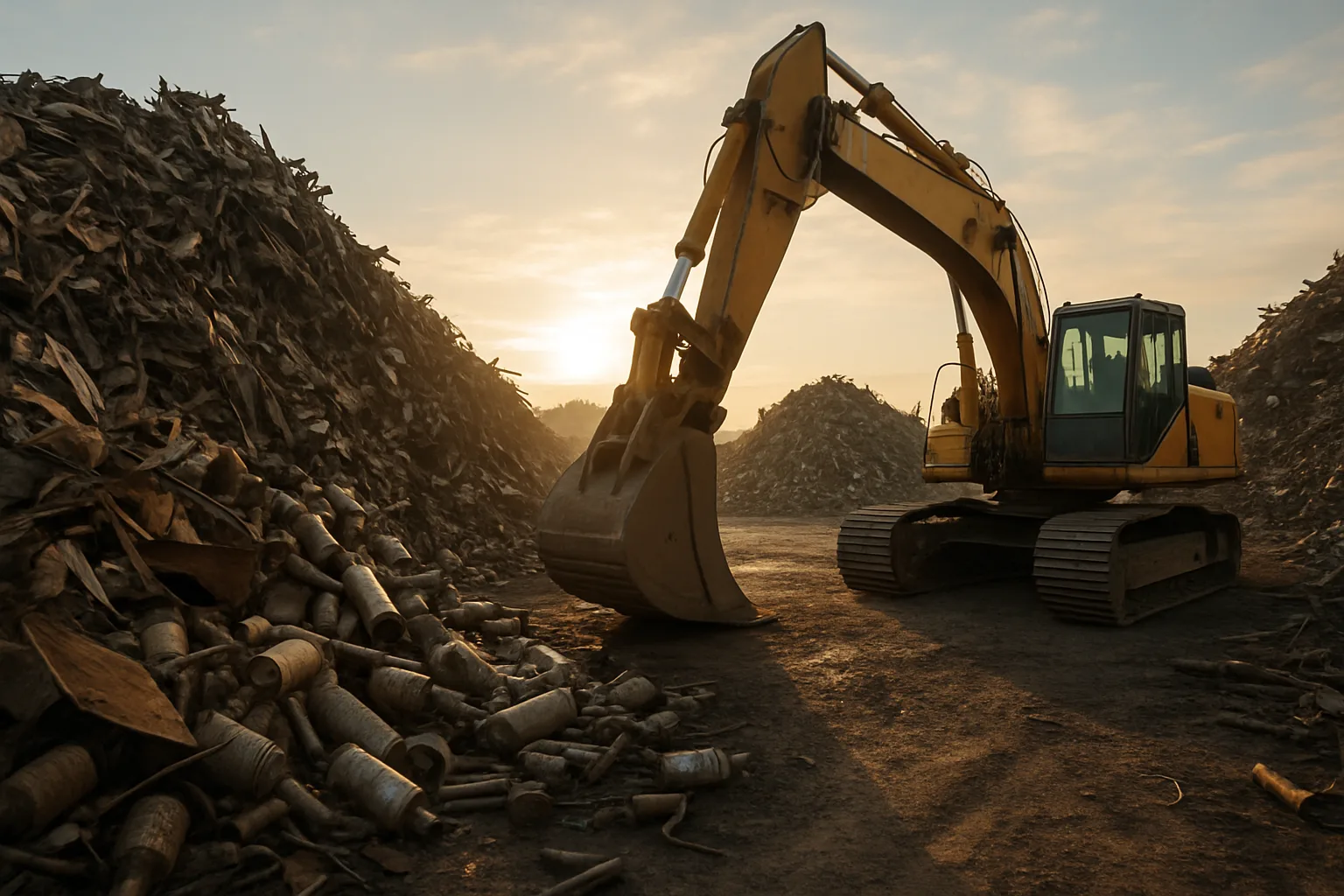
Most people who pull a catalytic converter off a car have no idea what happens next. They know it has value — they've heard that. But the journey from a rusted exhaust system to refined palladium, platinum, or rhodium is more involved than most sellers realize. Understanding that process helps you make smarter decisions about where you sell, who you sell to, and why catalytic converter recycling Saskatoon sellers often leave money on the table by taking the first offer they get.
This isn't a chemistry lecture. It's a practical walkthrough of what actually happens to your converter — and where the money is made (and lost) along the way.
Step One: The Converter Leaves the Vehicle
It starts at the exhaust pipe. Whether a mechanic pulls it during a repair, a dismantler strips it from an end-of-life vehicle, or a recycling yard processes a full wreck, the converter gets separated from the car. This step sounds simple, but it matters more than most people think.
Why? Because the condition at removal affects value. A converter that's been torched carelessly, has a cracked substrate, or is missing its end pipes can grade out lower when it hits a processor. Intact units with the substrate undamaged are worth more — full stop. If you're pulling your own converters, take care of the substrate inside. That ceramic or metallic honeycomb structure is where the precious metals are concentrated. Damage it, and you damage your payout.
In Saskatoon and across Saskatchewan, most converters come from a mix of sources: independent repair shops, auto recyclers, fleet operators, and individual vehicle owners who know their old truck is sitting on something valuable.
How Converters Are Graded and Sorted Before Recycling
Once a converter lands at a recycling operation, it doesn't immediately go into a furnace. It gets sorted and identified first. This is where a lot of sellers get shortchanged if they're not paying attention.
Processors and buyers use a combination of visual identification, serial number lookups, and assay data to assign a grade and value to each unit. Every converter model carries a known precious metal loading — the approximate amount of platinum, palladium, and rhodium contained in that specific substrate. High-volume domestic units from pickup trucks and SUVs often carry heavier loadings than small import converters. Exotic units from certain European luxury vehicles can carry extremely high values per unit.
Here's where the system gets murky for sellers. If you don't know what you have, a buyer can grade your converters conservatively and pocket the difference. That's not illegal — it's just commerce. But it's one reason why sell catalytic converters online platforms that rely on accurate serial tracking and transparent pricing exist. When you find the best scrap converter prices in Canada, you're not just finding a number — you're finding a buyer who isn't guessing low on purpose.
Common grading categories include:
- High-grade domestic: Typically larger converters from North American trucks and SUVs with heavier precious metal loadings
- Low-grade domestic: Smaller units, often from compact cars or older vehicles with worn substrates
- Foreign small: Import vehicle converters, often with a different metal ratio
- High-grade foreign: European and Japanese vehicles with higher platinum or palladium content
- DPF (Diesel Particulate Filters): A separate category entirely, often undervalued by buyers who don't specialize in them
- Exotic/specialty: Units from high-end vehicles that can command significant premiums
The Smelting and Assay Process — Where Precious Metals Are Actually Recovered
After sorting, converters move to a processor — typically a large-scale smelting operation. The substrate gets removed from the shell (a process called decanning) and the ceramic or metallic honeycomb gets crushed into a fine powder called "converter mix" or "catalyst powder." That powder is then sampled and assayed to determine its exact precious metal content.
This is the most technically intensive part of the lifecycle. The assay involves chemical analysis to identify the concentration of platinum group metals (PGMs) — primarily platinum (Pt), palladium (Pd), and rhodium (Rh). These three metals drive nearly all the value in your converter. Their prices fluctuate daily based on global commodity markets, industrial demand, and mining output.
Rhodium, in particular, has historically shown the most dramatic price swings of any PGM. It can represent a disproportionate share of value in certain converter types. Palladium has been the workhorse metal for gasoline engine converters for years. Platinum tends to dominate in diesel applications. Understanding this breakdown helps you appreciate why catalytic converter recycling prices aren't a flat number — they move with the market every single day.
After assay, the metals get smelted and refined into commercial-grade PGMs that re-enter global supply chains — used in new catalytic converters, electronics, medical equipment, and other industrial applications. Your old truck converter might end up in a new vehicle's emissions system a year later.
Where Saskatoon Sellers Fit Into This Chain — and How to Maximize Your Position
Here's the honest reality for anyone doing catalytic converter recycling Saskatoon: geography used to limit your options. You took what the local buyer offered because driving to a bigger market wasn't worth the fuel cost, and you had no way to know if the price was fair.
That dynamic has shifted. Platforms that let you sell catalytic converters online have changed what's possible for sellers in Saskatchewan and across Canada. You can now photograph your units, record serial numbers, and get competitive bids from vetted buyers without putting your converters in a truck and driving to find out what they're worth.
SMASH is built specifically for this kind of transaction. Instead of calling one buyer and taking one number, you list your converters through a competitive auction format. Multiple vetted buyers compete on your load. That competition is what drives better price discovery — not a guarantee of a higher number, but a real market test instead of a single take-it-or-leave-it quote. If you're tired of wondering whether your local buyer is being straight with you, that's exactly the problem SMASH was designed to solve.
Documenting your units properly — photos, serial numbers, condition notes — also gives buyers more confidence. More confidence means more competitive bids. It also protects you legally and creates a clear record for your business. SMASH's inventory tools and serial tracking make that documentation straightforward, even if you're processing dozens of units at a time.
For sellers in Saskatoon, connecting with Saskatoon scrap metal services that understand PGM pricing — not just generic scrap pricing — is the first step toward getting paid what your converters are actually worth.
Why Timing Matters When You Sell Catalytic Converters in Saskatchewan
The precious metals inside your converter are priced in real time. Palladium, platinum, and rhodium trade on global commodity exchanges. The price you get on a Tuesday might be meaningfully different from what you'd get on Friday. Most small sellers don't think about this, but recyclers and processors absolutely do.
This isn't a reason to obsessively watch commodity markets every hour. But it is a reason to stay informed about general market direction and to avoid selling in bulk during price troughs if you have the flexibility to hold. When you check current Canadian scrap converter prices regularly, you build a baseline sense of where the market sits — and you notice when you're being offered significantly below market without justification.
Saskatchewan sellers who run yards, fleet operations, or auto recycling businesses often accumulate converters over time. Having a process for lotting, documenting, and timing your sales — rather than just offloading converters whenever you have a few — can meaningfully affect your annual returns. It's not about playing the market. It's about not ignoring it entirely.
To get competitive bids for your scrap in Canada, you need to be on a platform where buyers are actually competing. A single local buyer with no competition has no incentive to offer you more than the minimum you'll accept. That's a structural problem with the old model, not a reflection of your converters' actual value.
What to Look for in a Catalytic Converter Buyer — Especially in Canada
Not all buyers are equal. Some specialize in PGMs and have direct relationships with smelters, which means they can pay closer to the refining value. Others are middlemen who buy conservatively because they're selling to someone else downstream. Knowing which type you're dealing with matters.
When evaluating catalytic converter buyers near me prices, ask these questions:
- How do they price? Per-unit grading based on serial lookup? Or bulk weight buying that averages everything together? Per-unit pricing benefits sellers with high-grade units.
- What's their settlement timeline? Some buyers pay on inspection; others pay after smelting and assay, which can take weeks. Know what you're agreeing to.
- Are they transparent about their grading? Can you see what grade they assigned each unit and why? Opacity at this stage is a red flag.
- Do they have a track record with Canadian sellers? Tax handling, currency, and shipping logistics matter for Canadian transactions.
- Are there fees or deductions? Freight, processing fees, and refining charges can erode your payout. Get the net number, not the gross.
The best way to answer all of these questions at once is to use a platform where multiple buyers compete openly. For Canadian sellers, reading Canadian scrap converter pricing guides helps you understand what fair looks like before you commit to a sale.
SMASH vets its buyers, runs transparent auctions, and handles the documentation side so you're not managing loose ends after the sale. No subscription fees. The model only works if the seller gets a result worth showing up for.
If you're ready to stop guessing and start seeing what your converters actually fetch in a competitive market, the starting point is simple — sell catalytic converters Saskatchewan the way the market actually works, not the way one buyer wants you to think it works.
The full lifecycle of your converter — from the exhaust pipe to refined platinum — passes through several hands. The question is whether you're positioned to capture fair value at your point in that chain. If you're in Saskatoon and you're not sure you are, it's worth finding out. Find the best Canadian scrap converter prices and get a free quote at best-scrap-converter-prices.ca.
Frequently Asked Questions
Q: How do I know if I'm getting a fair price for catalytic converter recycling in Saskatoon?
Compare offers from multiple buyers before committing. Platforms that run competitive auctions — like SMASH — let vetted buyers bid on your load, which gives you a real market price instead of one buyer's single offer. Knowing your converter's make, model, and serial number also helps you verify grades.
Q: What precious metals are inside a catalytic converter and why do they affect the price?
Catalytic converters contain platinum (Pt), palladium (Pd), and rhodium (Rh) — collectively called platinum group metals or PGMs. These metals are priced on global commodity exchanges and fluctuate daily. The exact mix and loading in your converter depends on the vehicle make, model, and year, which is why identical-looking converters can have very different values.
Q: Can I sell catalytic converters online from Saskatchewan?
Yes. Online platforms let you document and list your converters — including photos and serial numbers — and receive bids from buyers across Canada without being limited to your local market. This is especially useful for sellers in Saskatchewan who previously had limited local buyer options.
Q: How long does catalytic converter recycling take from sale to payout?
It depends on the buyer and the settlement method. Some buyers pay per-unit on inspection; others settle after smelting and assay, which typically takes several weeks. Always confirm the settlement timeline and terms before agreeing to a sale.
Q: Does the condition of the catalytic converter affect the recycling price?
Yes, significantly. A converter with an intact, undamaged substrate will grade higher and return more value than one that's been cracked, overheated, or improperly removed. The precious metals are concentrated in the ceramic or metallic honeycomb inside — protecting that during removal protects your payout.
Follow SMASH on LinkedIn for industry updates, PGM market insights, and scrap metal pricing news across Canada.
```